


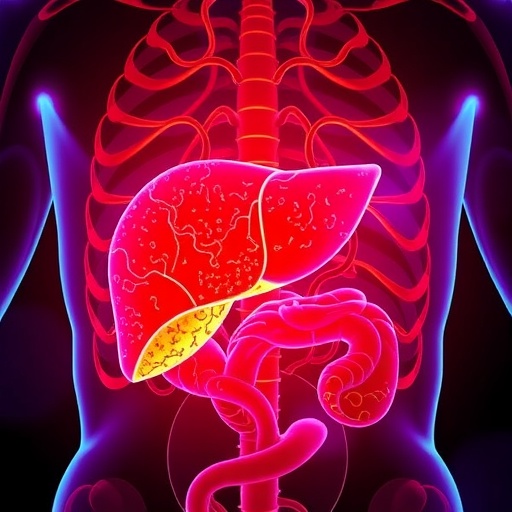
In a groundbreaking study published in Experimental & Molecular Medicine, researchers have unveiled a complex metabolic-immune interplay that sheds new light on the pathological mechanisms underlying Still’s disease, a rare and often debilitating systemic inflammatory disorder. This research identifies a pivotal role for the macrophage-derived immunometabolite itaconate in orchestrating hepatic immunopathology through an intricate axis involving CXCL10 and CD8 T cells. These revelations promise to revolutionize our understanding of Still’s disease and open novel therapeutic avenues targeting metabolic signaling in immune cells.
Still’s disease has long been enigmatic, characterized by excessive inflammation manifesting in fever, rash, joint pain, and in severe cases, liver involvement. Despite its recognition, the precise molecular mediators that drive organ-specific immune damage have remained elusive. The new research, led by Ye, Wang, Zhou, and colleagues, integrates immunology, metabolism, and cellular signaling to unravel how metabolic rewiring within monocytes and macrophages translates into detrimental hepatic immune responses.
Central to these findings is the immunometabolite itaconate, a molecule produced predominantly by activated monocytes and macrophages during inflammatory responses. Previously appreciated for its antimicrobial and anti-inflammatory properties, itaconate here assumes a dualistic role, acting as a metabolic signal that modulates immune cell behavior beyond its intrinsic biochemical functions. The study reveals that elevated levels of itaconate in the monocyte/macrophage compartment precipitate a cascade culminating in liver inflammation characteristic of Still’s disease.
The research team mapped the metabolic rewiring occurring in liver-infiltrating macrophages from Still’s patients, noting a marked increase in the enzyme IRG1, responsible for itaconate synthesis. This metabolic shift was accompanied by upregulated secretion of CXCL10, a chemokine known for recruiting cytotoxic CD8 T cells. Such recruitment exacerbates hepatic immune pathology, suggesting that itaconate’s elevation is not merely a consequence of inflammation but a driver of pathogenic T cell-mediated liver damage.
Further dissecting this axis, the investigators demonstrated that itaconate modulates CXCL10 expression through epigenetic regulation, influencing chromatin remodeling at the CXCL10 locus. This mechanistic insight reveals a nuanced role for itaconate as a metabolic-immune regulator, bridging cellular metabolism with gene expression programs that control immune cell recruitment and activation. The ability of metabolic intermediates to direct such transcriptional outcomes is an emerging frontier in immunometabolism, and this study situates itaconate at the forefront of this paradigm.
The consequences of this metabolic-immune crosstalk extend beyond mere chemokine production. The study showed that enhanced CXCL10-mediated recruitment of CD8 T cells to the liver contributed to hepatocyte apoptosis and tissue damage in experimental models recapitulating Still’s disease. These cytotoxic T cells, once recruited, become potent effectors driving the progression of hepatic immunopathology, implicating the itaconate-CXCL10-CD8 T cell axis as a fundamental pathological circuit.
Importantly, the investigators validated their results using human patient samples, confirming that the metabolic and immunological signatures identified were conserved in vivo. Liver biopsies from Still’s disease patients presented heightened itaconate concentrations and CXCL10 expression coinciding with increased infiltration of activated CD8 T cells. This translational relevance lays a robust foundation for considering metabolic interventions in clinical management.
From a therapeutic perspective, this discovery offers tantalizing prospects. Targeting the itaconate synthesis pathway or disrupting the downstream CXCL10 signaling axis could ameliorate liver inflammation and potentially modify disease progression. Small molecule inhibitors of IRG1, or antagonists of CXCL10 receptors on T cells, might selectively abrogate the deleterious immune infiltration without broadly suppressing systemic immunity.
This research also challenges previously held assumptions about immunometabolites solely being anti-inflammatory. Itaconate’s paradoxical role in promoting hepatic pathology despite its reported immunoregulatory functions underscores the contextual complexity of metabolic signaling in immune cells. Such findings advocate for a more nuanced exploration of immunometabolites within different tissue microenvironments and disease states.
Furthermore, this study contributes to the expanding field of immunometabolism by linking metabolic products directly to immune cell recruitment and tissue-specific damage. It demonstrates that metabolic intermediates can transcend traditional cellular roles, acting as pivotal messengers dictating immune cell dynamics and disease outcomes. This conceptual framework might extend to other systemic inflammatory diseases and autoimmune conditions involving aberrant tissue infiltration by cytotoxic lymphocytes.
Looking ahead, it would be crucial to delineate the precise molecular mechanisms by which itaconate influences chromatin remodeling and gene transcription in macrophages at a higher resolution, potentially identifying novel epigenetic regulators. Additionally, the extent to which this axis is modulated by other metabolic pathways or is influenced by systemic factors such as cytokines or hormonal milieu remains an open question.
Given the intricate communication between metabolic cues and immune responses demonstrated here, future investigations could also explore the impact of metabolic therapies or dietary interventions on the itaconate-CXCL10-CD8 T cell axis. Such multidisciplinary approaches may yield innovative strategies to dampen aberrant inflammation in Still’s disease and beyond.
In summary, the identification of the itaconate-driven metabolic-immune crosstalk offers an unprecedented window into the pathogenesis of Still’s disease. By elucidating how macrophage metabolism orchestrates immune cell recruitment via CXCL10 and subsequent CD8 T cell-mediated liver damage, Ye, Wang, Zhou, and colleagues have uncovered a critical pathway ripe for targeted therapeutic intervention. This study stands as a testament to the power of integrative immunometabolic research in decoding complex inflammatory diseases.
As Still’s disease continues to impact those affected with unpredictable severity, advances such as this inspire hope for more precise and mechanism-based treatments. The convergence of metabolism and immunity highlighted here may well represent the next frontier in understanding and combating systemic inflammatory disorders characterized by immune-mediated organ damage.
Cite Scienmag News
Nathaniel Bowman. (June 5, 2026). Immune Metabolite Itaconate Drives Still’s Disease Liver Damage. Scienmag. https://scienmag.com/immune-metabolite-itaconate-drives-stills-disease-liver-damage/
Nathaniel Bowman. "Immune Metabolite Itaconate Drives Still’s Disease Liver Damage." Scienmag, 5 June 2026, https://scienmag.com/immune-metabolite-itaconate-drives-stills-disease-liver-damage/. Accessed 5 September 2026.
Nathaniel Bowman. "Immune Metabolite Itaconate Drives Still’s Disease Liver Damage." Scienmag. June 5, 2026. https://scienmag.com/immune-metabolite-itaconate-drives-stills-disease-liver-damage/


