


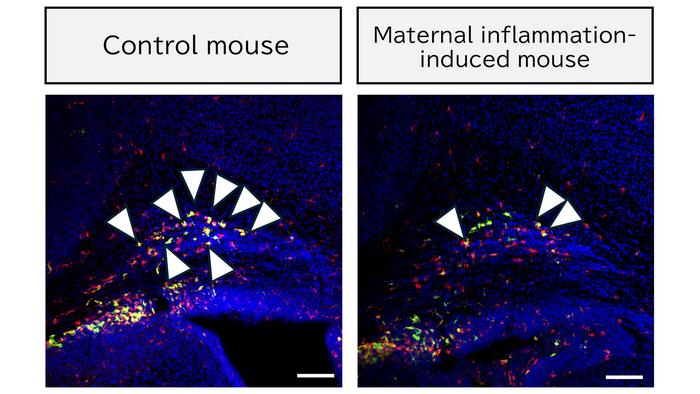
A recent study from the Nagoya University Graduate School of Medicine unveils a critical insight into how maternal inflammation during pregnancy impacts neurodevelopment in infants, particularly focusing on a specific type of immune cell known as CD11c-positive microglia. The research emphasizes the significance of these microglia, which are integral to the myelination process in the developing brain. This groundbreaking discovery suggests that inflammatory responses in expectant mothers could hinder the formation and function of these essential cells, significantly affecting the developmental trajectory of their offspring.
CD11c-positive microglia are recognized as key players in the brain’s immune defense and are particularly involved in the myelination process. Myelination is crucial for the efficient transmission of electrical signals within nerve cells, a fundamental aspect of brain function and cognitive development. This study posits that maternal inflammation can detrimentally alter the proliferation of CD11c-positive microglia, thereby interfering with essential neurodevelopmental processes that occur during infancy.
The research journey began with experiments conducted on neonatal mice subjected to maternal inflammation, where the researchers observed a marked reduction in the proliferation of CD11c-positive microglia. This pivotal finding raised questions about the implications for human infants exposed to similar inflammatory conditions in-utero. To bridge the gap between animal and human studies, the researchers analyzed cord blood samples from preterm infants affected by chorioamnionitis, a condition marked by inflammation during pregnancy.
Findings from the analysis of human samples were revealing; there was a notable decrease in levels of insulin-like growth factor 1 (IGF-1), a protein strongly correlated with CD11c-positive microglia. This correlation suggested that the inflammatory environment during pregnancy could lead to long-term implications for the myelination process in neonates, as MRI scans of the infants revealed an increased incidence of delayed myelination.
The correlation between impaired microglial function and neurodevelopmental disorders is becoming increasingly evident, as inflammation during pregnancy has been linked to adverse cognitive outcomes in children. Researchers have established that maternal immune activation can elicit significant changes in the fetal brain environment, which in turn can lead to lifelong neurological and developmental challenges.
Kazuya Fuma and Tomomi Kotani, the principal investigators of the study, emphasized the importance of CD11c-positive microglia in their research findings. Their work draws a compelling connection between inflammation, microglial function, and ultimately, cognitive outcomes in children. Fuma stated that typical infant development is characterized by an increase in CD11c microglia, and that this increase was suppressed in instances of maternal inflammation.
The significance of myelination in brain development cannot be overstated. Proper myelination is essential for ensuring that neural circuits are formed and function optimally, allowing for communication between different areas of the brain. Disruptions during this critical phase can lead to a host of neurological issues, underscoring the need for interventions aimed at mitigating the effects of maternal inflammation on fetal brain development.
The researchers posited that by understanding the mechanisms underlying this relationship, it may be possible to develop targeted therapies that could alleviate some of the negative impacts of prenatal inflammation. If future studies confirm the observed decrease of CD11c-positive microglia in preterm infants, it would pave the way for early interventions designed to buffer the neurodevelopmental impact of maternal inflammation.
The hope is that such interventions could ultimately protect infants from long-term cognitive deficits associated with impaired myelination. Fuma’s insights highlight a potential strategy: targeting CD11c-positive microglia could represent a pathway through which healthcare providers could intervene more effectively during critical developmental windows.
This line of inquiry is particularly timely as awareness grows regarding the maternal-fetal connection and the complexities of neurodevelopment. As science continues to uncover the intricacies of maternal health and its long-standing effects on child development, the implications of such research extend beyond the individual to address broader societal challenges in healthcare and education.
The findings, published in the esteemed journal Communications Biology, contribute significantly to our understanding of neurodevelopmental disorders and propose a potential avenue for future research aimed at enhancing cognitive outcomes for vulnerable populations. As we deepen our comprehension of these processes, innovative strategies may emerge that can protect future generations from the repercussions of prenatal inflammation.
In conclusion, the research on CD11c-positive microglia provides a promising framework for understanding the implications of maternal health on infant neurodevelopment. As scientists continue to investigate the underlying mechanisms, the hope is to establish effective therapeutic strategies that could redefine outcomes for children affected by maternal inflammation. With each discovery, we move closer to unraveling the complexities of brain development and ensuring healthier futures for vulnerable infants.
Cite Scienmag News
Harold Sullivan. (April 1, 2025). Immune Cell Insights Reveal Link Between Maternal Inflammation and Neurodevelopmental Disorders. Scienmag. https://scienmag.com/immune-cell-insights-reveal-link-between-maternal-inflammation-and-neurodevelopmental-disorders/
Harold Sullivan. "Immune Cell Insights Reveal Link Between Maternal Inflammation and Neurodevelopmental Disorders." Scienmag, 1 April 2025, https://scienmag.com/immune-cell-insights-reveal-link-between-maternal-inflammation-and-neurodevelopmental-disorders/. Accessed 7 September 2026.
Harold Sullivan. "Immune Cell Insights Reveal Link Between Maternal Inflammation and Neurodevelopmental Disorders." Scienmag. April 1, 2025. https://scienmag.com/immune-cell-insights-reveal-link-between-maternal-inflammation-and-neurodevelopmental-disorders/


