

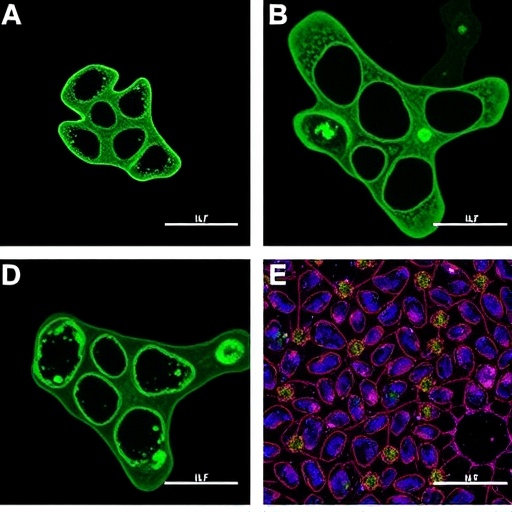
Recent research has unveiled the profound role of interleukin-6 (IL-6) in the polarization of Dectin-1 macrophages, offering new insights into immune response modulation in thyroid cancer. This groundbreaking study, conducted by a dedicated team of researchers, explores the intricate mechanisms by which IL-6 influences macrophage behavior, shedding light on potential therapeutic avenues for combating this pervasive malignancy.
Thyroid cancer, one of the most commonly diagnosed cancers worldwide, presents significant challenges in terms of immune evasion. The tumor microenvironment is characterized by a complex interplay between cancer cells and immune cells, where the latter often display an altered functionality that allows the tumors to thrive. This study addresses the vital need to understand how cytokines like IL-6 can tip the balance towards a more favorable immune response against thyroid cancer.
The research team highlights that IL-6, a pro-inflammatory cytokine produced during immune responses, plays a pivotal role in modulating macrophage polarization. Traditionally, macrophages are categorized into two main types: M1, which are pro-inflammatory cells involved in pathogen clearance, and M2, which are associated with tissue repair and tumor promotion. The study’s findings indicate that IL-6 influences Dectin-1 macrophages, which are crucial for recognizing fungal pathogens, to adopt a phenotype that may inadvertently assist tumor growth.
By conducting experiments on thyroid cancer models, the researchers discovered that the conditioning of Dectin-1 macrophages by IL-6 results in an altered immune environment. These macrophages exhibit characteristics indicative of an immune suppressive state, which contributes to the ability of thyroid cancer cells to escape immune surveillance and promote further malignancy. Understanding this mechanism presents a significant opportunity for therapeutic intervention, as targeting IL-6 could reinstate the antitumor functions of macrophages.
An intriguing aspect of the study involves the delicate balance of cytokine signaling pathways that govern macrophage behavior. The authors emphasize the necessity of dissecting these pathways to pinpoint effective targets for second-generation immunotherapies. The ramifications of manipulating IL-6 signaling extend beyond thyroid cancer, as similar mechanisms may be at play in various other tumors, suggesting a paradigm shift in how immunotherapies are designed and implemented.
The research team employed sophisticated methodologies to substantiate their findings, including flow cytometry and transcriptional profiling, which allowed them to delineate the changes that occur in macrophage populations subjected to IL-6 influence. Through these techniques, they were able to characterize the molecular signatures of Dectin-1 macrophages and their response to IL-6, providing a robust framework for understanding the interplay between cytokines and immune cells in cancer.
Moreover, the study discusses the implications of these findings for clinical practices. By elucidating the role of IL-6 in macrophage polarization, the researchers pave the way for the development of novel therapeutics designed to enhance the immune response in patients with thyroid cancer. Potential strategies could include the use of IL-6 antagonists or agents that reprogram macrophages back to a more immunogenic state to promote tumor rejection.
The importance of targeting the immune system in cancer treatment has gained significant traction over recent years, and this study underlines the critical need for personalized approaches based on tumoral and microenvironmental characteristics. As cancer evolves, so too must our strategies for combating it, making insights such as those provided in this research vital for future breakthroughs in oncological therapies.
Overall, the findings of this study underscore the intricate relationship between the immune system and cancer, particularly through the lens of cytokine signaling. The regulatory role of IL-6 in macrophage polarization exemplifies the potential for harnessing immune mechanisms to improve cancer prognosis. Future investigations will undoubtedly build upon these insights, further elucidating the complex web of interactions that characterize the tumor-immune interface.
In conclusion, as our understanding of the immune landscape in thyroid cancer continues to evolve, the implications of such research cannot be overstated. The identification of IL-6’s influence on Dectin-1 macrophages is a compelling narrative that adds to the broader discourse on cancer immunology. Navigating the complexities of immune evasion will be pivotal for the development of innovative therapies aimed at enhancing patient outcomes, and studies like this serve as a cornerstone for future investigations.
To encapsulate, the discovery concerning IL-6 and Dectin-1 macrophages in the context of thyroid cancer signifies a leap forward in our grasp of cancer immunology. The potential to redirect macrophage function through manipulation of this cytokine presents an exciting frontier in therapeutic development, inviting deeper exploration into its broad-spectrum applications against various malignancies.
As researchers dive deeper into the mechanisms of immune modulation, collaborations across disciplines will be essential. The merging of immunology, oncology, and biochemistry will yield a more nuanced understanding of cancer therapies, with the ultimate aim of not just managing tumors but eradicating them entirely.
Subject of Research: The role of IL-6 in regulating Dectin-1 macrophages in the context of thyroid cancer.
Article Title: IL-6 regulates the polarization of Dectin-1 macrophages to weaken immune escape in thyroid cancer.
Article References:
Deng, X., Wu, Y., Guo, B. et al. IL-6 regulates the polarization of Dectin-1 macrophages to weaken immune escape in thyroid cancer.
J Transl Med (2026). https://doi.org/10.1186/s12967-026-07679-0
Image Credits: AI Generated
DOI:
Keywords: IL-6, Dectin-1, macrophages, thyroid cancer, immune escape, cytokines, polarization, immunotherapy.


