


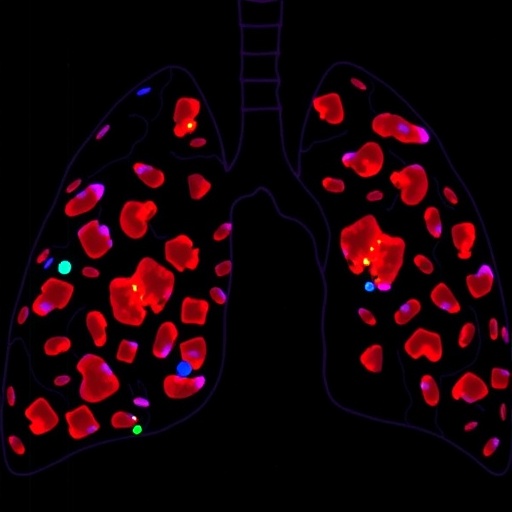
In a groundbreaking study that promises to reshape our understanding of sepsis-induced lung injury, researchers have unveiled the critical role of IL-1β positive lung-resident macrophages in mediating endothelial dysfunction. This discovery shines a spotlight on the complex immune-metabolic interplay that drives acute lung injury (ALI) in sepsis, a condition notorious for its high mortality rates and limited treatment options. The intricate crosstalk between immune cells and metabolic pathways opens new avenues for targeted therapies, potentially altering the clinical management of this devastating syndrome.
Sepsis, a systemic inflammatory response triggered by infection, leads to widespread endothelial damage, particularly in the lungs, resulting in acute respiratory distress syndrome (ARDS). The lungs, with their vast capillary network, become a battleground where immune and metabolic dysregulation converge, culminating in barrier breakdown and tissue edema. Until now, the exact cellular and molecular players orchestrating this destructive process remained elusive. This pivotal study identifies a specialized subset of macrophages residing within the lung tissue that produce the potent pro-inflammatory cytokine IL-1β as key mediators of vascular barrier impairment.
Lung-resident macrophages differ from their circulating counterparts in both location and function. Unlike monocyte-derived macrophages that infiltrate tissues during inflammation, lung-resident macrophages are strategically positioned within the alveolar and interstitial spaces, primed to respond rapidly to insult. By deploying IL-1β, these resident macrophages initiate a cascade of cellular signaling that disrupts endothelial integrity. This cytokine acts not merely as an inflammatory messenger but also tunes metabolic pathways that further compromise vascular homeostasis.
The researchers employed advanced single-cell RNA sequencing techniques combined with sophisticated metabolic profiling to dissect the phenotypic and functional heterogeneity of lung macrophages during sepsis. They demonstrated that upon septic insult, IL-1β+ lung-resident macrophages undergo metabolic reprogramming that amplifies their inflammatory output. This immune-metabolic crosstalk perpetuates endothelial cell activation, inducing expression of adhesion molecules and permeability factors that weaken the vascular barrier and facilitate immune cell infiltration.
Metabolic adaptations in macrophages are increasingly recognized as central to their inflammatory phenotype. This study reveals that IL-1β production is closely linked to shifts in macrophage metabolism, particularly towards glycolysis and mitochondrial dysfunction. Such metabolic rewiring not only sustains the pro-inflammatory state but also exhausts the macrophage’s capacity for resolving inflammation, contributing to persistent tissue injury. The tight coupling between metabolism and cytokine release underscores the potential for metabolic interventions to modulate immune responses in sepsis.
Endothelial cells, lining the pulmonary microvasculature, respond to IL-1β through activation of NF-κB and other downstream signaling pathways that alter cell junctions and cytoskeletal organization. The study highlights how IL-1β derived from lung-resident macrophages enhances endothelial permeability by downregulating tight junction proteins like VE-cadherin, leading to vascular leakage. This barrier dysfunction exacerbates fluid accumulation in the alveoli, impeding gas exchange and precipitating respiratory failure.
Through in vivo murine models of sepsis, the investigators validated the pathogenic role of IL-1β+ lung-resident macrophages by selectively depleting this population or genetically silencing IL-1β expression. These manipulations significantly ameliorated endothelial dysfunction and reduced lung injury markers, affirming the therapeutic potential of targeting this axis. Notably, systemic blockade of IL-1β signaling reversed endothelial damage, reinforcing the centrality of this cytokine in the pathological loop.
The study also explores the feedback mechanisms by which endothelial cells influence macrophage function. Endothelial-derived metabolites and cytokines create a microenvironment that further skews lung-resident macrophages towards an IL-1β producing phenotype, forging a vicious cycle of inflammation and metabolic stress. Disruption of this bidirectional communication may represent a novel strategy to restore vascular homeostasis and halt progression of ALI.
Beyond the immediate implications for sepsis, these findings may have broader relevance for other inflammatory lung diseases characterized by macrophage-driven endothelial injury, such as acute respiratory distress syndrome from diverse etiologies, chronic obstructive pulmonary disease, and even viral pneumonia. The concept of immune-metabolic crosstalk as a driver of endothelial barrier integrity could inform biomarker discovery and personalized therapeutic approaches.
This research capitalizes on cutting-edge immunometabolism techniques and integrative multi-omics analyses, setting a new standard for dissecting cellular heterogeneity and function in complex pathologies. By unraveling the cellular choreography underlying septic lung injury, the study not only deepens fundamental biological understanding but also propels translational innovation, paving the way for clinical trials targeting IL-1β and metabolic pathways in critically ill patients.
In summary, the identification of IL-1β+ lung-resident macrophages as orchestrators of endothelial dysfunction via immune-metabolic interplay marks a significant advance in sepsis research. The delineation of this pathogenic circuit provides a compelling rationale for developing macrophage-targeted or metabolism-based therapeutic interventions aimed at preserving endothelial barrier function and improving outcomes in sepsis-induced ALI.
This compelling new paradigm underscores the importance of resident immune cells as regulators of tissue homeostasis and pathogenesis, expanding the therapeutic horizon beyond traditional anti-inflammatory strategies. As investigations progress, targeting the dual facets of inflammation and metabolism may usher in a transformative era for critical care medicine.
The study’s approach and findings encourage the scientific community to rethink sepsis treatment paradigms by integrating immunology, vascular biology, and metabolism. Future research building on these insights will elucidate the temporal dynamics of immune-metabolic crosstalk and optimize therapeutic windows to mitigate lung injury while preserving host defense.
By marrying high-resolution spatial omics with functional assays, the researchers have opened a window into the cellular microenvironment of the septic lung, revealing the nuanced interplay that drives disease progression. This work exemplifies the power of systems biology in tackling multifactorial diseases and highlights promising targets poised for clinical translation.
Ultimately, these discoveries present a beacon of hope for patients suffering from sepsis and related pulmonary complications. Clinicians and scientists alike await the next wave of innovation inspired by this study to bring about tangible improvements in survival and quality of life for the critically ill.
The study investigates the role of IL-1β positive lung-resident macrophages in mediating endothelial dysfunction and acute lung injury during sepsis through immune-metabolic crosstalk.
IL-1β+ lung-resident macrophages mediate endothelial dysfunction and acute lung injury in sepsis through immune-metabolic crosstalk.
Dong, Y., Li, T., Fang, B. et al. IL-1β+ lung-resident macrophages mediate endothelial dysfunction and acute lung injury in sepsis through immune-metabolic crosstalk. Cell Death Discov. (2025). https://doi.org/10.1038/s41420-025-02868-0
AI Generated
https://doi.org/10.1038/s41420-025-02868-0
Cite Scienmag News
Ophelia Keating. (December 8, 2025). IL-1β+ Lung Macrophages Drive Sepsis Lung Injury. Scienmag. https://scienmag.com/il-1%ce%b2-lung-macrophages-drive-sepsis-lung-injury/
Ophelia Keating. "IL-1β+ Lung Macrophages Drive Sepsis Lung Injury." Scienmag, 8 December 2025, https://scienmag.com/il-1%ce%b2-lung-macrophages-drive-sepsis-lung-injury/. Accessed 4 September 2026.
Ophelia Keating. "IL-1β+ Lung Macrophages Drive Sepsis Lung Injury." Scienmag. December 8, 2025. https://scienmag.com/il-1%ce%b2-lung-macrophages-drive-sepsis-lung-injury/


