

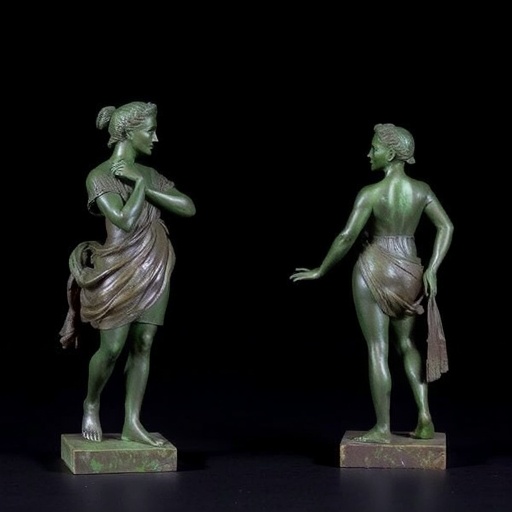
In the intricate world of metallurgy and art history, distinguishing between modern bronzes and those crafted during the Renaissance or earlier periods has long posed a significant challenge for researchers and collectors alike. Shilstein, Feldman, and Farhi, in their groundbreaking study published in “Archaeological and Anthropological Sciences,” have developed a robust methodology aimed at addressing this challenge. Their research underscores the importance of not just the aesthetic qualities of bronze artworks but also the scientific examination of their material composition.
Bronze objects have been pivotal within various cultures throughout history. The ability to connect with these historical artifacts can be passion-driven, yet identification is steeped in complexity. Many factors contribute to the difficulties in recognizing the age of a bronze item. Notably, modern advancements in metal production and restoration techniques often replicate the aesthetics of older works with striking accuracy. This can mislead even seasoned experts, as modern bronzes can exhibit similar patinas and surface textures.
One of the prime considerations in examining bronze is its alloy composition. Traditionally, bronze is primarily made of copper and tin, but variations can include other metals such as lead, zinc, or nickel, depending on the era and geographical location of production. The research led by the aforementioned scholars has delved into the elemental analysis of bronzes, utilizing advanced spectrometric techniques to provide clarity in distinguishing authentic Renaissance pieces from contemporary forgeries.
The study highlights that the alloy compositions of bronzes from different historical periods tend to differ significantly. For instance, Renaissance bronzes often exhibit a higher tin content compared to some modern equivalents, which may prioritize other alloying elements or include impurities due to industrial processes. By systematically analyzing various samples and correlating their compositions with historical data, the researchers have paved the way for a reliable identification protocol.
Equally important is the surface treatment of bronze objects. Over the centuries, various techniques such as polishing, patination, and the application of protective coatings have evolved. These can drastically alter the appearance of a bronze piece. The study outlines how modern bronzes are frequently treated with chemicals to emulate the desirable characteristics of aged artifacts, which might include a subtle green patina resulting from copper oxidation. This practice further muddies the waters for those attempting to ascertain an artifact’s historical provenance.
In addition to metallurgical analysis, the authors emphasize the role of historical documentation. Provenance research is an essential forum for establishing the authenticity of bronze artworks. By placing pieces within a well-documented context, including their origins, exhibitions, and previous ownership, scholars can bolster their findings. When coupled with scientific analyses, the combination creates a comprehensive narrative that either supports or challenges the authenticity of a piece.
The research team utilized a multidisciplinary approach in their study, merging the realms of art history, archaeology, and materials science. This collaboration has led to innovative techniques in both the research and conservation of bronzes. As art historians and conservators join forces, findings from materials science can guide restoration practices, ensuring that artists’ original intentions are honored while simultaneously preserving the integrity of the artifacts.
Furthermore, the rapid evolution of technology in recent years has shown promise in enhancing the methods of detecting forgeries. Non-invasive techniques such as X-ray fluorescence (XRF) have made it possible to assess the elemental composition of objects without causing damage. The use of such innovative techniques allows museums and collectors to perform preliminary assessments, sparking debates and further inquiry into the origins of significant bronzes.
As the global market for art continues to expand, the demand for reliable expertise in distinguishing between modern forgeries and authentic historical works has never been more pronounced. The research conducted by Shilstein et al. serves as a clarion call for practitioners within the field, advocating for the adoption of scientifically-backed methodologies in appraisals. The hope is that their findings will not only safeguard the integrity of the art market but will also heighten public awareness about the importance of preserving historical artifacts.
Moreover, the advent of online sales platforms has created a perfect storm for art investigators. The number of transactions involving bronzes has surged, making it ever more challenging to authenticate pieces quickly. The researchers point out that this situation opens the door to increased fraudulent practices, highlighting the necessity of reinforcing due diligence in both institutional and private sales.
The authors methodically describe their experiments and findings, illustrating how the incorporation of techniques like scanning electron microscopy (SEM) and energy-dispersive X-ray spectrometry (EDX) holds promise for the future of bronze authentication. Through comparative studies of known Renaissance bronzes and their modern imitations, they have developed a robust data set that serves as a reference point for future analysis.
As the conversation around provenance and authenticity intensifies, the situation surrounding bronze artifacts exemplifies a larger trend in the art world. A cultural shift toward science and technology to assess and validate artworks is gaining momentum. As knowledge and resources become more widely available, a greater understanding of materials science could empower both collectors and scholars to engage critically with pieces of art and their historical narratives.
In conclusion, the study conducted by Shilstein, Feldman, and Farhi not only enriches the conversation surrounding bronze artifacts but also represents a pivotal step forward in the intersection of art and science. Their research teams methodically address the complexity of identifying fine bronzes, offering a pathway for future inquiries. All eyes will remain trained on this field of study, as ongoing research promises to carve sharper lines in the maps of art history and patronage.
In a broader sense, the quest for authenticating artworks speaks to humanity’s desire to connect with our past. Each bronze piece carries a story, a sliver of history forged within its metal. The upheld integrity of these stories is vital for our understanding of artistry and culture, so that generations to come can appreciate the true masterpieces of our shared heritage.
Subject of Research: Distinguishing between Renaissance or older bronzes and modern bronzes using metallurgical analysis and historical documentation.
Article Title: Recognizing Renaissance or older bronzes from modern ones.
Article References:
Shilstein, S., Feldman, Y., Farhi, Y. et al. Recognizing Renaissance or older bronzes from modern ones. Archaeol Anthropol Sci 18, 15 (2026). https://doi.org/10.1007/s12520-025-02377-2
Image Credits: AI Generated
DOI: https://doi.org/10.1007/s12520-025-02377-2
Keywords: bronze, metallurgy, art history, authentication, Renaissance, forensics, materials science, provenance, cultural heritage, conservation, technology, non-invasive techniques, spectrometry.


