


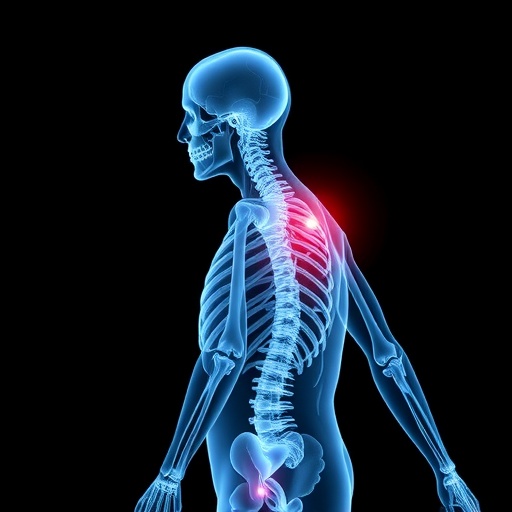
Recent research has unveiled a crucial link between hyperkyphosis and diminished physical function in geriatric outpatient populations characterized by frailty. The study, conducted by a team of experts led by Koelé et al., highlights the pressing need to address postural deformities as a significant factor that impacts overall health among older adults. As the prevalence of hyperkyphosis increases with age, understanding its implications for mobility and everyday functioning becomes paramount in geriatric care.
Hyperkyphosis, often referred to as “dowager’s hump,” is a condition where an individual displays an excessive curvature of the thoracic spine. This abnormal postural alignment can lead to a host of complications, including a decline in physical capabilities and increased risk of falls. The study focused on geriatric outpatients, a demographic frequently susceptible to frailty, which encompasses not just physical weakness but also cognitive and social declines. In essence, hyperkyphosis acts as a physical manifestation of broader systemic vulnerabilities often seen in older populations.
The consequences of hyperkyphosis are multifaceted, stretching beyond mere aesthetics. In many instances, individuals with this condition report limitations in their daily activities, challenging their independence. This study employed rigorous methodologies to quantify the relationship between the degree of hyperkyphosis and various physical performance measures, such as balance, walking speed, and the ability to rise from a seated position. The results yielded substantial evidence asserting that as the angle of spinal curvature increases, there is a corresponding decrease in physical functionality.
By leveraging validated assessment tools, such as the Timed Up and Go test and gait speed measurements, the researchers effectively illustrated the tangible impacts of postural changes on mobility. One of the key findings underscored the vulnerability of frail patients, who are often diminished in their muscular strength and resilience. With hyperkyphosis compounding these pre-existing vulnerabilities, the potential for significant health declines becomes alarmingly high, raising red flags for caregivers and clinicians alike.
Interestingly, the effects of hyperkyphosis aren’t merely limited to physical decline; they also influence psychosocial well-being. Participants in the study reported feelings of reduced confidence and increased anxiety regarding their mobility challenges. This psychological dimension is pivotal, as the fear of falling can incite a cycle of inactivity, thereby exacerbating physical deterioration. With this knowledge, healthcare providers are urged to integrate comprehensive care strategies that encompass both physical and mental health aspects in managing geriatric patients exhibiting hyperkyphosis.
One of the most concerning aspects of hyperkyphosis is its potential role in increasing morbidity and mortality rates among older adults. As the condition progresses, associated risks such as respiratory complications and pressure sores come into sharp focus. These findings warrant an urgent reevaluation of how we approach geriatric care, particularly in frail outpatients. Early intervention focused on corrective strategies and rehabilitative exercises could be instrumental in managing those at risk for hyperkyphosis, thereby preserving not only physical function but overall health and quality of life.
The research team emphasized that awareness and education are crucial for healthcare professionals dealing with older patients. Training programs that highlight the signs of hyperkyphosis and its associated risks could lead to timely assessments and better outcomes. Furthermore, practitioners should advocate for interdisciplinary approaches that involve physiotherapists and occupational therapists, ensuring that comprehensive care plans are in place.
Community-based initiatives can also play a vital role in addressing the challenges posed by hyperkyphosis in geriatric patients. Implementing programs centered around posture correction, strength training, and flexibility exercises might provide practitioners and older adults with additional tools to combat the effects of aging on spinal health. Such proactive measures could significantly enhance physical capabilities within this vulnerable demographic.
Amidst the multifactorial landscape of frailty in older adults, hyperkyphosis stands out as a clear, tangible target for intervention. The study offers not just a diagnosis but a call to action for healthcare systems to prioritize the management of postural deformities. Addressing hyperkyphosis could serve as a validation point for broader health interventions, aiming at improving the quality of life for geriatric patients battling frailty.
Furthermore, the implications of this research extend into public health realms, encouraging policymakers to allocate resources towards elder care that integrates physical therapy and posture-related activities. Preventative measures aimed at reducing the incidence of hyperkyphosis might enhance community health initiatives, fostering environments conducive to healthy aging.
In conclusion, the study by Koelé et al. illuminates a pivotal association between hyperkyphosis and physical function among frail geriatric outpatients. Through their comprehensive research, the authors not only advance the conversation on spinal health but also present a persuasive argument for more forthcoming and collaborative healthcare strategies. As we continue to navigate the challenges of an aging population, such insights will undoubtedly prove invaluable in promoting the health and well-being of older adults.
The findings underscore the importance of prioritizing spinal health as part of an integrated approach to elder care. As the healthcare landscape evolves, addressing hyperkyphosis could emerge as a key intervention strategy that impacts not just physical mobility but also the holistic well-being of older individuals.
This exploration into the relationship between hyperkyphosis and frailty is a timely reminder of how critical it is to approach geriatric care with a nuanced understanding of how underlying conditions can drastically affect quality of life. Moving forward, a concerted emphasis on research, education, and community engagement will be critical to combat the pervasive effects of this condition among older adults.
Ultimately, the study serves as both an informative piece and a rallying cry. It encourages stakeholders in healthcare to unify efforts and implement changes that can dramatically improve the lives of those living with hyperkyphosis and frailty, fostering an environment that nurtures longevity and vitality in our aging population.
Koelé, M.C., van der Velde, N., van Campen, J.P. et al. The association between hyperkyphosis and physical function in geriatric outpatients with frailty.
Arch Osteoporos 21, 21 (2026). https://doi.org/10.1007/s11657-025-01619-z
Cite Scienmag News
Beatrice Stafford. (January 17, 2026). Hyperkyphosis Impacts Physical Function in Frail Seniors. Scienmag. https://scienmag.com/hyperkyphosis-impacts-physical-function-in-frail-seniors/
Beatrice Stafford. "Hyperkyphosis Impacts Physical Function in Frail Seniors." Scienmag, 17 January 2026, https://scienmag.com/hyperkyphosis-impacts-physical-function-in-frail-seniors/. Accessed 6 September 2026.
Beatrice Stafford. "Hyperkyphosis Impacts Physical Function in Frail Seniors." Scienmag. January 17, 2026. https://scienmag.com/hyperkyphosis-impacts-physical-function-in-frail-seniors/


