


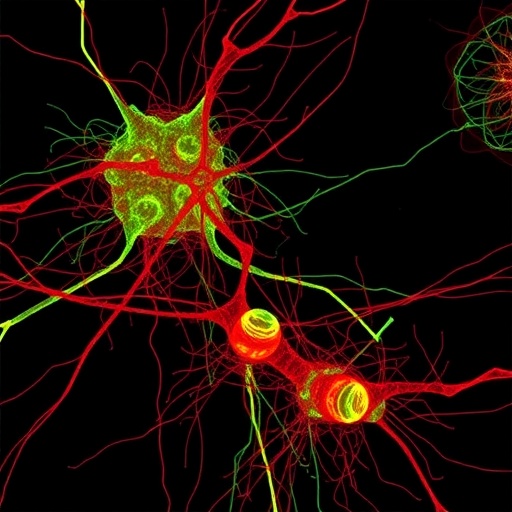
In a groundbreaking study set to reshape our understanding of schizophrenia, researchers have uncovered hyperdynamic microtubule-based structural changes in neuronal-like cells derived from monocytes of patients affected by this complex psychiatric disorder. The research, conducted by Bellon, Cortez-Resendiz, Forrest, and colleagues, provides novel cellular insights that challenge traditional notions about the neurobiological underpinnings of schizophrenia. This discovery could pave the way for innovative therapeutic strategies targeting microtubular dynamics within the brain.
Microtubules, vital components of the cytoskeleton, are known to regulate a plethora of neuronal functions, from intracellular transport to the maintenance of the cell’s architecture. In the context of neural cells, microtubules facilitate synaptic connectivity, neuron growth, and plasticity. The study meticulously examined Monocyte-Derived-Neuronal-like cells (MDNCs), a unique in vitro system engineered by reprogramming peripheral monocytes into cells that exhibit neuronal features. This approach circumvented the ethical and practical challenges of accessing living neurons from patients, providing a compelling platform to unveil cellular anomalies present in psychiatric conditions.
One of the critical revelations from this study lies in the observed hyperdynamic nature of microtubules within MDNCs obtained from schizophrenia patients. Unlike their counterparts from healthy individuals, these neuronal-like cells exhibited an aberrantly elevated rate of microtubule assembly and disassembly. Such hyperdynamic microtubule behavior suggests an unstable cytoskeletal framework, potentially impacting neuronal connectivity and consequently, cognitive function.
The implications of these findings extend to the understanding of synaptic dysfunction, increasingly recognized as a core feature of schizophrenia. Microtubules not only provide structural scaffolding but also direct the trafficking of neurotransmitter vesicles and receptor proteins essential for synaptic transmission. Hyperdynamic microtubule activity might disrupt these processes, contributing to the synaptic deficits observed clinically in schizophrenia, manifesting as hallucinations, delusions, and impaired executive function.
This research also underscores the significance of cytoskeletal dynamics in psychiatric pathology, a domain traditionally overshadowed by neurotransmitter-centric hypotheses. By shifting focus to the structural cellular environment, the study promotes the idea that subtle biophysical anomalies at the microtubule level can cascade into profound neurocognitive impairments. It invites a paradigm shift in schizophrenia research, encouraging exploration beyond synaptic chemistry into the realm of cellular architecture.
Furthermore, the utilization of MDNCs opens avenues for patient-specific modeling of schizophrenia at a cellular level. This personalized approach allows the exploration of individual biological variability and responses to pharmacological intervention. It raises exciting possibilities for tailored therapies aimed at normalizing microtubule dynamics, thereby alleviating disease symptoms or altering its trajectory.
In technical terms, the study employed advanced live-cell imaging techniques coupled with fluorescent tagging of tubulin proteins to quantify microtubule dynamics precisely. The team reported significant alterations in growth rates, catastrophe frequency (transition from growth to shrinkage), and rescue frequency (return from shrinkage to growth) when comparing schizophrenia-derived MDNCs to control cells. These parameters are instrumental in maintaining the delicate balance required for neuronal cell function.
Complementing these observations, proteomic analyses hinted at dysregulation of microtubule-associated proteins (MAPs) in schizophrenia-derived cells. MAPs, which stabilize microtubules and regulate their interactions with other cytoskeletal elements, appeared to be differentially expressed or post-translationally modified. This dysfunction could mechanistically underpin the abnormal dynamics seen in patient-derived cells.
The study also speculated on potential upstream causes of microtubule hyperdynamics, including oxidative stress and inflammatory pathways, both implicated in schizophrenia pathophysiology. Chronic cellular stress might weaken microtubule stability by modifying tubulin or associated proteins, contributing to the observed hyperdynamic state. Therapeutic interventions targeting these pathways could, therefore, indirectly restore cytoskeletal integrity.
Importantly, these results offer a cellular basis for observed neuroanatomical changes in schizophrenia, such as reduced dendritic spine density and cortical thinning. Microtubule instability can impair neurite outgrowth and synapse formation, providing a plausible link between molecular alterations and macroscopic brain abnormalities. This connection enhances the translational relevance of the findings.
The study’s multidisciplinary approach, combining neurobiology, cell biology, and psychiatry, exemplifies the integration required to tackle complex psychiatric disorders. It challenges researchers and clinicians alike to reconsider the cellular framework when devising diagnostic markers and treatment strategies. Such integrative efforts will be crucial for advancing schizophrenia therapeutics.
Moreover, the findings fuel the debate about the neurodevelopmental versus neurodegenerative nature of schizophrenia. Microtubule dynamics are critical during brain development for neuron migration and circuit formation. Aberrations in these processes could predispose individuals to schizophrenia, supporting a developmental hypothesis grounded in cytoskeletal biology.
Looking ahead, the study encourages replication and extension of these findings using in vivo models and brain organoids derived from induced pluripotent stem cells. These models could validate the physiological relevance of microtubule hyperdynamics and test candidate drugs aimed at stabilizing microtubule behavior. Such translational research bridges the gap from bench to bedside, promising impactful clinical applications.
This paradigm-shifting research not only enriches the fundamental understanding of schizophrenia but also exemplifies how cutting-edge cellular models can unravel disease complexity. As the scientific community digests these insights, the prospect of targeting the cytoskeleton for neuropsychiatric intervention appears more tangible than ever. The study heralds a future where psychiatric disorders may be approached with the same cellular precision as other medical conditions.
The research published in Schizophrenia journal presents compelling evidence that cellular microtubule dynamics are a vital component of schizophrenia pathophysiology. By moving beyond neurotransmitter-focused views, it opens novel avenues for mechanistic research and innovative treatments. The microtubule cytoskeleton, long regarded primarily as structural, is emerging as a dynamic regulator with profound implications for mental health.
As this new knowledge permeates the neuroscience community, it promises to inspire a wave of research dedicated to cytoskeletal targets, potentially revolutionizing therapeutic paradigms for schizophrenia and related disorders. The convergence of technology, innovative cellular models, and clinical insight showcased in this study marks a milestone in psychiatric research, illuminating paths towards improved outcomes for millions affected worldwide.
Cite Scienmag News
Courtney Benton. (April 30, 2026). Hyperdynamic Microtubules in Neuronal Cells from Schizophrenia. Scienmag. https://scienmag.com/hyperdynamic-microtubules-in-neuronal-cells-from-schizophrenia/
Courtney Benton. "Hyperdynamic Microtubules in Neuronal Cells from Schizophrenia." Scienmag, 30 April 2026, https://scienmag.com/hyperdynamic-microtubules-in-neuronal-cells-from-schizophrenia/. Accessed 5 September 2026.
Courtney Benton. "Hyperdynamic Microtubules in Neuronal Cells from Schizophrenia." Scienmag. April 30, 2026. https://scienmag.com/hyperdynamic-microtubules-in-neuronal-cells-from-schizophrenia/


