


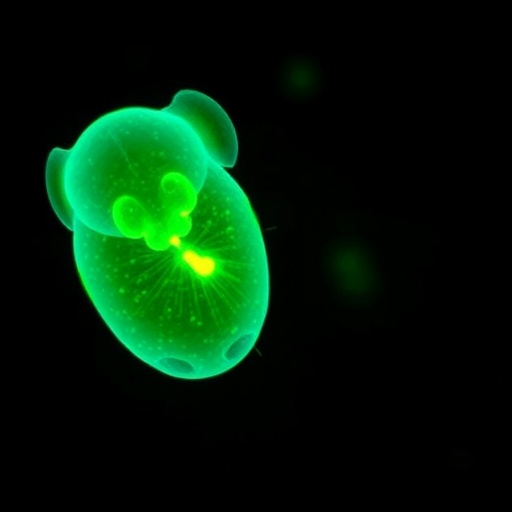
A hidden mechanical failure inside the earliest stages of life may help explain why fertility declines so sharply as females enter their mid-30s. A study published in Nature Cell Biology reports that embryos from reproductively aged female mice are not simply less viable in a general sense. Instead, they possess a specific physical defect that interferes with implantation: their outer cells contract too strongly, making the embryo unusually tense and resistant to the shape changes required to attach to the uterus. The finding places embryo mechanics at the center of reproductive ageing and suggests that the ability of an embryo to physically interact with maternal tissue may be as important as its genetic or metabolic condition.
Implantation is one of the most consequential transitions in embryonic development. Before implantation, the early embryo forms a hollow structure called a blastocyst. Its external layer, known as the trophectoderm, later contributes to the placenta and is responsible for contacting and invading the uterine lining. For implantation to succeed, the blastocyst must expand, attach to the uterine surface and spread across it. These actions depend on coordinated forces generated by cells within the trophectoderm. The new research indicates that reproductive ageing disrupts this balance by driving excessive contractility in these outer epithelial cells.
Cellular contractility is generated largely by the actomyosin cytoskeleton, a network composed of actin filaments and myosin motor proteins. Myosin pulls on actin, allowing cells to change shape, generate tension and remodel their connections with neighboring cells. This machinery is essential during development, wound healing and tissue organization. But the researchers found that in embryos from aged females, contractile activity in the trophectoderm becomes excessive. Rather than behaving as a flexible surface capable of spreading, the blastocyst behaves more like a tightly tensioned structure. Its outer tissue becomes mechanically stiffer in behavior, less able to deform and less prepared to establish the broad contact needed for implantation.
The team used mouse models to connect this physical abnormality directly to implantation failure. Their experiments showed that increased trophectoderm contractility raises two key material properties of the blastocyst: surface tension and viscosity. Surface tension describes the tendency of a tissue boundary to minimize its exposed area, while viscosity reflects how readily a material flows or changes shape over time. A blastocyst with elevated surface tension tends to maintain a compact, rounded form. If its tissue is also more viscous, it cannot rapidly reorganize when it encounters the uterine lining. Together, these properties hinder the spreading behavior that normally helps the embryo secure implantation.
The distinction is important because it moves the explanation beyond the idea that aged embryos simply fail due to accumulated molecular damage. Embryos from older females may carry a range of age-associated abnormalities, but the study identifies a particular mechanical pathway that is both measurable and functionally decisive. Elevated contractility was not merely correlated with poor implantation. According to the experiments, it was necessary for the age-associated defect and sufficient to reproduce the failure pattern. In other words, manipulating contractile behavior could alter implantation competence, providing evidence that the mechanical state of the embryo itself is a driving factor rather than a passive consequence of ageing.
This finding also helps explain why implantation can fail even when an embryo appears morphologically normal under a microscope. Standard embryo assessment commonly focuses on visible features such as blastocyst expansion, the appearance of the inner cell mass and the organization of the trophectoderm. These characteristics can provide useful information, but they do not necessarily reveal how the tissue behaves physically. Two embryos may look similarly developed while differing substantially in their ability to generate, absorb or release mechanical forces. The researchers therefore searched for non-invasive imaging signatures that could indirectly reveal embryo mechanics without disrupting development.
Those signatures were associated with the embryo’s likelihood of successful implantation in both young and aged groups. Although the study does not turn mechanical imaging into an immediate clinical test, the results point toward a new class of embryo-selection tools. Instead of relying only on static morphology, future assessment could incorporate dynamic information, such as how rapidly a blastocyst expands, relaxes, changes shape or spreads. These movements may serve as visible consequences of underlying tissue tension and viscosity. A non-invasive mechanical profile could eventually help distinguish embryos that possess implantation competence from those that appear healthy but are mechanically impaired.
The researchers also examined human embryos and analyzed clinical datasets from in vitro fertilization treatment. Their findings indicate that the age-associated mechanical changes observed in mice are conserved in humans and correlate with implantation potential. This cross-species connection strengthens the significance of the work, while also highlighting the complexity of translating laboratory measurements into reproductive medicine. Human implantation depends on many interacting factors, including uterine receptivity, embryo chromosome status, hormonal timing and immune communication. Mechanical behavior would not replace these considerations, but it may represent a missing layer of information that helps explain why some embryos fail after transfer despite favorable conventional assessments.
The study raises the possibility that reproductive longevity is influenced not only by the number and quality of eggs, but also by how the resulting embryos organize themselves as physical tissues. If excessive contractility is a modifiable feature, interventions aimed at restoring an appropriate balance of cytoskeletal forces could eventually become a subject of investigation. At present, however, the work is primarily mechanistic: it identifies a defect and demonstrates its importance in mouse models, while human observations provide supporting evidence rather than a ready-made therapy. The safest immediate implication is that embryo mechanics deserves closer attention in both basic developmental biology and fertility research.
By linking reproductive ageing to the physical behavior of the trophectoderm, the study offers a striking new view of implantation failure. The embryo is not merely a package of genetic information waiting to be accepted by the uterus. It is an active, dynamic tissue that must generate the correct forces, adopt the correct shape and flow across the maternal surface at the correct time. When its outer cells contract too strongly, that choreography breaks down. The result is an embryo that may reach the blastocyst stage yet remain unable to spread and establish a stable connection. Mechanical competence, the research suggests, could become a crucial indicator of reproductive potential and a defining factor in the biology of fertility decline.
Cite Scienmag News
Drew Townsend. (August 25, 2026). Hypercontractile embryos from older female mice experience implantation failure. Scienmag. https://scienmag.com/hypercontractile-embryos-from-older-female-mice-experience-implantation-failure/
Drew Townsend. "Hypercontractile embryos from older female mice experience implantation failure." Scienmag, 25 August 2026, https://scienmag.com/hypercontractile-embryos-from-older-female-mice-experience-implantation-failure/. Accessed 4 September 2026.
Drew Townsend. "Hypercontractile embryos from older female mice experience implantation failure." Scienmag. August 25, 2026. https://scienmag.com/hypercontractile-embryos-from-older-female-mice-experience-implantation-failure/


