


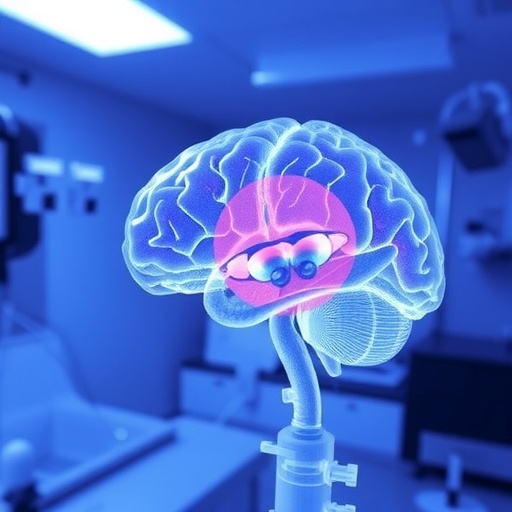
In a groundbreaking exploration into neuroprotection and therapeutic intervention, researchers have unveiled compelling evidence supporting the efficacy of hyperbaric oxygen therapy (HBOT) in ameliorating vascular cognitive impairment (VCI) using a hypoperfusion mouse model. The study’s detailed mechanistic insights focus on the miR-137-3p/TRAF3 signaling pathway, shedding new light on molecular cascades governing cognitive decline associated with cerebral hypoperfusion. This work, recently published in Translational Psychiatry, marks a significant leap forward in understanding how targeted oxygen therapies might revolutionize treatment approaches for neurovascular disorders.
Vascular cognitive impairment, characterized by deficits in memory, attention, and executive function, occurs as a consequence of chronic cerebral hypoperfusion. Hypoperfusion leads to progressive neuronal damage, increased neuroinflammation, and subsequent cognitive deterioration. Traditional treatment strategies have largely been symptomatic, with limited success in modifying underlying pathophysiology. By leveraging HBOT—a method established for enhancing tissue oxygen saturation—scientists have investigated its potential to restore cerebral microenvironment homeostasis and counteract VCI progression at a molecular level.
Hyperbaric oxygen therapy functions by delivering oxygen at pressures exceeding atmospheric levels, significantly increasing plasma oxygen content and fostering elevated tissue oxygenation. This phenomenon is crucial for neurorepair mechanisms in ischemic and hypoxic brain conditions. In the present research, the therapeutic regimen consisted of controlled HBOT sessions applied to a well-validated mouse model of VCI induced by bilateral common carotid artery stenosis, simulating prolonged cerebral hypoperfusion. This design ensures translational relevance, as it mirrors vascular contributions to cognitive dysfunction observed clinically.
Central to the study’s novel findings is the modulation of microRNA-137-3p (miR-137-3p), a small non-coding RNA molecule known to regulate gene expression post-transcriptionally. The researchers discovered that HBOT significantly upregulated miR-137-3p levels in the hippocampus and cortex—regions critically involved in learning and memory. This upregulation was linked to downstream inhibition of tumor necrosis factor receptor-associated factor 3 (TRAF3), a pivotal adaptor protein that orchestrates inflammatory signaling pathways, including NF-κB and MAPK cascades, thereby influencing neuroinflammation and cell survival.
Analyzing neuroinflammatory markers, the team reported a robust decrease in pro-inflammatory cytokines such as TNF-α and IL-1β post-HBOT, correlating with reduced microglial activation. Microglia, the brain’s resident immune cells, are known to exacerbate neuronal injury when chronically activated. This inflammatory suppression via the miR-137-3p/TRAF3 axis highlights a critical neuroprotective mechanism by which HBOT mitigates secondary damage resulting from hypoperfusion-induced inflammation.
Notably, behavioral assessments in the treated mice revealed pronounced improvements in spatial memory and cognitive flexibility, as evaluated by the Morris Water Maze and Y-maze tests. These behavioral outcomes provide functional validation for the molecular alterations observed, firmly positioning HBOT as a potential disease-modifying intervention rather than merely symptomatic relief. The cognitive benefits evidenced in the mouse model evoke optimism for clinical adaptability in human populations suffering from vascular contributions to cognitive impairment and dementia (VCID).
Further histopathological examination elucidated that HBOT promoted neuronal survival and synaptic integrity. Quantitative analyses displayed increased expression of synaptic proteins, such as PSD-95 and synaptophysin, alongside attenuation of apoptotic markers like cleaved caspase-3 in treated animals. Preservation of synaptic connectivity is essential for maintaining neuronal circuitry that underpins cognition, reinforcing the therapeutic promise of HBOT in neurodegenerative diseases marked by synaptic loss.
The translational implications of this study resonate profoundly within the neuroscience and clinical communities. Current pharmacological interventions for VCI lack robust efficacy and are often accompanied by adverse effects. In contrast, HBOT is emerging as a non-invasive strategy with the potential to target multiple pathogenic facets of vascular cognitive impairment. Its capacity to modulate microRNA expression and dampen neuroinflammation introduces a paradigm shift in therapeutic design, paving the way for next-generation precision medicine.
From a mechanistic perspective, the delineation of the miR-137-3p/TRAF3 pathway unravels new targets for drug development. MicroRNAs are attractive candidates for therapeutic manipulation due to their fine-tuning capabilities of gene networks. Understanding the intricacies of their regulation by oxygen levels and inflammatory signals could inspire novel combinatorial treatments that synergize with HBOT, amplifying neuroprotective outcomes.
Equally, the study ignites curiosity about the duration, dosage, and timing parameters of HBOT to maximize efficacy and minimize possible oxygen toxicity. Optimization of these protocols in preclinical models can accelerate forward translation into human trials testing HBOT for mild cognitive impairment (MCI) and early-stage dementia attributed to vascular pathology. Safety profiles of HBOT are well-documented in other contexts, supporting its feasibility as a viable clinical intervention for neurological conditions.
The intricate balance between oxygen supply, oxidative stress, and cellular metabolism forms a biochemical milieu crucial to brain health. By enhancing oxygen availability, HBOT may recalibrate this balance, restoring mitochondrial function and energy production impaired in chronic hypoperfusion states. This metabolic restoration likely complements the anti-inflammatory and gene regulatory effects observed, creating a multidimensional therapeutic landscape.
Moreover, the research underlines the importance of mitochondrial dynamics and energy homeostasis linked to microRNA regulatory networks. Such insights expand the conceptualization of neuroprotection beyond classical inflammatory suppression to encompass broader metabolic resilience mechanisms orchestrated at the epigenetic and post-transcriptional levels.
In summary, the investigation conducted by Yang and colleagues compellingly argues for hyperbaric oxygen therapy as a formidable intervention against vascular cognitive impairment through molecular modulation of the miR-137-3p/TRAF3 pathway. The synthesis of neuroinflammatory control, synaptic preservation, and functional cognitive improvements underscores a holistic neuroprotective strategy with transformative clinical potential.
Future research should aim to explore synergistic effects between HBOT and emerging neurorestorative agents, potentially harnessing multimodal approaches for combating VCI. Longitudinal studies assessing sustained cognitive improvements and quality of life metrics will be crucial to cement HBOT’s role in standard care protocols. Additionally, investigations into patient stratification biomarkers may help personalize therapy to those most likely to benefit from oxygen-based modulation of microRNA pathways.
The findings herald a new chapter in neurovascular therapeutics, where oxygen—a fundamental element—proves to be a powerful modulator of gene expression and inflammatory circuits, capable of rewiring the brain’s response to injury. As the global burden of vascular dementia rises with aging populations, such innovative treatments offer a beacon of hope for millions affected by cognitive decline worldwide.
Cite Scienmag News
Glenn Wilkins. (November 29, 2025). Hyperbaric Oxygen Protects Cognition via miR-137-3p Pathway. Scienmag. https://scienmag.com/hyperbaric-oxygen-protects-cognition-via-mir-137-3p-pathway/
Glenn Wilkins. "Hyperbaric Oxygen Protects Cognition via miR-137-3p Pathway." Scienmag, 29 November 2025, https://scienmag.com/hyperbaric-oxygen-protects-cognition-via-mir-137-3p-pathway/. Accessed 3 September 2026.
Glenn Wilkins. "Hyperbaric Oxygen Protects Cognition via miR-137-3p Pathway." Scienmag. November 29, 2025. https://scienmag.com/hyperbaric-oxygen-protects-cognition-via-mir-137-3p-pathway/


