


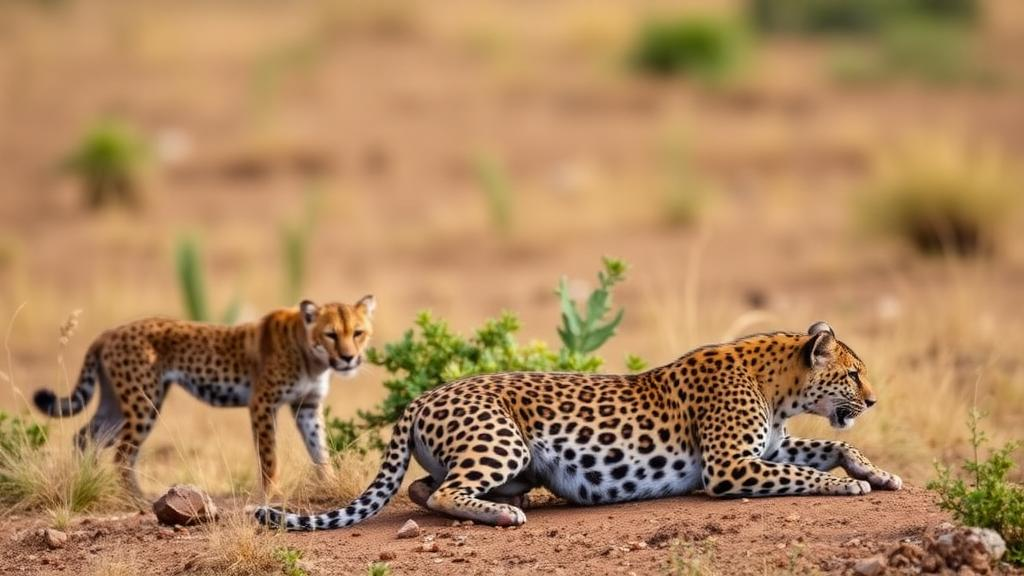
In the green highlands and dry lowlands surrounding the Sirso forest of southern Ethiopia, the nightly routine of penning livestock has become a high-stakes contest between farming families and some of Africa’s most adaptable predators. A new study published in the journal BioRisk has quantified that contest in striking detail, documenting nearly 350 conflict incidents over five years, more than 1,200 animals killed, and economic losses approaching US$118,000 in a landscape where most households survive on subsistence farming. The findings offer one of the most comprehensive portraits yet of how human–carnivore conflict unfolds outside protected areas, where the vast majority of such encounters actually occur.
The research team surveyed 343 households across six villages distributed through three agro-ecological zones—highland, midland, and lowland—that ring the 35-square-kilometer community-conserved Sirso moist evergreen Afromontane forest. Using stratified and systematic random sampling, the researchers interviewed household heads for roughly an hour each, supplementing the questionnaire data with key informant interviews involving village leaders, elders, and agricultural experts. The survey covered the five-year period from 2020 to 2024 and captured the full spectrum of conflict: livestock depredation, attacks on people, disease transmission, and the retaliatory measures farmers take in response.
The headline numbers are sobering. Nearly 43 percent of respondents reported experiencing at least one conflict incident, and among those affected, roughly 62 percent suffered multiple events. Livestock depredation dominated the conflict profile, accounting for 74.5 percent of incidents, while attacks on humans made up 19.2 percent. In total, 1,280 head of livestock were lost—about 256 animals every year. Small stock bore the brunt: poultry made up 39.7 percent of losses and sheep another 31.3 percent. That poultry topped the list is notable, since most Ethiopian studies have identified sheep and goats as the primary targets, a discrepancy the researchers attribute to the sheer abundance and vulnerability of chickens kept around homesteads in the study area.
Spotted hyenas emerged as the single most destructive predator, responsible for 25.3 percent of all livestock losses, followed by leopards at 16.3 percent and common jackals at 12.2 percent. Cheetahs, marsh mongooses, civets, white-tailed mongooses, slender mongooses, and Abyssinian genets rounded out the cast of culprits. The hyenas’ dominance reflects what ecologists have long observed about the species: spotted hyenas are ecological generalists with high population densities, territorial behavior, and a remarkable tolerance for human-modified landscapes. In Sirso, they preyed on virtually every livestock type except poultry, demonstrating the flexible foraging strategy that has allowed the species to thrive even as other large carnivores retreat into shrinking habitat.
The spatial and temporal patterns of conflict tell a story about where and when prevention fails. Fully 65.7 percent of depredation incidents occurred in the lowland zone, where livestock ownership is also concentrated, and 70.8 percent of attacks happened within homesteads rather than in the forest itself. Nighttime accounted for 65.5 percent of incidents, and the wet season for 77.3 percent. The researchers link these patterns to weak infrastructure: poorly constructed enclosures, inadequate nighttime guarding, and the seasonal practice of grazing livestock in crop fields where dense vegetation gives predators cover. During the rains, herding duties often fall to inexperienced children, further raising livestock vulnerability, while wild prey disperse and predators roam wider in search of food.
The economic accounting reveals a stark asymmetry between which animals are killed most often and which losses hurt most. Although poultry were the most frequently depredated species, their low market value meant they accounted for just US$85.6 in total losses. Cattle, by contrast, generated the greatest economic impact at US$80,580.1 over the five-year period, followed by horses at US$9,826.7. Spotted hyenas caused 35.4 percent of the total financial damage—roughly US$41,830.6—with leopards close behind at 35 percent and cheetahs at 25.5 percent. The average household lost US$344.5 over five years, a substantial sum in a region where two-thirds of respondents fall into the low-income category, defined as earning less than 30,000 Ethiopian birr annually.
Compensation, where it exists at all, is failing the community. Nearly 97 percent of affected livestock owners reported receiving no compensation for carnivore-related losses, a gap the study identifies as a key driver of intolerance. The consequences are visible in the retaliatory toll: 110 carnivores were killed during the study period, with spotted hyenas the most frequent targets at 45.45 percent of kills, followed by jackals and marsh mongooses. Hunting was the most common removal method, used in nearly 62 percent of cases, with trapping accounting for another 32 percent. A majority of households—58.6 percent—reported lethal control as their response to depredation, a preference consistent with findings from other Ethiopian landscapes such as Chebera-Churchura National Park and the Wabe Valley.
Yet the study also identified a remarkably simple and effective defense. Households that kept guarding dogs were 66.5 percent less likely to experience livestock depredation than those without dogs, the strongest and most statistically significant predictor in the researchers’ generalized linear models. Because most attacks occur at night inside livestock enclosures, the vigilance of a dog provides early detection precisely when it matters most. Economic status and the location of predation also influenced risk, though neither reached conventional statistical significance; poorer households tended to suffer more losses, likely due to weaker fences, absent corrals, and fewer buildings. Only about a third of households currently own guard dogs, suggesting considerable room for expansion of this low-cost intervention.
The preventive toolkit in Sirso remains traditional. Physical barriers such as fences and enclosures were the most commonly reported strategy at 40.4 percent of households, followed by active guarding at 37.2 percent and fear-inducing stimuli at 21.9 percent. Chemical repellents were almost nonexistent. Interestingly, when asked which measures actually worked, respondents ranked active guarding first, citing it as the most effective approach in 51.9 percent of cases. The researchers argue that upgrading enclosure quality—building tin-roofed kraals with durable timber—combined with enhanced nighttime protection and wider use of trained guard dogs could substantially reduce losses without requiring lethal control.
The broader implications extend beyond Sirso. Carnivores deliver real ecological benefits, from regulating prey populations and zoonotic disease to supporting biodiversity and human well-being, yet these services are invisible to a farmer counting dead sheep. In developing countries, livestock losses can exceed half of annual household income, corroding local support for conservation and fueling a cycle of killing that destabilizes carnivore populations. The study’s authors call for context-specific mitigation strategies, improved livestock husbandry, and community-based education programs, along with fair compensation schemes and sustainable financing drawn from ecotourism revenues. As human encroachment continues to shrink the habitat around the Sirso forest—an island ecosystem surrounded by farmland and settlements—the choice is stark: invest in coexistence now, or watch both rural livelihoods and carnivore populations pay the price.
Subject of Research: Human–carnivore conflict, livestock depredation, and mitigation strategies in the human-dominated Sirso landscape of southern Ethiopia
Article Title: Human–carnivore conflict in the human-dominated Sirso landscape, southern Ethiopia
Article References: Masne, M., Takele, S., & Gebo, B. (2026). Human–carnivore conflict in the human-dominated Sirso landscape, southern Ethiopia. BioRisk, 24, 147-167. https://doi.org/10.3897/biorisk.24.185920
Image Credits: AI Generated
DOI: 10.3897/biorisk.24.185920
Keywords: human-carnivore conflict, spotted hyena, livestock depredation, Ethiopia, Sirso forest, retaliatory killing, guarding dogs, leopard, wildlife conservation, economic loss, human-wildlife coexistence, agro-ecology
Cite Scienmag News
Margaret Porter. (October 15, 2026). Hyenas and leopards cost Ethiopian farmers $118,000 in five years of conflict. Scienmag. https://scienmag.com/hyenas-and-leopards-cost-ethiopian-farmers-118000-in-five-years-of-conflict/
Margaret Porter. "Hyenas and leopards cost Ethiopian farmers $118,000 in five years of conflict." Scienmag, 15 October 2026, https://scienmag.com/hyenas-and-leopards-cost-ethiopian-farmers-118000-in-five-years-of-conflict/. Accessed 15 October 2026.
Margaret Porter. "Hyenas and leopards cost Ethiopian farmers $118,000 in five years of conflict." Scienmag. October 15, 2026. https://scienmag.com/hyenas-and-leopards-cost-ethiopian-farmers-118000-in-five-years-of-conflict/


