


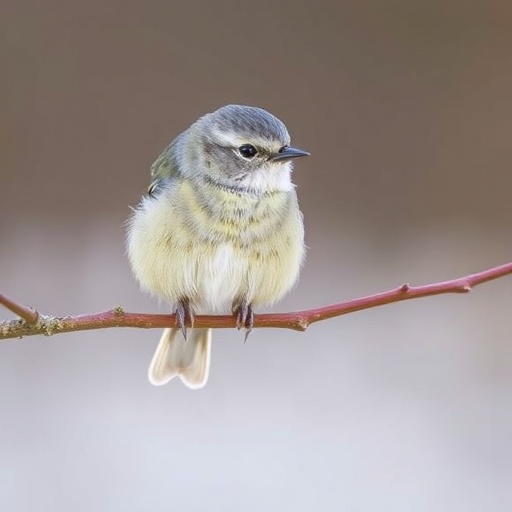
In a groundbreaking study published in Nature Climate Change, researchers have unveiled how hybridization among mountainous bird species can play a pivotal role in mitigating the looming risks posed by climate change. As global temperatures continue to rise and ecosystems shift rapidly, biodiversity faces unprecedented challenges. One emerging beacon of hope, according to this study, lies in the natural genetic exchanges or interspecific introgression that occur when closely related species interbreed, fostering novel variation that can enhance adaptability to shifting climates.
The research centers on mountainous avian communities where geographic isolation and ecological diversity have historically driven species divergence, creating distinct ecological niches adapted to narrow environmental conditions. Yet, despite these divergences, zones where species come into contact remain hubs of gene flow. This gene flow, replenished through ongoing hybridization, introduces valuable genetic variants capable of fortifying populations against future climatic stresses—a process illuminated with robust genomic and ecological data in this study.
By integrating advanced population genomic analyses with ecological modeling, the team captured the nuanced interplay of evolutionary forces shaping these birds’ genetic landscapes. Their approach enabled the mapping of genetic diversity not just in spatial terms but in relation to climatic variables, uncovering how hybrid individuals harbor combinations of alleles that provide a buffer against environmental fluctuations predicted under future climate scenarios. This finding challenges traditional conservation paradigms that often treat hybrid zones as problematic, suggesting instead that such zones are reservoirs of resilience.
One of the core innovations of this work is the use of genetic offset modeling—a computational strategy that quantifies the discrepancy between existing genetic variants and those optimal for future climates. Through these projections, the authors demonstrated that populations engaged in interspecific gene flow exhibited markedly lower genetic offset values, implying reduced vulnerability. In contrast, populations without hybrid influences faced steeper adaptive challenges, underscoring the vital importance of maintaining connectivity and gene exchange pathways.
This insight into gene flow’s role in climate resilience underscores the adaptive potential harbored within second-generation hybrids and backcrossed individuals. Their genomes harbor alleles derived from both parent species, representing a genetic toolkit rich in adaptive potential. Such genomic mosaics enable responses to diverse environmental stressors, ranging from temperature variability to changes in precipitation patterns, elevating their prospects for persistence amidst climatic upheavals.
Importantly, the study draws attention to the spatial distribution of these effects. Mountainous topography creates mosaics of isolated and interconnected populations where gene flow is unevenly distributed. Contact zones act as genetic bridges—keeping species “in conversation” with one another and enabling the continuous pulse of introgressed genetic variation. Preserving these natural corridors emerges as a tangible conservation strategy aligned with evolutionary processes rather than solely focusing on species isolation.
The authors also explore the implications of ecological heterogeneity—how microclimatic differences coupled with elevational gradients contribute to population differentiation. Such heterogeneity gives rise to specialized climatic niches, which typically increase species vulnerability. However, the infusion of genetic variants through hybridization can counteract this vulnerability by enhancing the breadth of climatic tolerance, generating what might be described as a genetic armor against rapid environmental change.
At a mechanistic level, examination of gene ontology and adaptive loci revealed a suite of candidate genes tied to climate-relevant traits such as thermoregulation, metabolism, and stress response. Hybrid genomes were enriched in alleles related to these functional pathways, indicating selection’s sculpting of advantageous gene combinations in hybrid populations. This genomic evidence supports the ecological forecasts, knitting together phenotypic and genetic dimensions of adaptation.
From a conservation perspective, these findings disrupt the often-held perception that hybridization threatens species integrity. Instead, interspecific introgression emerges as a natural evolutionary process with pronounced benefits in times of environmental uncertainty. This challenges regulators to rethink management strategies, suggesting that facilitating gene flow in fragmented landscapes may offer a critical buffer for biodiversity facing climate-induced range contractions and habitat alterations.
Moreover, the temporal scope of the projections—spanning approximately 40 generations—provides a meaningful evolutionary context, emphasizing that while climate change unfolds over decades, evolutionary processes can operate over similar timeframes to provide adaptive relief. Such dynamic interplay between climate pressures and genetic exchange underscores the urgency in preserving not just species but the evolutionary processes that empower them.
This study also raises intriguing questions for future research. For instance, how might hybridization dynamics shift in response to increasingly extreme weather patterns and shifting species distributions? Could similar genetic buffering effects be realized in other taxa beyond mountainous birds? And importantly, what role will human-mediated landscape change play in facilitating or hindering these critical gene flow channels?
Technological advancements in genomic sequencing and ecological modeling underpin these breakthroughs, illustrating the power of interdisciplinary integration. By weaving together field ecology, population genetics, and climate science, the research provides an exemplary model of how contemporary science can illuminate the paths forward for biodiversity in a warming world.
As climate change accelerates, understanding and leveraging such natural evolutionary processes could become central pillars of resilience strategies. The study’s revelations encourage a shift from static conservation targets toward dynamic frameworks that embrace hybridization and genetic diversity as tools for adaptation. Such perspectives not only broaden our scientific horizons but also inspire more nuanced policy dialogues blending conservation biology with climate mitigation efforts.
Ultimately, this research offers hope rooted in nature’s own mechanisms. The hybrid birds of mountain ranges, through their genetic exchanges, symbolize how life harnesses complexity and connectivity to endure change. Preserving the permeable boundaries between species—rather than enforcing rigid separations—might be one of the most potent conservation strategies available as humanity seeks to safeguard the planet’s rich tapestry of life against an uncertain climatic future.
Cite Scienmag News
Sloane Callahan. (November 10, 2025). Hybridization Reduces Climate Risks for Mountain Birds. Scienmag. https://scienmag.com/hybridization-reduces-climate-risks-for-mountain-birds/
Sloane Callahan. "Hybridization Reduces Climate Risks for Mountain Birds." Scienmag, 10 November 2025, https://scienmag.com/hybridization-reduces-climate-risks-for-mountain-birds/. Accessed 4 September 2026.
Sloane Callahan. "Hybridization Reduces Climate Risks for Mountain Birds." Scienmag. November 10, 2025. https://scienmag.com/hybridization-reduces-climate-risks-for-mountain-birds/


