


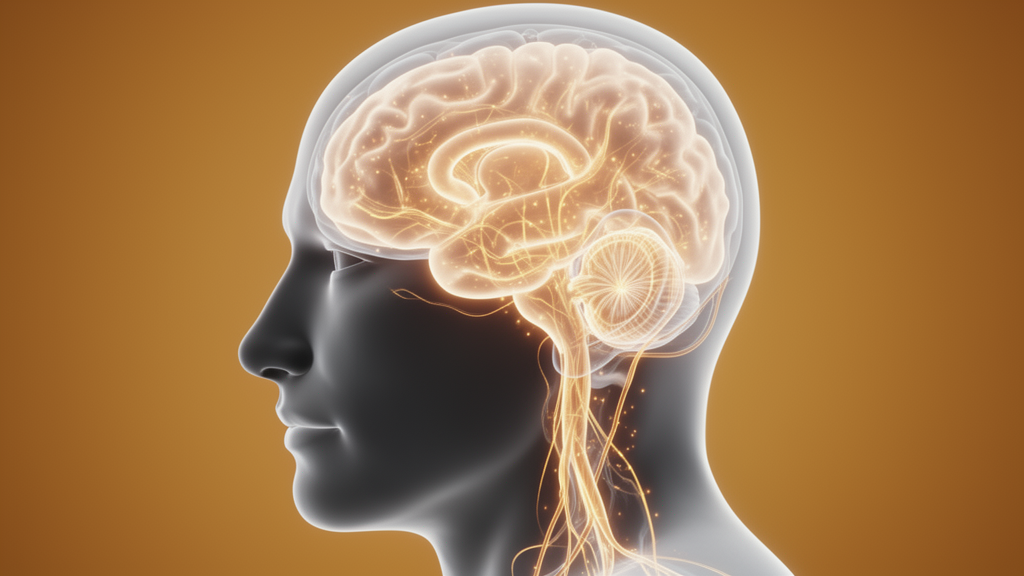
Tinnitus—the perception of ringing, buzzing, or hissing sounds with no external source—affects roughly 10 to 15 percent of the population, yet after decades of research it still lacks a unified mechanistic explanation. A new review published in Frontiers in Audiology and Otology by Patrick Krauss and Achim Schilling traces ten years of development of one of the field’s most provocative ideas: the stochastic resonance model of tinnitus. Rather than treating the condition as a simple malfunction of the auditory system, the model proposes that the ringing many people hear is actually a side effect of the brain’s own sophisticated attempt to hear better.
The conceptual roots of the model reach back long before 2016. Stochastic resonance was first described in physics in the early 1980s, when researchers showed that adding noise to a nonlinear system can paradoxically improve signal transmission. When a weak signal falls below a detection threshold, random fluctuations can push it over that threshold, making the signal detectable when it otherwise would not be. Later work extended this principle to biology, demonstrating that noise-enhanced signal detection occurs in sensory receptors and neural populations. In a striking human demonstration, researchers showed that mild acoustic noise added to subthreshold stimuli could enhance hearing performance, establishing stochastic resonance as a biologically plausible mechanism rather than a physical curiosity.
In 2016, Krauss and colleagues formally applied this principle to tinnitus. Their model proposed that after hearing loss reduces the input reaching the auditory system, internally generated neural noise is adaptively upregulated to restore information transmission. The central conceptual innovation was a reinterpretation of neuronal hyperactivity, the increased spontaneous firing consistently observed at multiple levels of the auditory pathway in tinnitus patients. Where classical frameworks such as central gain and homeostatic plasticity models regard this hyperactivity as pathological overexcitation or an epiphenomenon of compensation, the stochastic resonance model treats it as functional: internally generated noise required for optimal signal detection in nonlinear sensory systems. Tinnitus, in this view, is not the primary failure but the perceptual price of a compensatory process aimed at restoring sensitivity.
The original formulation was implemented as a phenomenological feedback system with three components: a sensory detector representing the cochlear or early auditory stage, an information detector computing the autocorrelation of neural responses, and a noise generator whose output was regulated through feedback. When hearing loss reduced sensory input, output autocorrelation fell, which in turn increased internally generated noise until information transmission was partially restored. Computational simulations confirmed that this adaptive noise regulation improves detection performance under elevated thresholds while simultaneously raising spontaneous activity—the neural correlate of tinnitus within the framework.
Empirical support soon followed from an unexpected direction. The 2016 study analyzed audiometric data from more than 39,000 patients and found that tinnitus patients exhibited improved low-frequency hearing thresholds compared to patients without tinnitus, a pattern consistent with threshold compensation mediated by stochastic resonance. The framework also naturally accounts for tinnitus in people whose standard audiograms appear normal. Hidden hearing loss and cochlear synaptopathy can degrade the fidelity of neural information transmission without measurably affecting audiometric thresholds, and because adaptive stochastic resonance responds to diminished information transfer rather than absolute hearing thresholds, the model predicts compensatory noise upregulation even when conventional tests show nothing wrong.
Perhaps the most compelling experimental bridge comes from ear-plugging studies. When healthy participants wear an earplug for a period of temporary unilateral auditory deprivation, many report transient tinnitus-like phantom percepts during or shortly after the deprivation. Because no lasting peripheral damage occurs, these findings are difficult to explain through permanent cochlear pathology alone. Within the stochastic resonance framework, plugging the ear reduces information transmission, triggering adaptive upregulation of internal neural noise to maintain sensitivity, and the transient phantom sound is the direct perceptual consequence. The studies link chronic tinnitus associated with hearing loss to transient phenomena such as the Zwicker tone, showing that reduced sensory input alone can be sufficient to induce tinnitus-like sensations in otherwise healthy auditory systems.
Between 2017 and 2022, the model matured from a tinnitus-specific hypothesis into a general theory of adaptive sensory processing. A key advance was the demonstration of an adaptive stochastic resonance mechanism that regulates internal noise without requiring knowledge of the input signal, using output autocorrelation as a biologically plausible proxy for information transmission. Crucially, the mechanism proved robust beyond idealized conditions: it works with non-Gaussian noise distributions, aperiodic signals, and biologically realistic soft-threshold systems. The framework also evolved from a single-channel formulation to a multichannel perspective in which frequency-specific pathways operate as partially independent adaptive detectors, providing a mechanistic explanation for why tinnitus is typically frequency-specific and clusters in regions of hearing loss. The concept was extended to cross-modal stochastic resonance, proposing that internally generated or cross-modal neural activity can serve as a functional noise source enhancing sensory processing across modalities.
Computational milestones reinforced the theory’s reach. In deep neural-network simulations of the auditory pathway, simulated hearing loss decreased speech recognition accuracy, but adding an appropriate level of intrinsic noise partially restored performance relative to the impaired condition. The authors are careful to note that this does not constitute evidence for better-than-normal hearing, and it does not contradict findings that cochlear neural degeneration increases cortical internal noise while impairing hearing in background noise. The central constraint is one of regulation: benefits arise only when noise is introduced at an appropriate processing stage and adaptively maintained near an optimum, whereas insufficient, excessive, or dysregulated internal noise degrades neural coding. Such functional benefits may even help explain why some tinnitus patients show less cognitive decline than expected given their degree of hearing loss. Animal work added further support: in 2021, simulated transient hearing loss induced by long-term notched-noise exposure improved frequency-specific auditory sensitivity while simultaneously eliciting tinnitus-like phantom percepts, exactly the trade-off the model predicts.
By 2023, it had become clear that no single model could account for the full range of tinnitus phenomena, prompting a conceptual integration. In the unified framework, stochastic resonance acts at the level of signal detection, modulating internal variability and inducing hyperactivity, particularly in the dorsal cochlear nucleus, a structure whose circuitry integrates auditory and somatosensory inputs and which shows rapid activity changes after acoustic trauma. Homeostatic plasticity and central gain mechanisms then amplify this hyperactivity along the auditory pathway, linking it to loudness recruitment and the frequent co-occurrence of tinnitus with hyperacusis. Predictive coding or Bayesian brain accounts address the final step: how internally generated activity becomes conscious perception. Initially, stochastic resonance-induced hyperactivity may be misinterpreted as a real external tone, producing acute tinnitus; with ongoing internal noise, higher-level predictions gradually update, stabilizing the phantom percept and contributing to chronicity. A consortium formed in 2023 now works to connect induction, amplification, and conscious perception within a single coherent model.
The review is candid about limitations. The evidence spans distinct levels of analysis—computational proof of principle, animal experiments, observational audiometric associations, and early clinical studies—and these should not be read as uniformly demonstrating the mechanism in humans. The speech-recognition results come from artificial neural networks and have not yet been shown in human participants. Sound-based interventions derived from the model, which use spectrally matched near-threshold noise in frequency regions associated with hearing loss or the tinnitus percept, have shown feasibility in pilot and phase II studies, but their superiority over conventional broadband maskers or other sound therapies has yet to be systematically evaluated in adequately powered trials with active controls. The next decisive step is direct empirical verification: demonstrating adaptive internal noise regulation within the auditory system would elevate the model from theoretical plausibility to mechanistic validation. Whether stochastic resonance is the primary driver of tinnitus or one core mechanism within a multilevel process remains an open empirical question. What is already clear, ten years on, is that the model has redefined the condition itself—shifting tinnitus from a story of pure pathology to one of adaptive sensory computation, in which the brain’s own noise becomes both a tool for hearing and, sometimes, the sound that will not stop.
Subject of Research: The stochastic resonance model of tinnitus as a theory of adaptive sensory optimization and phantom auditory perception
Article Title: Ten years of the stochastic resonance model of tinnitus: from phantom perception to adaptive sensory optimization
Article References: Krauss, P., & Schilling, A. (2026). Ten years of the stochastic resonance model of tinnitus: from phantom perception to adaptive sensory optimization. Frontiers in Audiology and Otology, 4, Article 1910758. https://doi.org/10.3389/fauot.2026.1910758
Image Credits: AI Generated
DOI: 10.3389/fauot.2026.1910758
Keywords: tinnitus, stochastic resonance, hearing loss, auditory neuroscience, phantom perception, neural noise, central gain, homeostatic plasticity, predictive coding, hidden hearing loss, dorsal cochlear nucleus, sound therapy
Cite Scienmag News
Cassandra Pierce. (October 16, 2026). How the Brain’s Own Noise May Explain Tinnitus: A Decade of the Stochastic Resonance Model. Scienmag. https://scienmag.com/how-the-brains-own-noise-may-explain-tinnitus-a-decade-of-the-stochastic-resonance-model/
Cassandra Pierce. "How the Brain’s Own Noise May Explain Tinnitus: A Decade of the Stochastic Resonance Model." Scienmag, 16 October 2026, https://scienmag.com/how-the-brains-own-noise-may-explain-tinnitus-a-decade-of-the-stochastic-resonance-model/. Accessed 16 October 2026.
Cassandra Pierce. "How the Brain’s Own Noise May Explain Tinnitus: A Decade of the Stochastic Resonance Model." Scienmag. October 16, 2026. https://scienmag.com/how-the-brains-own-noise-may-explain-tinnitus-a-decade-of-the-stochastic-resonance-model/


