

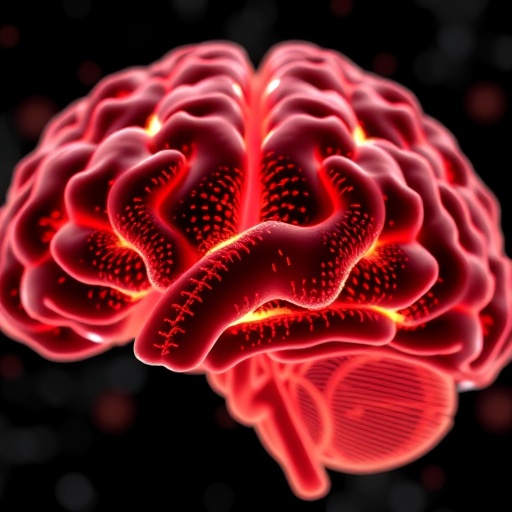
The traditional narrative of Alzheimer’s disease has long been cast in the shadow of inevitable decay, a relentless march of plaque accumulation leading to the tragic erosion of human memory. However, a groundbreaking study published in Translational Psychiatry by Wu, Lee, Martinez-Serra, and colleagues is fundamentally rewriting this script, suggesting that the brain’s initial response to the very seeds of the disease is not one of passive failure, but of a frantic and ultimately maladaptive attempt at reconstruction. By investigating the subtle, early-stage interactions of amyloid-beta oligomers, the researchers have uncovered a paradoxical phenomenon where low concentrations of these toxic proteins actually trigger an explosion of new synaptic connections. This discovery challenges the long-held “amyloid cascade hypothesis” which suggests that the loss of synapses is the primary early event, revealing instead a hidden phase of “hyper-synaptogenesis” that mirrors the clinical observations seen in patients with Mild Cognitive Impairment.
The complexity of the human brain lies in its intricate wiring, but when that wiring begins to misfire under the influence of sub-lethal doses of amyloid-beta, the results are nothing short of a cellular drama. The research team meticulously demonstrated that before the devastating neuron loss typically associated with advanced Alzheimer’s, there is a distinct period where neurons appear to “over-compensate” for emerging disruptions. This aberrant growth of synapses is not a sign of health, but rather a characteristic signature of the brain struggling to maintain functional equilibrium in a shifting chemical landscape. By utilizing advanced proteomic techniques, the scientists were able to track the synthesis of new proteins—the de novo proteome—revealing that the brain is essentially building a faulty infrastructure that sets the stage for future cognitive decline. This shifts our understanding of Mild Cognitive Impairment from a simple “pre-dementia” state to a highly active, pathological remodeling process.
At the heart of this molecular mystery are the amyloid-beta oligomers, small clusters of proteins that have long been the prime suspects in the theft of human identity. While high concentrations are known to be lethal to neurons, this study focuses on the “whisper” of the disease—concentrations so low they were previously thought to be negligible. The researchers found that these low-level invaders act as a perverse master switch, flipping the biological programming of the neuron from maintenance to a chaotic state of expansion. This specific concentration-dependent effect explains why early detection has been so difficult; the brain is masking its own destruction by temporarily increasing its connectivity. This “fools” the system for a time, creating a fragile bridge across the abyss of neurodegeneration, but the proteomic data suggests that these new synapses lack the stability and molecular composition of their healthy predecessors.
To understand the sheer scale of this biological disruption, one must look at the de novo proteome—the entire set of proteins being actively produced by the cell at a specific moment. The study revealed that amyloid-beta oligomers do not just sit passively on the surface of neurons; they hijack the protein manufacturing machinery itself. This leads to a profound alteration in the types of proteins being synthesized, favoring those that promote rapid, unstable synaptic growth while suppressing proteins essential for Long-Term Potentiation and memory consolidation. This architectural instability suggests that the brain is essentially building a house of cards. The newly formed synapses are structurally deficient, lacking the necessary scaffolding to withstand the oxidative stress and inflammatory environments that characterize the progression of Alzheimer’s. This molecular insight provides a vital link between the cellular behavior and the clinical symptoms of forgetfulness and confusion.
The implications of this research for the future of medicine are staggering, suggesting that our current diagnostic and therapeutic windows may be opening much too late. If the brain is already undergoing massive structural remodeling during the earliest “mild” stages, then waiting for clinical signs of memory loss means we have already missed the most critical turning point. The study implies that we need to develop biomarkers capable of detecting this aberrant synaptogenesis and the specific de novo protein signatures associated with it. By targeting the proteomic shift before the hyper-synaptogenesis phase concludes and the subsequent “pruning” or death of these synapses begins, doctors might one day be able to stabilize the brain’s circuitry before the damage becomes irreversible. This represents a paradigm shift from neuroprotection to neuro-stabilization, focusing on the quality of connections rather than just the quantity of plaques.
Furthermore, the study delves into the specific signaling pathways that translate the presence of amyloid-beta into the physical growth of these rogue synapses. By identifying the exact molecular triggers, the research team has opened a treasure trove of potential drug targets. These pathways involve a complex choreography of calcium signaling and kinase activation that, when overstimulated by oligomers, force the neuron into a state of hyper-productivity. This provides a clear explanation for why many previous Alzheimer’s drugs have failed; if a drug is designed to stop cell death, but the disease is currently in a phase of pathological growth, the treatment is essentially targeting the wrong biological event. The granularity of this data allows for a more “surgical” approach to pharmacology, where the goal is to modulate the neuron’s response to amyloid rather than just sweeping the amyloid away.
The methodology utilized in this study is equally impressive, employing state-of-the-art mass spectrometry and labeling techniques to distinguish between existing proteins and those newly minted in response to the amyloid challenge. This temporal resolution—knowing exactly when and what the cell is building—allows for a high-definition view of the disease’s “first moves.” The researchers observed that the synaptic proteins being produced were skewed toward excitatory neurotransmission, creating an imbalance that could lead to excitotoxicity—a state where neurons become overstimulated and eventually burn out. This aligns with clinical observations of increased seizure activity or subclinical electrical “noisy” brains in the early stages of cognitive decline. It suggests that the brain is not just failing, it is “screaming” electrically as it attempts to compensate for the burgeoning toxic load.
The broader scientific community is now beginning to grapple with the idea that the brain’s plasticity, usually our greatest asset, might be our greatest vulnerability in the face of Alzheimer’s. This “dark side” of plasticity means that the very mechanism we use to learn and adapt is being exploited by amyloid-beta to create a dysfunctional network. This research highlights the inherent risks of a “reactive” brain; by trying to repair itself without the correct architectural blueprint, the brain inadvertently accelerates its own demise. The study’s findings on the characteristic synaptogenesis of Mild Cognitive Impairment provide a structural explanation for the “fluctuating cognition” often reported by patients and their families, where a person may seem perfectly fine one hour and confused the next, reflecting the unstable nature of these temporary synaptic bridges.
As we look toward the 2030s and beyond, this study will likely be remembered as a cornerstone of the “New Wave” of Alzheimer’s research—one that prioritizes the dynamic proteome over static pathology. The work of Wu, Lee, and Martinez-Serra reminds us that the brain is a living, breathing, and ever-changing organ that does not go gentle into that good night. Instead, it fights back with a flurry of activity that, while ultimately tragic, offers a clear window of opportunity for intervention. The challenge now lies in translating these complex molecular “signatures” into a routine screening process that can identify the proteomic shift in its infancy. If we can master the art of reading the de novo proteome, we may finally move from a position of managing a terminal condition to one of preventing the collapse of the human mind before it ever truly begins.
The environmental context of these findings cannot be overstated, as the research also touches upon how these low-concentration effects might be exacerbated by other factors such as chronic stress or sleep deprivation, which also influence protein synthesis. Because the de novo proteome is highly sensitive to the cellular environment, the presence of even a small amount of amyloid-beta might act as a catalyst that turns normal aging into a pathological descent. This holistic view of brain health suggests that lifestyle interventions might work by stabilizing the proteome, making the brain more resilient to the “synaptic noise” created by oligomers. It emphasizes that we are not just victims of our genetics, but active participants in the maintenance of our neural architecture, where every protein synthesized is a brick in the wall against cognitive decay.
Crucially, the study also addresses the “reproducibility crisis” in Alzheimer’s research by providing a highly detailed and standardized model of how these low-dose oligomers behave. By focusing on the direct proteomic changes rather than just behavioral outcomes in animal models, the researchers have provided a more direct and measurable metric for success in future clinical trials. This is vital because many drugs that worked in mice failed in humans precisely because mouse “memory” and human “cognition” are governed by different levels of synaptic complexity. By focusing on the fundamental biology of synaptogenesis and the proteome, the researchers have found a common language that bridges the gap between the laboratory bench and the patient’s bedside, offering a more reliable roadmap for drug development.
One of the most profound takeaways from this research is the realization that the brain’s “early warning system” is actually visible at the molecular level long before it is visible on a brain scan. Standard MRI or PET scans look for atrophy or large-scale plaque deposits, but the “alteration of the de novo proteome” happens at a scale thousands of times smaller. This study pushes the boundary of what we consider “early detection” to a microscopic level, suggesting that the future of neurology lies in fluid biopsies—testing cerebrospinal fluid or even blood for the specific protein fragments that indicate the hyper-synaptogenesis phase has begun. This would allow for a proactive medical approach, where the “neuro-architecture” is reinforced through targeted therapies the moment the first signs of proteomic instability are detected.
In conclusion, the work of Wu et al. represents a significant leap forward in our quest to decode the world’s most devastating neurodegenerative disease. By proving that low concentrations of amyloid-beta oligomers induce a specific, measurable, and pathological growth of synapses, they have highlighted a critical “hidden phase” of the disease. This phase, characteristic of Mild Cognitive Impairment, is defined not by loss, but by a frantic and flawed attempt at gain. Understanding that the brain is actively rewriting its own proteome in response to these toxins gives us a new set of tools to fight back. We are no longer just looking at the wreckage of a collapsed building; thanks to this research, we are finally seeing the cracks in the foundation as they happen, giving us the chance to shore up the structure of the human mind before it falls.
This discovery ultimately transforms our understanding of the aging process itself. It suggests that the transition from healthy aging to dementia isn’t a sudden cliff, but a series of subtle molecular choices made by our neurons. The “characteristic synaptogenesis” identified by the researchers serves as a biological marker of a brain under siege, but also as a beacon of hope. It tells us that the brain is still trying, still building, and still capable of change. If we can harness that same capacity for change and redirect it toward healthy, stable growth, the fear that currently surrounds an Alzheimer’s diagnosis may one day be replaced by the confidence of a manageable, and perhaps even reversible, condition of the neural proteome.
Subject of Research: The effects of low-concentration amyloid-beta oligomers on synaptic growth and protein synthesis in the early stages of Alzheimer’s disease.
Article Title: Low concentrations of amyloid-beta oligomers induce synaptogenesis characteristic for mild cognitive impairment and alter the de novo proteome.
Article References:
Wu, K., Lee, S., Martinez-Serra, R. et al. Low concentrations of amyloid-beta oligomers induce synaptogenesis characteristic for mild cognitive impairment and alter the de novo proteome.
Transl Psychiatry (2026). https://doi.org/10.1038/s41398-026-03905-x
Image Credits: AI Generated
DOI: https://doi.org/10.1038/s41398-026-03905-x
Keywords: Alzheimer’s Disease, Amyloid-beta Oligomers, Synaptogenesis, Mild Cognitive Impairment (MCI), De Novo Proteome, Translational Psychiatry, Neurodegeneration, Proteomics, Synaptic Plasticity.


