


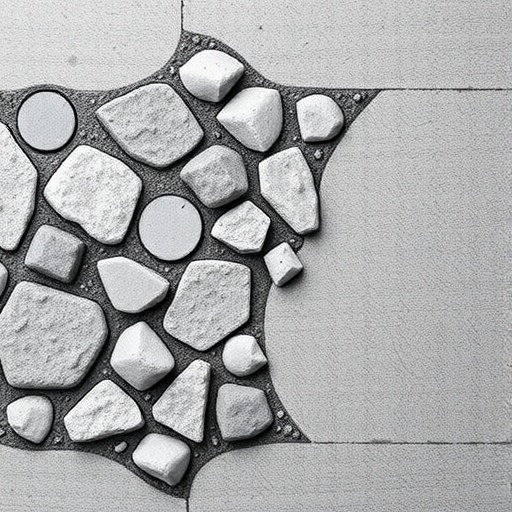
In a groundbreaking study published in Environmental Earth Sciences, researchers Zhao, Min, Huang, and colleagues have unveiled transformative insights into how the roughness of interfaces within rock-concrete composites impacts their mechanical behavior and deformation patterns. This innovative research addresses a crucial gap in geotechnical engineering and materials science, promising to enhance the durability and stability of composite structures that are foundational in infrastructure development around the world.
Understanding the interface between rock and concrete is paramount because these composites are common in various engineering applications, such as tunnels, dams, and foundations. The interface acts as a critical transition zone where mechanical stresses concentrate, making its properties influential in the overall performance of composite structures. Prior studies largely focused on the bulk materials separately; however, this new investigation shifts the spotlight onto the subtle interplay at the boundary, revealing that the interface roughness is far more influential than previously recognized.
Using advanced experimental setups combined with microscopic imaging and finite element simulations, the researchers were able to map out how varying degrees of interface roughness alter mechanical responses. They found that increased roughness enhances interlocking between rock and concrete, significantly improving load transfer across the interface. This enhancement directly correlates with increased shear strength and resistance to deformation, key factors in predicting and preventing structural failures.
Of particular interest is the study’s nuanced exploration of how deformation mechanisms evolve at the interface under different loading conditions. The scientists observed that smoother interfaces tend to develop micro-slip zones early, leading to incremental deterioration under cyclic loading. On the contrary, rough interfaces demonstrated a form of mechanical interlock that restricted slip and delayed the inception of damage, thereby extending the lifespan of the composite system.
The implications of these findings ripple through the design and maintenance strategies of composite structures. Engineers are now equipped with more precise parameters to tailor interface roughness when constructing or rehabilitating rock-concrete interfaces. This can lead to optimized designs that minimize the risk of catastrophic failure due to unexpected deformation or cracking, ultimately saving costs and enhancing safety.
Moreover, the study ventures into unexplored territory by quantifying the degree of roughness necessary for optimal performance. Through a combination of controlled laboratory tests and numerical modeling, the team established threshold values of surface roughness that maximize mechanical interlocking without introducing stress concentrations that could paradoxically trigger damage initiation.
Beyond immediate structural applications, these findings also advance our theoretical understanding of contact mechanics in heterogeneous materials. The correlation between interface topography and mechanical behavior underscores how multiscale surface features, from macro-scale undulations to micro-scale asperities, collectively govern the composite’s mechanical integrity. This insight opens new avenues for material scientists aiming to engineer composite interfaces at multiple scales.
The research also incorporates a comprehensive assessment of the deformation characteristics, revealing that interface roughness influences not only strength but also ductility. Rough interfaces exhibit enhanced energy dissipation capabilities under stress, suggesting that they can better accommodate deformation without brittle failure. This attribute is particularly beneficial in seismic regions where materials must endure dynamic and unpredictable loads.
The team’s methodological rigor stands out in this study. They employed 3D laser scanning techniques to precisely characterize the interface morphology before mechanical testing. Coupling this with digital image correlation during loading allowed them to track deformation fields and crack propagation paths in real-time. Such integration of experimental techniques with computational analysis represents a gold standard for future investigations into composite materials.
This deeper understanding of interface mechanics also has implications for the development of new materials and treatments. Surface modification technologies, such as texturing and coatings, could be designed to artificially enhance interface roughness, thereby customizing the interface properties to meet specific engineering requirements. This research lays the groundwork for innovations in sustainable construction materials by improving the performance of conventional rock-concrete composites.
In light of these discoveries, the durability of infrastructure that involves rock-concrete composites may see profound improvements. From hydroelectric dams enduring constant water pressure to underground tunnels subjected to ground movement, the structural reliability can be substantially fortified by integrating optimal interface characteristics from the outset. The study’s relevance extends globally, impacting regions prone to natural disasters where infrastructure resilience is critical.
The interdisciplinary approach of this research, bridging geology, materials science, and structural engineering, exemplifies the dynamic nature of modern scientific inquiry. By merging theoretical models with practical observations, Zhao and colleagues provide a comprehensive blueprint for managing interface characteristics in rock-concrete composites, which has eluded the engineering community for decades.
In conclusion, this pioneering work charts new directions for both academic research and practical engineering. It underscores the importance of interface roughness as a design variable, invites further exploration into the micro-mechanical processes at play, and sets a higher benchmark for evaluating composite materials. As infrastructure demands evolve, such studies will be instrumental in ensuring that the materials we rely on can meet future challenges with resilience and reliability.
This study, published in 2025, serves not only as a technical milestone but also as a roadmap for innovative engineering solutions that marry durability with functionality. The fusion of experimental precision, numerical sophistication, and theoretical insight embodied in this research is poised to inspire a paradigm shift in how composite materials are studied and applied across disciplines, promising safer and more sustainable built environments worldwide.
Cite Scienmag News
Neil Sanderson. (November 18, 2025). How Interface Roughness Shapes Rock-Concrete Mechanics. Scienmag. https://scienmag.com/how-interface-roughness-shapes-rock-concrete-mechanics/
Neil Sanderson. "How Interface Roughness Shapes Rock-Concrete Mechanics." Scienmag, 18 November 2025, https://scienmag.com/how-interface-roughness-shapes-rock-concrete-mechanics/. Accessed 3 September 2026.
Neil Sanderson. "How Interface Roughness Shapes Rock-Concrete Mechanics." Scienmag. November 18, 2025. https://scienmag.com/how-interface-roughness-shapes-rock-concrete-mechanics/


