


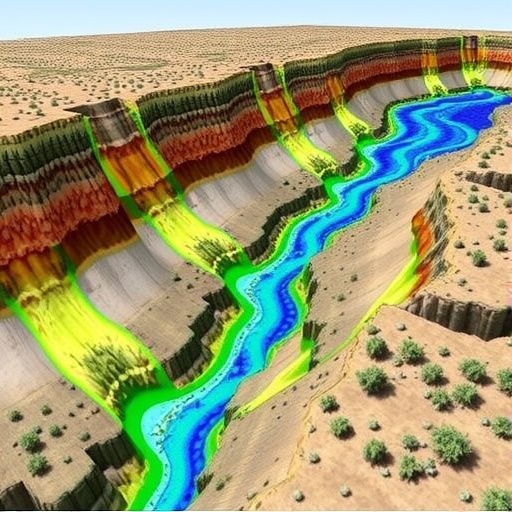
The intricate relationship between fault geometry, attributes, and fluid dynamics forms a fundamental conceptual framework for understanding the genesis of unconformity-related mineralization. A recent study conducted by Eldursi et al. shed light on these mechanisms, particularly as they pertain to uranium deposits in one of the world’s most prolific mining regions, the Athabasca Basin in Canada. This region holds significant economic value due to its rich uranium resources, making insights into geological processes here critical for future exploration and resource management strategies.
Faults in geological formations are not merely fractures in the rock; they are complex structures that govern fluid movement through the Earth’s crust. The study emphasizes that the geometry of these faults significantly impacts how fluids migrate through subsurface formations, which in turn influences mineralization processes. Fluid flow in fault zones can be enhanced or restricted based on the geometry, orientation, and other attributes of the faults, leading to variations in the deposition of minerals, particularly uranium.
One of the key findings of this research highlights that steeply dipping faults may create pathways for hydrothermal fluids that can concentrate valuable minerals, such as uranium. Conversely, faults with a more horizontal geometry could obstruct fluid flow, leading to a lesser degree of mineralization. This observation underscores the necessity for geologists and resource managers to consider the three-dimensional aspect of these geological structures when assessing potential sites for uranium mining.
The characteristics of fault zones—such as width, intensity, and fracturing—play pivotal roles in controlling the migration patterns of fluids. In the Athabasca Basin, faults often act as conduits for mineral-laden fluids emanating from deeper geological layers. This movement is crucial in understanding where high-grade uranium deposits might form. The authors suggest that by interpreting seismic data and employing advanced modeling techniques, geoscientists can better predict where these deposits are likely to be located.
Moreover, the research presents compelling evidence that the timing and sequence of fault activity significantly influence mineralization. Episodes of fault reactivation can lead to repeated flushing of mineral-rich fluids through the same pathways, accentuating the potential for pilot-scale deposits. Key geological events, such as tectonic movements or post-depositional alterations, have been shown to further enhance the mineral concentration in these fault zones, leading to economically viable uranium concentrations.
In examining the Athabasca Basin’s stratigraphy, the researchers point out that unconformities—geological features created by eroded rock layers—play a crucial role in enabling mineralizing fluids to penetrate deeper rock formations. These unconformities provide migration pathways for the fluids that eventually precipitate uranium and other minerals, demonstrating the interconnectedness of various geological processes at play.
The study also underscores the importance of integrating multidisciplinary approaches to enhance understanding of these complex systems. By combining traditional geological fieldwork with cutting-edge geophysical techniques, scientists can extract a more comprehensive understanding of mineralization processes. Data from surface mapping, core drilling, and advanced imaging methods all contribute to elucidating the role of fault geometry in mineral deposition.
As the demand for uranium rises in tandem with global initiatives toward clean energy solutions, the insights provided by Eldursi and colleagues are timely and invaluable. Fostering a deeper understanding of geological processes not only aids in sustainable resource management but also guides efforts to mitigate potential environmental impacts associated with mining activities. These revelations could pave the way for more focused exploration efforts that target specific fault systems likely to host economically significant mineral deposits.
In terms of implications for future research, the findings motivate a broader examination of fault networks beyond the Athabasca Basin. Other mineral-rich regions could benefit from similar analytical frameworks, allowing for the optimization of exploration techniques globally. The principles established in this study might serve as a template for understanding mineralization in varying geological environments, expanding the horizons of mineral exploration.
By illuminating the complexities of fluid flow in relation to fault attributes, this research ultimately invites further inquiries into both the environmental and geological ramifications of mining operations. It challenges industry standards and emphasizes the need for environmentally responsible practices that respect the intricate balance of geological processes. The implications of this work extend beyond academic realms, impacting economic strategies related to resource extraction and management.
In summary, the study conducted by Eldursi et al. significantly adds to the geoscientific understanding of fault systems and their implications for mineral resources, especially uranium in the Athabasca Basin. By detailing the effects of fault geometry and attributes on fluid dynamics and mineralization genesis, it sets the stage for a new chapter in mineral exploration, characterized by refined techniques and a more profound respect for the natural processes governing our planet’s geology.
The research serves as a clarion call for continuous investigation into fault dynamics within mineral-rich landscapes. As the global focus on sustainable and responsible mining practices intensifies, incorporating regional geological insights into exploration methodologies will become essential for successfully navigating the often-complex terrain of resource management in the 21st century.
Eldursi, K., Chi, G., Bethune, K. et al. Effects of Fault Geometry and Attributes on Fluid Flow and Genesis of Unconformity-Related Mineralization with Particular Application to Uranium Deposits in the Athabasca Basin, Canada.
Nat Resour Res (2025). https://doi.org/10.1007/s11053-025-10580-0
Cite Scienmag News
Violet Maxwell. (November 22, 2025). How Faults Influence Fluid Flow in Uranium Deposits. Scienmag. https://scienmag.com/how-faults-influence-fluid-flow-in-uranium-deposits/
Violet Maxwell. "How Faults Influence Fluid Flow in Uranium Deposits." Scienmag, 22 November 2025, https://scienmag.com/how-faults-influence-fluid-flow-in-uranium-deposits/. Accessed 3 September 2026.
Violet Maxwell. "How Faults Influence Fluid Flow in Uranium Deposits." Scienmag. November 22, 2025. https://scienmag.com/how-faults-influence-fluid-flow-in-uranium-deposits/


