


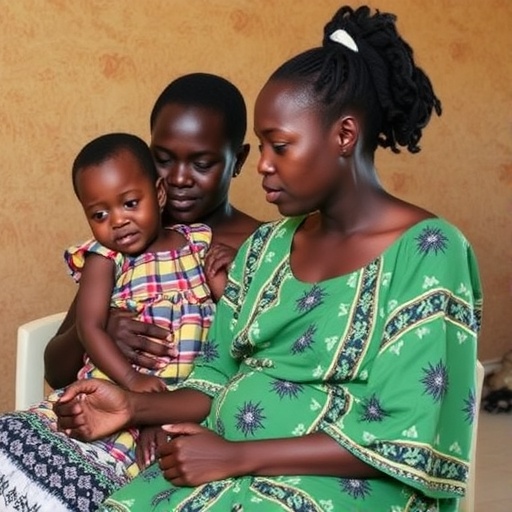
The size of the family a woman grows up in continues to shape how many children she wants decades later, and—surprisingly—education appears to amplify rather than erase that childhood influence. That is the central finding of a new study of more than 40,000 Nigerian women, published open access in the Journal of Population Research, which challenges the long-standing assumption that schooling simply replaces family background with new, smaller-family norms. Researchers Patrick Akhas Okooboh of the University of Maryland and Adenife Modile of Coker University analyzed data from the 2018 Nigeria Demographic and Health Survey (NDHS) to ask a deceptively simple question: does the number of siblings a woman grew up with predict her ideal number of children, and does her own education change that link? The answer to both parts, they report, is yes—and in a direction that runs counter to much demographic orthodoxy.
Fertility preferences—the number of children individuals say they consider ideal—are widely used by demographers as a window into the values and aspirations that guide reproductive behavior. While actual fertility is shaped by a tangled web of socioeconomic, ethno-cultural, and life-course factors, stated preferences reveal what people want before those wants are constrained by circumstance. Understanding where preferences come from matters enormously in Nigeria, one of the world’s most populous countries, where family size remains socially and culturally meaningful and where large families are still widely viewed as desirable or consistent with ethno-cultural expectations. Previous research has established two separate facts: that people raised in larger families tend to want more children themselves, and that more educated women generally prefer fewer children. What remained unclear was how these two forces interact—whether education dilutes the influence of the childhood family or, in some settings, makes that influence more visible.
The researchers drew on the 2018 NDHS, a nationally representative cross-sectional survey that employed a two-stage stratified cluster sampling design: enumeration areas were first selected within strata defined by state and urban-rural residence, and households were then systematically sampled within those areas. The final analytic sample comprised 40,670 women aged 15 to 49 with complete information on all study variables, and the survey’s probability weights were applied to correct for unequal selection probabilities, with stratification and clustering incorporated into the estimation of standard errors. The outcome variable was each woman’s stated ideal number of children, and the main exposure was sibship size—the number of siblings in her family of origin, excluding herself and her parents. Educational attainment, categorized as none, primary, secondary, or higher, served as the moderator, while the models controlled for age, region of residence, marital status, urban or rural residence, household wealth, and religion.
Because the outcome is a count variable with considerable spread, the team estimated survey-weighted Negative Binomial regression models, which accommodate overdispersion in count data more flexibly than standard Poisson regression. Two models were fitted: the first tested the direct association between sibship size and ideal family size, while the second introduced interaction terms between sibship size and educational attainment to test whether that association varied across education levels. The descriptive portrait of the sample reflects Nigeria’s demographic diversity: the mean age of respondents was 29.02 years, the mean number of siblings was 5.24, and 35 percent of the women had no formal education, compared with 14 percent with primary, 40 percent with secondary, and 11 percent with higher education. Slightly more than half lived in rural areas, and 59 percent resided in the northern region of the country.
The baseline results confirm the first hypothesis. Each additional sibling was associated with a 1.3 percent increase in a woman’s ideal number of children, an effect that remained statistically robust after adjustment for the full set of covariates. Education, by contrast, showed the expected inverse gradient: relative to women with no schooling, those with primary education desired 7.2 percent fewer children, those with secondary education 14.3 percent fewer, and those with higher education 22.8 percent fewer. Other findings aligned with the country’s demographic geography—women in the southern region desired 18.9 percent fewer children than women in the north, and women from rich households desired 11.8 percent fewer than women from poor households. Age was modestly positively associated with desired family size. A margins plot visualizing the predictions shows the ideal number of children climbing steadily as sibship size grows, a striking illustration of how the childhood household leaves a measurable imprint on adult aspirations.
The surprise came from the interaction model. If education simply overwrote family background, the sibship effect should have weakened—or disappeared—at higher levels of schooling. Instead, it grew stronger. Relative to women with no education, the positive association between siblings and ideal family size was marginally stronger among women with primary education, significantly stronger among women with secondary education, and strongest among women with higher education. Post-estimation linear combinations quantified the pattern: each additional sibling corresponded to a 1.3 percent increase in ideal family size among women with primary education, 1.7 percent among those with secondary education, and 2.2 percent among those with higher education. In other words, the more schooling a woman had, the more faithfully her stated preferences tracked the size of the family she grew up in.
The theoretical implications cut in two directions. The negative education gradient fits neatly within Demographic Transition Theory, which predicts that as societies urbanize and education expands, fertility preferences should shift toward smaller families. But the persistent—and strengthened—sibship effect suggests that the fertility transition is not a uniform process that sweeps away early-life influences. The authors frame their interpretation through Social Learning Theory, the classic perspective holding that people acquire behaviors, attitudes, and norms by observing the people around them. Children raised in large households, on this account, come to see bigger families as familiar, normal, and desirable, and those internalized norms become the lens through which they evaluate childbearing in adulthood—particularly in a context like Nigeria, where pronatalist norms remain strong.
Why would education amplify rather than attenuate this effect? The researchers offer three plausible mechanisms, while cautioning that the data cannot directly test any of them. First, more educated women may simply have greater social capital and economic resources to pursue larger families if they want them—paid childcare, flexible employment, and supportive partnerships can make big families feasible within a modern life course, an argument consistent with recent findings from low-fertility settings where highly educated women increasingly have more children. Second, education may help women recognize, reflect on, and articulate the norms they absorbed in childhood, translating early socialization into deliberate stated preferences. Third, more educated women are more likely to be in relationships where childcare and household labor are shared more equitably, lowering the perceived cost of each additional child and making larger families feel attainable rather than burdensome. Under any of these readings, education is not erasing family influence; it is changing how that influence is carried into adulthood and expressed.
The study’s authors are careful to flag its limits. The analysis is cross-sectional, so no causal claims can be made about sibship size, education, or preferences. The outcome measures stated ideals rather than completed fertility, and self-reported ideal family sizes are vulnerable to heaping on socially salient numbers such as four or six. Sibship size is also only an indirect proxy for the full family-of-origin environment—it says nothing about parenting styles, sibling relationships, or the influence of grandparents, uncles, and cousins who may share the household. Finally, the moderation pattern could partly reflect selection into education rather than a true interaction. Even so, the findings add real nuance to a field that has often treated education as the dominant, near-deterministic engine of fertility decline, and they underscore that fertility preferences are the product of both intimate family histories and broad processes of social change.
For policymakers and demographers watching Nigeria—where the population is projected to keep growing rapidly for decades—the message is that the family one is born into remains a durable predictor of the family one wants, even as the country’s educational landscape transforms. The authors suggest that future research should turn to qualitative and longitudinal designs capable of tracing how childhood family environments and educational experiences interact over the life course. Until then, the study stands as a vivid reminder that the sibling crowded kitchen table may echo, quietly but measurably, in the family a woman says she wants twenty years later.
Cite Scienmag News
Courtney Benton. (September 9, 2026). How family background shapes fertility desires in Nigeria, with education’s role. Scienmag. https://scienmag.com/how-family-background-shapes-fertility-desires-in-nigeria-with-educations-role/
Courtney Benton. "How family background shapes fertility desires in Nigeria, with education’s role." Scienmag, 9 September 2026, https://scienmag.com/how-family-background-shapes-fertility-desires-in-nigeria-with-educations-role/. Accessed 9 September 2026.
Courtney Benton. "How family background shapes fertility desires in Nigeria, with education’s role." Scienmag. September 9, 2026. https://scienmag.com/how-family-background-shapes-fertility-desires-in-nigeria-with-educations-role/


