


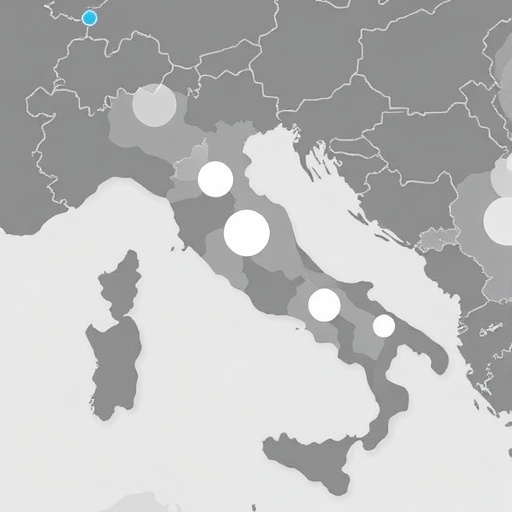
Italy’s persistent north–south divide in institutional quality has just been given its most precise numerical portrait yet. In a study published in the journal Social Indicators Research, economists Mario Eboli of the Universitat Jaume I in Spain and Lorenzo Fabiani of the University of Turin have constructed two composite indices that measure impunity—the likelihood that criminal, civil, or fiscal wrongdoing escapes effective accountability—across all 106 Italian provinces from 2008 to 2021. Rather than relying on perception surveys or expert opinions, the researchers built their measures exclusively from administrative data: arrest statistics, court records, tax litigation files, and municipal collection figures. The result is a granular, data-driven map of how effectively the Italian state detects, adjudicates, and enforces its rules at the territorial level, and it reveals a stark and persistent geographic gradient in which northern provinces consistently outperform their southern counterparts.
The researchers define impunity not as a categorical absence of justice but as a probabilistic phenomenon: the reduced likelihood that unlawful conduct will be investigated, prosecuted, and sanctioned within a reasonable time frame. Drawing on the operational definition proposed by Amnesty International in 1993, they identify three stages at which accountability can fail—detection, adjudication, and enforcement. A transgressor who is never apprehended escapes justice entirely; a case that expires under Italy’s statute of limitations, or drags through the courts for years, produces a diluted form of impunity; and a fine that is never collected or a civil dispute that festers in a backlog signals an institutional failure that extends well beyond the criminal courtroom. This framework allowed the authors to translate an abstract concept into a set of observable, measurable indicators.
The narrower of the two measures, the Impunity Index Crimes, is built from four variables capturing the performance of police and criminal courts. These include the ratio of crimes reported to offenders apprehended within a year, the share of criminal proceedings extinguished by statutory limitation, the average duration in days of criminal trials, and the clearance rate—the ratio of adjudicated cases to incoming proceedings, a metric used by the European Union to assess judicial throughput. The broader Impunity Index adds four further indicators: the stock of pending civil cases calculated with a formula that weights both beginning and ending backlogs against case flow, the clearance rate for tax litigation, the average age of pending tax disputes, and the tax collection capacity of local authorities, defined as the share of assessed local taxes actually collected. This last variable, the authors argue, serves as a proxy for the wider capacity of local institutions to enforce rules and norms.
Methodologically, the study had to confront several challenges common to composite index construction. Exploratory analysis revealed that the eight indicators were only weakly correlated with one another, suggesting that each captures a genuinely distinct institutional function rather than a single latent dimension of judicial quality. That finding ruled out purely data-driven weighting techniques such as principal components analysis, which depend on shared variance to extract factors. Instead, the researchers employed the Analytic Hierarchy Process developed by Thomas Saaty, in which domain experts made systematic pairwise comparisons of indicator importance on a nine-point scale. The resulting comparison matrices yielded consistency ratios of 0.0007 for the broad index and 0.0061 for the criminal variant, both far below the conventional 0.10 threshold, indicating highly coherent expert judgments. Indicators were then normalised with a modified Min–Max procedure rescaled to the range of one to ten, with non-normally distributed variables log-transformed following Shapiro–Wilk tests, and combined through a weighted arithmetic mean.
Missing data posed a further obstacle, addressed through regression-based imputation following the framework of Little and Rubin. The collection capacity variable lacked 7.19 percent of its values and was entirely absent for 2021; the researchers predicted the gaps using tax dispute duration and civil case stock, both strongly correlated with the target variable across provinces and years. In total, 177 values were imputed, roughly 1.50 percent of the dataset. The robustness of the final indices was then stress-tested through nine alternative specifications for each measure, including seven leave-one-out models that sequentially dropped each indicator, a geometric-mean aggregation that penalises compensability, and a principal-components-based index. Spearman rank correlations between the baseline and all alternatives remained high, with the lowest correlation for the broad index being 0.7626 when collection capacity was excluded, confirming that the results are not artefacts of any single methodological choice.
The spatial findings are striking. Over the full 2008–2021 period, the Alpine province of Verbano-Cusio-Ossola recorded the lowest impunity score at 0.50, while Siracusa in Sicily registered the highest at 0.79. A simple linear regression of 2021 impunity on latitude produced a coefficient of −0.0178 with a p-value below 0.001, and an R-squared of 0.6208—meaning that roughly 62 percent of the variance in provincial impunity is explained by geographic position along the north–south axis alone. Grouping regions by Eurostat’s NUTS 1 classification, the study finds impunity lowest in the north-east, followed by the north-west, central Italy, the islands, and finally the southern mainland. Interestingly, the islands outperform the southern mainland, a pattern the authors attribute in part to residents’ reluctance to report crimes and engage in civil disputes, which artificially lowers measured enforcement failures.
The temporal analysis reveals an equally important dynamic: convergence. Regressing the compound annual growth rate of impunity between 2008 and 2021 on initial impunity levels produced a significantly negative relationship (coefficient −0.0578, t-statistic −8.64, R-squared 0.4253), indicating that provinces which started with the worst institutional performance improved fastest. Crotone in Calabria achieved the most substantial reduction, with a compound annual decline of 4.2 percent, while already virtuous provinces such as Trento, starting from favourable positions, registered negligible change of −0.2 percent—a pattern consistent with diminishing returns to institutional quality. Yet convergence was neither smooth nor uniform. Individual provinces experienced dramatic shocks: Enna’s ranking collapsed after its collection capacity fell from 0.70 to 0.44 in a single year; Rome recorded the study’s most extreme one-year swing between 2017 and 2018, driven by volatile tax collection; and Trapani underwent a sudden performance improvement in 2021 as its criminal clearance rate rose and civil backlogs halved.
Perhaps the most surprising result concerns the narrower criminal index. Unlike the broad Impunity Index, the Impunity Index Crimes shows no consistent north–south divide, and in fact exhibits a weak but statistically significant positive association with latitude, meaning criminal impunity tends to be slightly higher in the north. Several southern provinces perform admirably on criminal justice indicators—Isernia records the lowest criminal impunity score, with a 0.376 capture rate, an expiry rate of roughly 0.2 percent, and a clearance rate near 0.98—while all four major metropolitan areas of Rome, Milan, Naples, and Bari fall into the worst quintile, likely reflecting heavy caseloads and enforcement bottlenecks in dense urban environments. The comparison between Turin and Isernia is telling: Turin’s criminal impunity appears driven less by slow trials than by failures early in the process, with only 14.3 percent of reported crimes leading to arrest and 17 percent of proceedings expiring, against Isernia’s far higher conversion of reports into apprehensions. Criminal impunity, the study suggests, obeys a different geography than broader institutional dysfunction.
The COVID-19 pandemic left a visible imprint on the data. The year 2020 brought significant fluctuations, particularly in the ratio between reported and apprehended offenders, the volume of pending civil cases, and tax clearance rates, as hearings were suspended and judicial activity slowed. The pandemic’s congestion effects fell disproportionately on provinces with larger and more overloaded court systems, temporarily compressing the variance of index values in 2021. Other trends track legislative change: a peak in the criminal clearance rate in 2016 plausibly followed the decriminalisation of certain minor offences under Legislative Decree no. 7 of January 2016, while the duration of tax proceedings declined to a minimum in 2018 before reversing without any apparent reform to explain it, and collection capacity peaked that same year before trending downward.
The authors are careful to frame their contribution as descriptive rather than causal, and deliberately exclude input variables such as judicial staffing or vacancies, arguing that mixing upstream resources with output measures would blur the interpretation of the index. What they offer instead is a performance-based tool built from routinely collected administrative data, which can be updated annually and replicated in other national contexts. Because the indices provide comparable, subnational measures of how effectively the rule of law actually operates—not how it is perceived—they open new avenues for research into how institutional enforcement shapes economic outcomes, crime reporting behaviour, and quality of life. In a country where trust in institutions varies as sharply as its landscapes, quantifying impunity province by province transforms a vague grievance into a measurable policy target.
Cite Scienmag News
Courtney Benton. (September 9, 2026). New Index Uses Administrative Data to Track Impunity Across Italian Provinces. Scienmag. https://scienmag.com/new-index-uses-administrative-data-to-track-impunity-across-italian-provinces/
Courtney Benton. "New Index Uses Administrative Data to Track Impunity Across Italian Provinces." Scienmag, 9 September 2026, https://scienmag.com/new-index-uses-administrative-data-to-track-impunity-across-italian-provinces/. Accessed 9 September 2026.
Courtney Benton. "New Index Uses Administrative Data to Track Impunity Across Italian Provinces." Scienmag. September 9, 2026. https://scienmag.com/new-index-uses-administrative-data-to-track-impunity-across-italian-provinces/


