


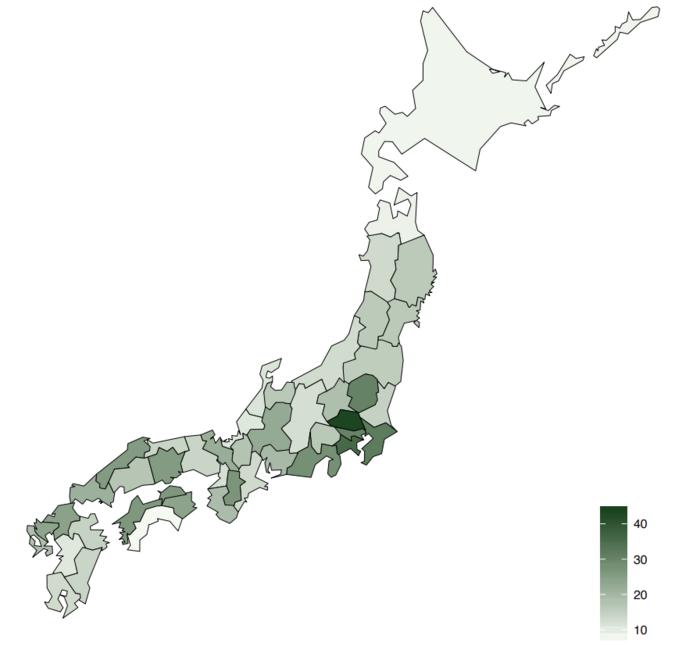
Recent research out of Japan has incited considerable interest regarding the profound implications of preschool education by examining the long-term effects of a significant expansion in early childhood educational opportunities during the 1960s. In a study that scrutinized archival data from 46 prefectures, including educational enrollment patterns, researchers unveiled noteworthy correlations between preschool attendance and reduced incidence of risky behaviors such as juvenile violent crime and teenage pregnancies. These findings not only illuminate the importance of early educational engagement but also open pathways for understanding the developmental factors that could forge healthier adolescent behaviors long after early educational interventions cease.
This expansive study sidesteps typical limitations present in prior research by leveraging a vast and representative sample while emphasizing the pivotal role of early childhood education in shaping noncognitive abilities. The authors, including Professor Shintaro Yamaguchi from the University of Tokyo, underscore that their results signify a crucial departure from previous investigations, which largely focused on targeted education programs aimed at low-income populations in the United States. Instead, Japan’s approach, which guaranteed preschool access for all children regardless of socioeconomic background, offers a valuable framework that could aid policymakers in emerging economies considering early investment in education.
The analyses delineated how varying rates of preschool enrollment across prefectures allowed researchers to isolate the impact attributable specifically to the expansion of educational opportunities. By methodically contrasting juvenile behavior trends before and after the implemented reforms, the study mitigated concerns regarding confounding variables. Intriguingly, while researchers found a marked decrease in violent crime and pregnancy rates among adolescents who had attended preschool, these benefits did not extend to increases in high school or college enrollment. The data suggest that the observed behavioral changes stemmed more from enhanced noncognitive skill development than from mere academic engagement in later schooling.
Delving deeper into the study methodology, Yamaguchi and his colleagues implemented a framework utilizing pre-existing crime statistics that scrutinized adult outcomes from these timeframes. This strategic alignment sought to verify that any substantial behavioral shifts could indeed be traced back exclusively to children who participated in the preschool programs, effectively ruling out historical factors or pre-existing societal trends that could skew results. Their approach inspires confidence that the conclusions drawn not only reflect genuine educational impacts but also serve as a clarion call for more comprehensive early childhood policies.
These findings resonate with the broader literature on early childhood education, suggesting that preschool availability can tangibly reshape social trajectories, particularly in a nation traditionally characterized by its low levels of violent crime and teenage pregnancy. By correlating enhanced educational provisions with quantifiable reductions in negative outcomes, this research offers an evidence-based rationale for increased investment in early childhood education as a preventive strategy against future societal issues such as crime.
Moreover, Yamaguchi’s study highlights vital areas for future inquiry, particularly around identifying which specific noncognitive skills implement the most significant influence on individual trajectories. The researchers acknowledge the necessity to expand their investigations to encompass even longer-term outcomes, potentially encompassing effects on health, family dynamics, and intergenerational outcomes. By elucidating these connections, they aim to cultivate a deeper understanding of how early intervention can yield broad societal benefits that extend well into adulthood.
Importantly, this research underlines a broader philosophical question regarding the purpose and value of education itself. In assessing whether educational interventions ought to primarily focus on academic acquisitions or consider the holistic development of noncognitive skills, findings from this investigation suggest an urgent reevaluation in pedagogical practices. It tantalizingly points towards a future where lifestyle and behavior enhancements contribute significantly to the measures of educational success, propelling early childhood education beyond its foundational academic role.
As the team prepares to disseminate their work through forthcoming publications, they invite further discourse within educational and policy-making communities about the ramifications of early childhood educational access. Coordinating interdisciplinary knowledge sharing could foster innovative solutions aimed at optimizing early educational outcomes, ultimately influencing not just those who attend preschool, but society at large.
This compelling exploration not only advocates for heightened awareness surrounding preschool education as a catalyst for change but also embodies a transformative vision where early interventions serve as scaffolds nurturing lifelong success and stability. The evolution of educational frameworks will undoubtedly demand commitment and resilience, but as illustrated by these findings, the societal rewards of prioritizing early childhood education could be nothing short of revolutionary.
In summary, research suggests that the path to reducing risky adolescent behaviors commenced in preschool classrooms, and scaling accessible educational models could hold the potential to yield dividends that far exceed initial investments. This profound intersection between education policy and social transformation stands as a testament to the power of proactive frameworks in shaping resilient communities and fostering a future defined by opportunity rather than adversity.
Cite Scienmag News
Courtney Benton. (April 8, 2025). How Early Education Influences Adolescent Behavior: Insights from Recent Research. Scienmag. https://scienmag.com/how-early-education-influences-adolescent-behavior-insights-from-recent-research/
Courtney Benton. "How Early Education Influences Adolescent Behavior: Insights from Recent Research." Scienmag, 8 April 2025, https://scienmag.com/how-early-education-influences-adolescent-behavior-insights-from-recent-research/. Accessed 5 September 2026.
Courtney Benton. "How Early Education Influences Adolescent Behavior: Insights from Recent Research." Scienmag. April 8, 2025. https://scienmag.com/how-early-education-influences-adolescent-behavior-insights-from-recent-research/


