

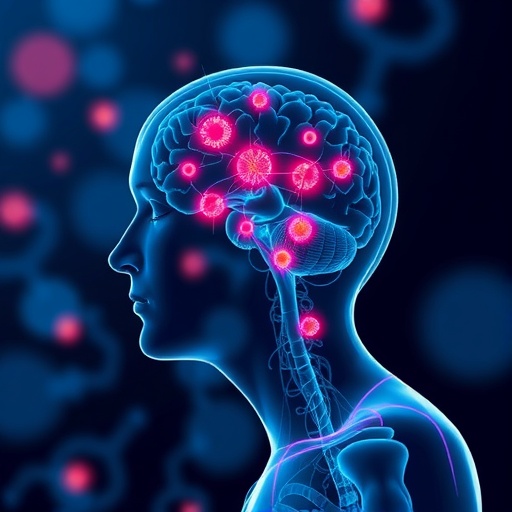
In the continuously evolving landscape of oncology, one invisible yet insidious adversary persists alongside cancer itself: chronic stress. Far from being a mere psychological discomfort, chronic stress exerts profound biological effects that have the potential to influence cancer development and progression. A comprehensive systematic review conducted by researchers at Wroclaw Medical University, recently published in the International Journal of Molecular Sciences, sheds light on the complex interplay between persistent stress and tumor biology, emphasizing the nuanced ways in which chronic stress might alter treatment outcomes across various cancer types.
Biologically, chronic stress represents a sustained overactivation of the body’s stress response systems, notably the hypothalamic-pituitary-adrenal (HPA) axis and the sympathetic nervous system. This persistent state is characterized by the prolonged elevation of hormones such as cortisol, adrenaline, and noradrenaline. These stress hormones, when chronically elevated, disrupt immune regulation and promote inflammatory processes, creating a physiological milieu conducive to cancer cell survival, proliferation, and metastasis. The review meticulously details how this hormonal alarm state sets the stage for downstream effects that influence tumor dynamics.
One pivotal mechanism involves the intricate relationship between immune function and inflammation under chronic stress. Elevated cortisol and catecholamines suppress critical immune surveillance activities, diminishing the body’s capacity to detect and eradicate malignant cells. Simultaneously, they trigger a shift towards chronic, low-grade inflammation, typified by increased pro-inflammatory cytokines such as interleukin-6 (IL-6). This inflammatory environment not only facilitates tumor growth but also contributes to resistance against therapeutic interventions. At the tissue level, chronic stress influences angiogenesis — the formation of new blood vessels — thereby supplying tumors with oxygen and nutrients necessary for expansion and dissemination.
An intriguing aspect highlighted in the review is the heterogeneity of chronic stress’s impact on cancer, which varies notably by cancer type and its associated prognosis. In malignancies like breast and prostate cancer, which generally have relatively higher five-year survival rates, chronic stress manifests largely as ongoing uncertainty regarding disease status, fear of recurrence, and long-standing treatment side effects. This persistent psychological burden perpetuates neuroendocrine signaling pathways that, in preclinical models, correlate with metastatic potential and altered sensitivity to cancer therapies. Such insights underscore the possibility that stress-related biological changes may act as ancillary contributors to disease progression, rather than as direct causal agents.
Conversely, in cancers characterized by substantially poorer prognoses—such as pancreatic and ovarian tumors—the psychological distress often presents with greater severity and a more profound systemic biological footprint. Notably, depression and psychological symptoms in these cases sometimes precede cancer diagnoses, hinting at a bidirectional relationship where biological stress markers could be part of early tumorigenic processes. The predominance of inflammatory mediators in these cancers suggests a tightly coupled interaction between the neuroimmune axis and tumor biology, which may exacerbate physiological burden and hinder the effectiveness of therapeutic regimens.
The review also makes a compelling case for integrating psycho-oncological support as a fundamental component of cancer care, extending well beyond simple emotional consolation. Empirical data indicate that targeted psychological interventions can tangibly reduce symptoms of anxiety and depression, improve patient-reported quality of life, and modulate biomarkers indicative of systemic stress and inflammation, including cortisol and select cytokines. While these findings are promising, the complexity of cancer biology and patient heterogeneity complicate efforts to establish direct causality between psychological therapy and improved survival metrics.
Additionally, the persistence of therapeutic benefits appears to depend on sustained psychological intervention, rather than brief or episodic therapy sessions. This highlights the need for designing comprehensive, accessible psycho-oncology services that accommodate the chronic nature of stress in cancer patients. Digital health platforms and e-health strategies represent promising avenues for delivering ongoing psychosocial support, potentially enhancing adherence and fostering resilience over the cancer care continuum.
Importantly, the authors caution that current knowledge is limited by several factors. The varied methodologies used to measure stress across studies, the scarcity of quantitative meta-analyses, and the inherent difficulty in disentangling stress’s biological effects from confounding clinical parameters such as disease severity and treatment toxicity obscure definitive conclusions. Despite these challenges, the review advocates for recognizing chronic stress as a clinically modifiable risk factor, akin to malnutrition or pain, meriting systematic screening and intervention protocols within oncology settings.
Crucially, chronic stress should not be construed as a patient failing but viewed through a biopsychosocial lens that accounts for environmental, psychological, and physiological influences. The authors preach a paradigm shift whereby psycho-oncology evolves from an ancillary service to a standard of care, with health systems implementing timely distress screening, rapid referral pathways, and inclusive support frameworks that encompass caregivers and families. Such holistic models promise to mitigate the physiological impact of stress and potentially enhance treatment responses.
This body of work opens new horizons for integrative oncology, encouraging researchers, clinicians, and policymakers to re-examine existing cancer care frameworks. By acknowledging the multifaceted nature of chronic stress and its tangible biological correlates, future therapeutic strategies can be refined to incorporate psychosocial health as an integral facet of cancer management. Ultimately, addressing chronic stress may unlock additive benefits that complement conventional cancer therapies, enhancing patient outcomes and quality of life in an often daunting journey.
Subject of Research: People
Article Title: The Impact of Chronic Stress on Cancer Development and Progression
News Publication Date: 9-Jan-2026
Web References: http://dx.doi.org/10.3390/ijms27020686
References: Herbetko K., Kaczor J., Sołtyk A., Kisielewska M., Opęchowski M., Sztuder A., Kulbacka J. The Impact of Chronic Stress on Treatment Outcomes of Cancer Patients with Divergent Survival Rates. International Journal of Molecular Sciences, 2026. DOI: 10.3390/ijms27020686
Image Credits: Wroclaw Medical University
Keywords: Oncology, Chronic Stress, Cancer Progression, Neuroendocrine Signaling, Immune Suppression, Inflammation, Psycho-oncology, Cancer Therapy, Depression, Biomarkers


