


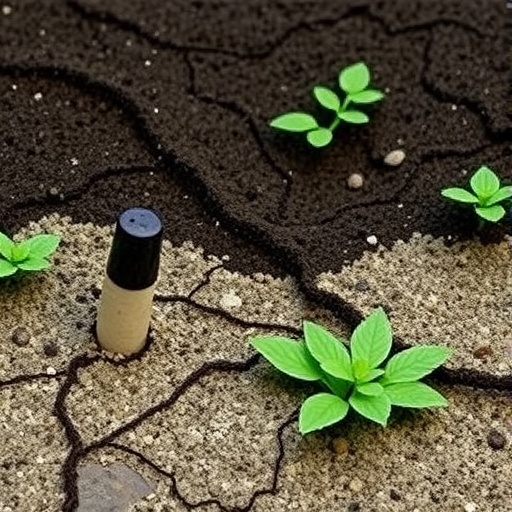
Pyrogenic carbon, a carbon-rich substance generated through the combustion of biomass or its conversion into biochar, is an omnipresent entity within soils, sediments, and aquatic ecosystems globally. This material has long been recognized for its profound influence on environmental chemical dynamics, particularly its role in electron transfer processes. Nevertheless, the transformations it undergoes as it ages in natural settings have posed a complex scientific enigma. A novel investigation, recently published in the distinguished journal Biochar, offers groundbreaking insights into the effects of aging on the electron transfer and exchange characteristics of pyrogenic carbon, unveiling nuanced behaviors contingent upon its production temperature and the subsequent aging processes it undergoes.
The study embarked on a meticulous analysis of pyrogenic carbon derived from various biomass feedstocks, subjected to pyrolysis at two markedly different temperatures—350 °C and 750 °C. Following production, researchers simulated environmental aging through a triad of experimental methodologies: chemical oxidation, freeze-thaw cycling, and exposure to natural aging conditions over the course of an entire year. These deliberate aging simulations were critical in capturing the evolutionary trajectories of the material’s electrochemical properties, aiming to decode how its complex electron shuttle mechanisms evolve over time in real-world contexts.
One of the seminal findings of the research centers around the profound disparity in aging effects related to the initial pyrolysis temperature. Pyrogenic carbons produced at the relatively modest temperature of 350 °C exhibited a striking enhancement in electrical conductivity post-aging. In fact, in some instances, conductivity amplified by more than three orders of magnitude, marking a dramatic transformation in the electron transport capabilities of the material. Researchers ascribed this augmentation to the genesis of oxygen-containing functional groups, such as quinones and carbonyl groups, which adorn the carbon surface during aging. These moieties act as pivotal redox-active sites, effectively facilitating electron shuttling, thereby enhancing the conductive prowess of the low-temperature biochar.
In stark contrast, pyrogenic carbon generated at the elevated pyrolysis temperature of 750 °C manifested a diametrically opposing trend. The aging processes inflicted deleterious alterations on the polyaromatic carbon frameworks inherent to high-temperature biochars, which are typically responsible for their superior electrical conductivity. Oxidative stress and environmental wear progressively eroded these conjugated structures, culminating in the deterioration of electron pathways. This degradation precipitated a measurable decline in electrical conductivity, underscoring that high-temperature pyrolyzed carbons may become less electronically active with environmental aging—an essential consideration for their functional longevity in applications.
Beyond conductivity, the study delved into the transformative shifts in the electron exchange capacities intrinsic to pyrogenic carbon. Aging broadly diminished the material’s electron donating ability while simultaneously enhancing its capacity to accept electrons. This shift was chemically underpinned by the conversion of electron-donating hydroxyl groups into more oxidized entities such as carboxyl and carbonyl groups. These modifications effectively reprogram the electron transfer behavior of aged pyrogenic carbon, skewing it toward electron acceptance and altering its role within myriad environmental redox processes.
The implications of these findings are particularly salient within the contexts of soil nutrient cycling and pollutant dynamics. Aged pyrogenic carbon characterized by elevated electron accepting capacity can potentiate nitrification by facilitating electron uptake processes integral to nitrogen transformations. This, in turn, modulates nitrogen bioavailability for plants, potentially influencing agricultural productivity and soil health. Moreover, the enhanced electron-accepting properties may empower pyrogenic carbon to immobilize pollutants and heavy metals via redox interactions, presenting promising avenues for environmental remediation strategies.
However, these environmental benefits are not without complexity. The evolving redox characteristics of aged pyrogenic carbon might inadvertently perturb microbial respiration pathways, potentially influencing soil microbial community structures and their metabolic outputs. Additionally, alterations in electron transfer dynamics could have unforeseen impacts on greenhouse gas fluxes, potentially exacerbating or mitigating emissions depending on specific ecosystem contexts and the nature of microbial interactions.
The study foregrounds the crucial importance of temporal considerations in the deployment and management of biochar and pyrogenic carbon-based amendments. Given the impressive environmental persistence of pyrogenic carbon—often envisioned to last from hundreds to thousands of years—understanding its aging trajectory offers vital clues in anticipating its long-term ecological roles. The detailed mechanistic insights reported pave the way for more predictive models of pyrogenic carbon behavior, integral to crafting sustainable environmental management practices.
From a technological perspective, the insights gleaned hold significant promise for the deliberate engineering of biochar materials tailored to specific environmental functions. By modulating pyrolysis conditions and accounting for expected aging transformations, it may become feasible to design biochars with enhanced longevity in their electron transfer roles or optimized capacities for nutrient cycling facilitation and pollutant immobilization. Such design strategies can fundamentally reshape approaches in agriculture, soil science, and environmental remediation fields.
Furthermore, the research accentuates the multifaceted nature of biochar-electron transfer interplay, governed by a constellation of chemical, physical, and environmental factors influencing aging processes. Future investigations will benefit from deeper exploration of aging pathways under diverse environmental stressors and across variable ecological niches to refine the utility and predictability of pyrogenic carbon applications globally. These endeavors will fortify the role of biochar research in combating pressing environmental challenges through innovative material science.
Ultimately, this study constitutes a landmark advancement in our comprehension of how biochar’s electrochemical landscape is sculpted over time, illuminating the intricate balance between production parameters, environmental exposure, and material function. It resonates widely across disciplines, from agronomy to environmental chemistry and materials science, underlining the concerted cross-sector efforts needed to harness pyrogenic carbon’s full potential in fostering sustainable and resilient ecosystems.
Keywords
Corrosion, Electrochemistry, Electron transfer, Environmental impact assessments, Gerontology
Cite Scienmag News
Beatrice Stafford. (March 11, 2026). How Aging Transforms Electron Transfer Dynamics of Pyrogenic Carbon in Soils and Ecosystems. Scienmag. https://scienmag.com/how-aging-transforms-electron-transfer-dynamics-of-pyrogenic-carbon-in-soils-and-ecosystems/
Beatrice Stafford. "How Aging Transforms Electron Transfer Dynamics of Pyrogenic Carbon in Soils and Ecosystems." Scienmag, 11 March 2026, https://scienmag.com/how-aging-transforms-electron-transfer-dynamics-of-pyrogenic-carbon-in-soils-and-ecosystems/. Accessed 4 September 2026.
Beatrice Stafford. "How Aging Transforms Electron Transfer Dynamics of Pyrogenic Carbon in Soils and Ecosystems." Scienmag. March 11, 2026. https://scienmag.com/how-aging-transforms-electron-transfer-dynamics-of-pyrogenic-carbon-in-soils-and-ecosystems/


