


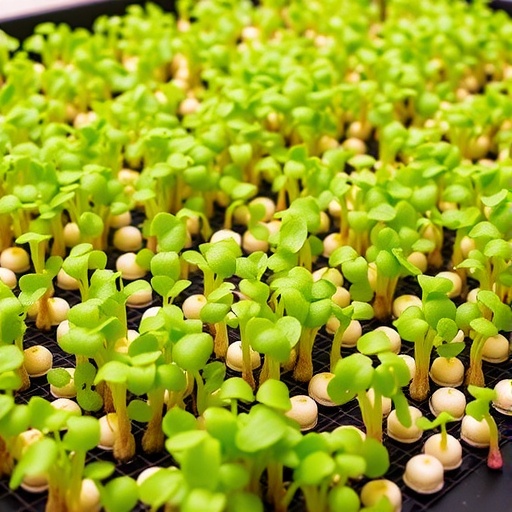
University Park, Pa. — The nutritional powerhouses known as cruciferous vegetables, which include radish, broccoli, and kale, have been extensively celebrated for their health benefits. Recently, the focus has shifted to their microgreen forms—young seedlings harvested shortly after germination. Radish microgreens, in particular, are emerging as potent sources of vitamins, minerals, and bioactive compounds such as antioxidants and glucosinolates, the latter being credited for their potential anti-cancer properties. Despite their impressive nutrient profile, microgreens suffer from extreme perishability, losing their nutritional value within a day or two at room temperature, and only slightly longer under refrigeration. A collaborative research team at Penn State University has conducted an in-depth experimental study, aimed at identifying practical ways to preserve these nutrient-dense plants without reliance on costly technologies.
Led by Professor Joshua Lambert from the College of Agricultural Sciences, the study rigorously analyzed how hot air drying—a low-cost, accessible preservation technique—affects the retention and bioavailability of key nutrients and phytochemicals in radish microgreens. This research seeks to address a crucial barrier in the widespread adoption of microgreens: their high perishability. “Microgreens’ health benefits are exceptional but their shelf life remains a challenge that limits consumption, increases economic loss, and leads to significant food waste, particularly in regions lacking refrigeration infrastructure,” Lambert noted. “Therefore, our work focuses on exploring preservation methods that can maintain nutrient integrity while being affordable and scalable.”
Published in the Journal of Food Science, this investigation demonstrates that radish microgreens subjected to hot air drying retain a substantial fraction of their nutritional compounds, regardless of drying temperature. Specifically, total phenolic content—a biomarker of antioxidant capacity—remained remarkably stable, with retention rates of 91% at 113°F, 79% at 149°F, and surprisingly 100% at 203°F. This finding is indicative of the resilience of antioxidant compounds to thermal processing, positioning hot air drying as a viable preservation approach for antioxidant-enriched microgreens.
Another critical phytochemical group, glucosinolates—specifically glucoraphenin—was also assessed for thermal stability. Glucoraphenin levels remained stable at both 113°F and 149°F and showed a retention of 78% even after drying at 203°F. This is particularly significant given glucosinolates’ growing recognition for their chemoprotective qualities. Parallel to this, the study evaluated the retention of water-soluble vitamins: B1 (thiamine) and B9 (folate) demonstrated robust stability across all tested temperatures, while vitamins B2 (riboflavin), B3 (niacin), and vitamin C showed varying degrees of heat sensitivity, with retention rates up to 65%, 64%, and 37%, respectively.
Beyond mere retention of compounds, Lambert and his colleagues emphasized bioaccessibility—the extent to which nutrients can be absorbed post-digestion—as an essential facet of nutrient evaluation. Utilizing simulated gastrointestinal digestion models, the team found that bioaccessibility of total phenols and vitamins B1, B3, B9, and C ranged between 13% and 68%, consistent across hot air drying conditions. Notably, vitamin B2 exhibited enhanced bioaccessibility when dried at 149°F compared to other temperatures, suggesting that moderate thermal treatment might positively affect its availability to the human body.
Interestingly, certain phytochemicals such as glucoraphenin and anthocyanins, despite their known health benefits, became undetectable after simulated digestion. This implies these molecules either degrade or transform into other metabolites during the digestive process, calling for further metabolomic studies to understand their bioactive metabolites and ultimate physiological impact. Indeed, the comprehensive metabolomic analysis performed revealed that different drying temperatures influence the biochemical fingerprint of microgreens, particularly in the profiles of glucosinolates and flavonoids, plant pigments associated with anti-inflammatory and antioxidant activities.
Marjorie Jauregui, the study’s first author and a pilot plant research technologist, highlighted that hot air drying, even at higher temperatures, is a promising preservation method. The technique not only retains critical nutrients but also facilitates the production of microgreen powders, which can be incorporated into various food products—thereby extending their utility and shelf life. Jauregui stressed the practicality of hot air drying, especially for small-scale producers or regions where expensive freeze-drying equipment is not accessible.
In contrast to freeze-drying, which is widely regarded as the gold standard for nutrient retention but requires costly infrastructure and energy inputs, hot air drying presents a financially sustainable alternative. “Our findings carry profound implications for food security and nutrition in low-resource settings,” Lambert said. “By understanding how temperature modulates nutrient preservation and availability, we can optimize drying protocols tailored for different environments and applications.”
The team acknowledged that, although some nutrient loss is inevitable with thermal processing, the trade-off against the extreme perishability of fresh microgreens tilts the scale in favor of hot air drying as an intervention. They envision that industrial and community-level adoption of these techniques could democratize access to nutrient-rich microgreen products, reduce waste, and enhance diet quality globally.
This cutting-edge research received support from Open Philanthropy through the Food Resilience in the Face of Catastrophic Global Events grant and the U.S. Department of Agriculture’s National Institute of Food and Agriculture, underscoring its relevance for both scientific innovation and public health preparedness.
As the public continues to seek convenient, nutrient-dense food options, this study adds a significant piece to the puzzle by providing evidence-based guidelines for preserving and delivering the health benefits of cruciferous microgreens. Future research directions include exploring the impact of different drying durations, integration with packaging technologies, and the bioactivity of metabolites formed during digestion.
With growing interest in plant-based diets and sustainable food systems, the application of accessible preservation methods like hot air drying could revolutionize how microgreens are stored, distributed, and consumed—offering a tangible solution to combat nutrient loss and food insecurity worldwide.
Cite Scienmag News
Daisy Hatcher. (October 1, 2025). Hot Air Drying Effectively Retains Nutritional Quality of Radish Microgreens. Scienmag. https://scienmag.com/hot-air-drying-effectively-retains-nutritional-quality-of-radish-microgreens/
Daisy Hatcher. "Hot Air Drying Effectively Retains Nutritional Quality of Radish Microgreens." Scienmag, 1 October 2025, https://scienmag.com/hot-air-drying-effectively-retains-nutritional-quality-of-radish-microgreens/. Accessed 4 September 2026.
Daisy Hatcher. "Hot Air Drying Effectively Retains Nutritional Quality of Radish Microgreens." Scienmag. October 1, 2025. https://scienmag.com/hot-air-drying-effectively-retains-nutritional-quality-of-radish-microgreens/


