

Friday, September 4, 2026
Science
No Result
View All Result
  • Login
  • HOME
  • SCIENCE NEWS
  • CONTACT US
  • HOME
  • SCIENCE NEWS
  • CONTACT US
No Result
View All Result
Scienmag
No Result
View All Result
Home Science News Psychology & Psychiatry

Hippocampal Changes Linked to Somatic Depression

October 13, 2025
in Psychology & Psychiatry
Glenn Wilkins
By Glenn Wilkins Scienmag Editorial Profile - Clinical Psychology
Reading Time: 3 mins read
0
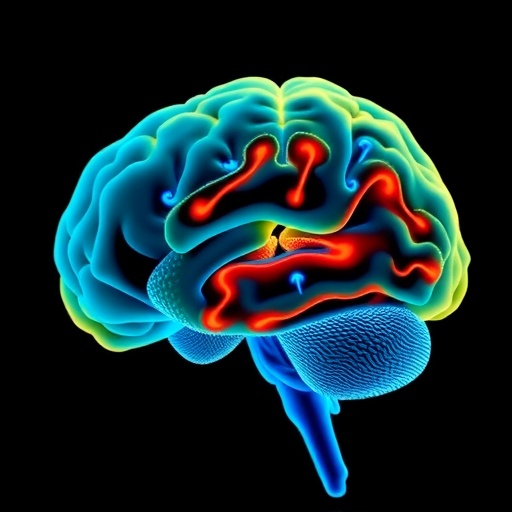
Hippocampal Changes Linked to Somatic Depression
66
SHARES
604
VIEWS
Share on FacebookShare on Twitter
ADVERTISEMENT

In a groundbreaking study published in BMC Psychiatry, researchers have unveiled critical neurobiological distinctions underlying somatic depression, a distinct subtype of major depressive disorder (MDD). This research delves into the hippocampal subregions, exposing structural and functional abnormalities uniquely associated with somatic depression, thereby advancing our understanding of the neuroanatomical substrates that differentiate it from non-somatic depression.

The hippocampus, a complex brain structure critical for memory and emotional processing, comprises several subfields with specialized functions. Despite its known involvement in depressive disorders, previous investigations largely treated it as a homogeneous entity. This new study challenges that approach by dissecting the hippocampus into its constituent subregions to map disruptions specific to somatic depression.

A cohort of 261 individuals participated in this investigation, including 190 patients diagnosed with major depressive disorder and 71 healthy controls. Using advanced 3.0 Tesla resting-state magnetic resonance imaging (MRI), the team meticulously measured both grey matter volume (GMV) and functional connectivity (FC) within hippocampal subregions. These neuroimaging metrics served as indicators of structural integrity and functional communication between brain regions respectively.

Remarkably, the study identified significant reductions in grey matter volume localized in the left and right hippocampus amygdala transition area (HATA) among patients suffering from somatic depression compared to their non-somatic counterparts. The amygdala transition area, an anatomically intricate nexus linking hippocampus and amygdala, is crucial for integrating emotional and sensory information, which may underpin somatic symptomatology.

Beyond structural alterations, functional connectivity analyses revealed diminished communication between the left HATA and the left superior occipital gyrus as well as between the right HATA and the left middle temporal gyrus in somatic depression patients. These disrupted networks suggest impaired integration of sensory and cognitive processing pathways, potentially explaining the somatization phenomena observed clinically.

Of particular significance, the strength of connectivity between the left HATA and left superior occipital gyrus correlated positively with clinical measures of depression severity, including scores from the Hamilton Depression Rating Scale (HAMD-17) and assessments of cognitive disturbance. This finding not only substantiates a link between hippocampal network dysfunction and depressive symptomatology but also offers a promising biomarker for disease severity.

The implications of these findings are multifaceted. They underscore the importance of viewing the hippocampus as a heterogeneous structure where specific subregions contribute differentially to psychopathology. Identifying the HATA as a locus of disruption enhances the precision of neurobiological models of somatic depression and opens avenues for targeted neuromodulatory treatments.

Moreover, the involvement of sensory processing areas like the superior occipital gyrus emphasizes the cross-talk between limbic structures and cortical sensory regions, possibly elucidating mechanisms by which emotional disturbances manifest somatically. This cross-modal interaction highlights a neural pathway that could be manipulated therapeutically to alleviate somatic symptoms.

The study’s methodology, combining high-resolution imaging with rigorous clinical phenotyping, represents a methodological advance in psychiatric neuroimaging. It sets the stage for further work aimed at unraveling complex brain-behavior relationships in depressive subtypes, with potential to tailor interventions based upon distinct neurobiological signatures.

Future research may expand this approach to other subfields within the hippocampus and examine longitudinal changes in GMV and FC as these relate to treatment response. Additionally, exploring how these hippocampal abnormalities interact with other key brain circuits implicated in mood regulation will deepen our understanding of depression’s heterogeneity.

By pinpointing neurobiological markers specific to somatic depression, this study paves the way not only for refined diagnostic criteria but also for personalized therapeutic strategies. As precision psychiatry gains momentum, such targeted insights into brain network dysfunction hold promise for mitigating the substantial burden of depressive disorders worldwide.

In conclusion, the structural and functional aberrations of the hippocampus, particularly within the amygdala transition area, represent a neurobiological hallmark of somatic depression. The connectivity disruptions involving sensory cortical regions may serve as a novel target for neuroregulation, offering hope for innovative treatment modalities tailored to this debilitating subtype of depression.

Subject of Research: Neurobiological distinctions of somatic depression focusing on hippocampal subregions.

Article Title: Brain structural and functional aberrant of hippocampal subregions was associated with somatic depression.

Article References: Juan, Q., Liuyi, Z., Yuxuan, H., Jiabo, S., Yu, C., Shui, T., Zhijian, Y., & Qing, L. (2025). Brain structural and functional aberrant of hippocampal subregions was associated with somatic depression. BMC Psychiatry, 25(1), Article 978. https://doi.org/10.1186/s12888-025-07386-y

Image Credits: AI Generated

DOI: 10.1186/s12888-025-07386-y

Keywords: brain imaging studies in depression, differences between somatic and non-somatic depression, emotional processing and memory, functional connectivity in depression, grey matter volume in MDD, hippocampal subregions in depression, hippocampus and mental health, major depressive disorder research, neuroanatomy of somatic depression, neurobiological distinctions in somatic depression, resting-state MRI in psychiatry, structural abnormalities in somatic depression

Cite Scienmag News

Glenn Wilkins. (October 13, 2025). Hippocampal Changes Linked to Somatic Depression. Scienmag. https://scienmag.com/hippocampal-changes-linked-to-somatic-depression/

Glenn Wilkins. "Hippocampal Changes Linked to Somatic Depression." Scienmag, 13 October 2025, https://scienmag.com/hippocampal-changes-linked-to-somatic-depression/. Accessed 4 September 2026.

Glenn Wilkins. "Hippocampal Changes Linked to Somatic Depression." Scienmag. October 13, 2025. https://scienmag.com/hippocampal-changes-linked-to-somatic-depression/


Tags: brain imaging studies in depressiondifferences between somatic and non-somatic depressionemotional processing and memoryfunctional connectivity in depressiongrey matter volume in MDDhippocampal subregions in depressionhippocampus and mental healthmajor depressive disorder researchneuroanatomy of somatic depressionneurobiological distinctions in somatic depressionresting-state MRI in psychiatrystructural abnormalities in somatic depression
Share26Tweet17
Previous Post

Enhancing Gastrointestinal Surgery Training with Flipped Classroom Approach

Next Post

Illinois Chat: A New Communication Platform Unveiled for Campus Community

Related Posts

Delirium signals systemic vulnerability in hospitalized COVID-19 patients, cohort study finds
Psychology & Psychiatry

Delirium signals systemic vulnerability in hospitalized COVID-19 patients, cohort study finds

September 4, 2026
Genetic study links CD40 locus to depression and immune disease
Psychology & Psychiatry

Genetic study links CD40 locus to depression and immune disease

September 4, 2026
Casual and excessive action gaming shape visual search differently, training study shows
Psychology & Psychiatry

Casual and excessive action gaming shape visual search differently, training study shows

September 4, 2026
When AI companions disappear, users grieve like losing a friend
Psychology & Psychiatry

When AI companions disappear, users grieve like losing a friend

September 4, 2026
Building Your Own Boxes: Training and the Hidden Curriculum of Academic Success
Psychology & Psychiatry

Building Your Own Boxes: Training and the Hidden Curriculum of Academic Success

September 4, 2026
Genes may predict lithium response in Ethiopian bipolar disorder patients
Psychology & Psychiatry

Genes may predict lithium response in Ethiopian bipolar disorder patients

September 4, 2026
Next Post
Illinois Chat: A New Communication Platform Unveiled for Campus Community

Illinois Chat: A New Communication Platform Unveiled for Campus Community

  • Mothers who receive childcare support from maternal grandparents show more optimized

    Mothers who receive childcare support from maternal grandparents show more parental warmth, finds NTU Singapore study

    27656 shares
    Share 11059 Tweet 6912
  • University of Seville Breaks 120-Year-Old Mystery, Revises a Key Einstein Concept

    1061 shares
    Share 424 Tweet 265
  • Bee body mass, pathogens and local climate influence heat tolerance

    682 shares
    Share 273 Tweet 171
  • Researchers record first-ever images and data of a shark experiencing a boat strike

    546 shares
    Share 218 Tweet 137
  • Groundbreaking Clinical Trial Reveals Lubiprostone Enhances Kidney Function

    531 shares
    Share 212 Tweet 133
Science

Embark on a thrilling journey of discovery with Scienmag.com—your ultimate source for cutting-edge breakthroughs. Immerse yourself in a world where curiosity knows no limits and tomorrow’s possibilities become today’s reality!

RECENT NEWS

  • Magnetic regulation robot design tackles obstacle-crossing challenges
  • Deep learning segments retinal blood vessels in fluorescein angiography images
  • Single-Bit Faults Break Ascon Through Differential S-Box Analysis
  • KSVoteRank: identifying dispersed key nodes through k-shell and voting methods

Categories

  • Agriculture
  • Anthropology
  • Archaeology
  • Athmospheric
  • Biology
  • Biotechnology
  • Blog
  • Bussines
  • Cancer
  • Chemistry
  • Climate
  • Earth Science
  • Editorial Policy
  • Marine
  • Mathematics
  • Medicine
  • Pediatry
  • Policy
  • Psychology & Psychiatry
  • Science Education
  • Social Science
  • Space
  • Technology and Engineering

Subscribe to Blog via Email

Enter your email address to subscribe to this blog and receive notifications of new posts by email.

Join 5,151 other subscribers

© 2025 Scienmag - Science Magazine

Welcome Back!

Login to your account below

Forgotten Password?

Retrieve your password

Please enter your username or email address to reset your password.

Log In
No Result
View All Result
  • HOME
  • SCIENCE NEWS
  • CONTACT US

© 2025 Scienmag - Science Magazine

Discover more from Science

Subscribe now to keep reading and get access to the full archive.

Continue reading