


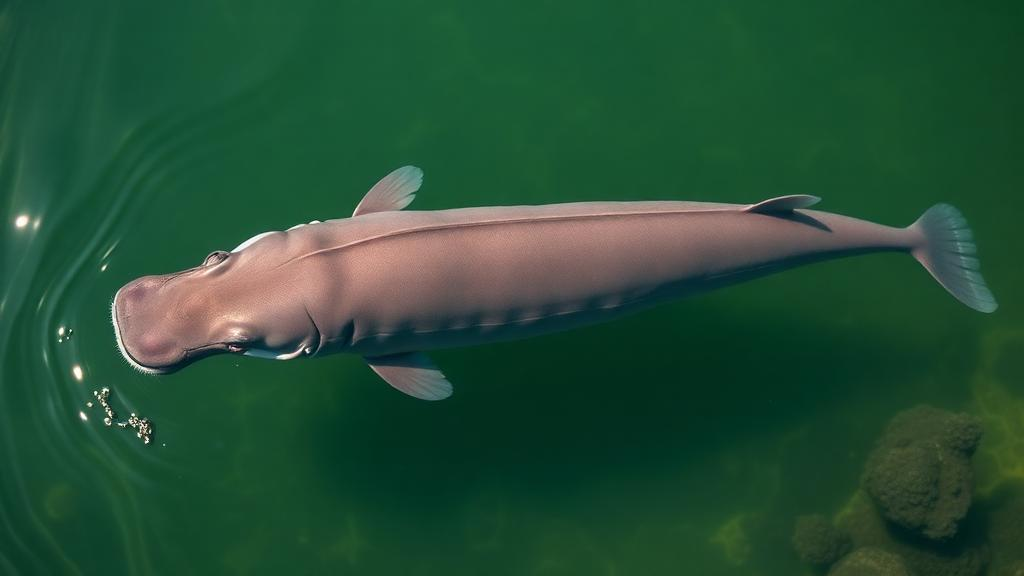
A pilot environmental DNA study in Mozambique’s Bazaruto Archipelago found that sampling strategy strongly shaped the odds of detecting dugongs, with laboratory-processed 60-litre near-bottom samples producing the highest sample-level detection rate. Across 12 boat survey tracks conducted in October 2024, researchers recovered dugong DNA from 35% of the 107 samples analyzed. The results indicate that a species-specific quantitative polymerase chain reaction assay can detect the animals in their natural habitat, but that filtration volume, sampling depth and sample-processing conditions must be considered when designing monitoring surveys.
The field experiment was conducted in Bazaruto Archipelago National Park, where the largest known dugong subpopulation in the Western Indian Ocean occurs. Dugongs are large, mostly herbivorous marine mammals whose populations have declined throughout their range, and visual or aerial surveys can be difficult where animals are scarce, solitary, cryptic or avoid human activity. A positive eDNA result therefore offers a non-invasive way to supplement field observations, although the signal may reflect an animal that was present nearby or recently passed through the sampled area rather than one present at the exact sampling point and time.
During the campaign, the research team followed 12 non-linear boat tracks at an average speed of about 1.5 knots through known areas of dugong occurrence. The sampling design compared surface water with near-bottom water, filtered volumes of 1.5, 30 and 60 litres, and approximately 25 millilitres of sediment. Two filter configurations were used: 0.45-micrometre polyethersulfone Waterra cartridges for the 30- and 60-litre samples and 0.22-micrometre Millipore Sterivex filters for the 1.5-litre samples. Near-bottom water was collected about one metre above the seabed with a pump mounted on a manta tow frame, while surface samples were collected from the boat or from composite samples taken at the beginning and end of each track.
The investigators developed a species-specific qPCR assay, named Ddug01, targeting a 115-base-pair segment of the mitochondrial 16S ribosomal RNA gene. In silico analysis indicated amplification specific to dugongs and the extinct Steller’s sea cow. Testing with serial dilutions of dugong tissue DNA produced a linear response from undiluted DNA through a 10^-4 dilution, with a slope of -4.819, an R² of 0.984 and an amplification efficiency of 61.3%. The lowest concentration detected in all four technical replicates was 0.944 picograms of DNA per reaction, which was assigned as both the limit of detection and limit of quantification. Amplification became inconsistent at the next tenfold dilution and was absent at lower concentrations.
Each environmental sample was amplified in eight technical replicates, and a beta-binomial mixed-effects model accounted for positive versus negative replicates while including sampling batch as a random effect. Laboratory processing was associated with markedly stronger qPCR detection than field processing, with a significant treatment effect of χ² = 15.06 and p < 0.001. The comparison concerned complete operational workflows rather than extraction location alone: field samples were processed with smaller amounts of preservation buffer, lower centrifugation capacity and, for Sterivex filters, a different extraction kit. Positive results from field processing showed that the method functioned, but the lower yield indicates a practical limitation of the field protocol.
Filtration volume and vertical position interacted significantly, with χ² = 3.875 and p = 0.049. At the low volume of 1.5 litres, near-bottom samples had about 5.8 times higher odds of producing a positive qPCR replicate than surface samples, a statistically significant difference with p = 0.013. At 60 litres, however, detection was similar between the two vertical positions. The corresponding pattern appeared when volume was compared at each depth: increasing the filtered volume from 1.5 to 60 litres significantly improved detection in surface water, with an odds ratio of 5.49 and p = 0.012, whereas it did not significantly change detection near the bottom, with p = 0.917.
The highest sample-level detection rate came from 60-litre near-bottom samples processed in the laboratory, with 9 of 11 samples positive. The researchers also detected dugong DNA in samples collected 1 hour 40 minutes and 2 hours after the last visual sightings, and at two sites where no animals had been directly observed. One event without a visual sighting produced no eDNA detection, while a known feeding site with visible feeding trails also yielded no positive signal. These outcomes illustrate the complementary nature and limitations of the two approaches: eDNA may reveal animals missed by visual surveys, but absence of a detection does not necessarily establish that dugongs were absent, particularly where tides dilute signals or DNA disperses quickly.
Sediment did not outperform the water-based methods in this pilot. None of the 10 sediment samples produced a positive result, whereas every water-sampling and extraction combination produced at least one detection. The comparison is incomplete because sediment was processed only in the field, where overall detection was lower, and the extraction kit may have performed differently with sediment than with water. The result therefore does not establish that sediment is inherently unsuitable for dugong eDNA analysis. It shows only that the tested sediment workflow offered no advantage under the conditions encountered, while sediment eDNA may integrate signals over longer periods than water samples and could provide information about past rather than recent presence.
High-volume filtration also carried practical benefits. The 0.45-micrometre Waterra cartridge filtered water at an average rate of 25 seconds per litre, allowing a 60-litre sample to be processed in less than 25 minutes at the surface and underwater without clogging. Placing the cartridge directly on the pre-pump side of the system also reduced the amount of single-use tubing consumed, a relevant advantage for large monitoring programs. The field protocol used centrifugation limited to 5,000 g and could not process the full preservation-buffer volume processed in the laboratory. Such conditions are less effective for recovering free or weakly adsorbed DNA than higher-force centrifugation or precipitation methods involving reagents that are difficult to transport because of their toxicity and volatility.
The authors therefore favor mobile surface sampling with high-volume filtration as a practical approach for large-scale dugong monitoring, while acknowledging that the proof-of-concept study included only 12 sampling events and a limited number of positive detections. Sampling volume was also partly confounded with filter configuration and, in some laboratory comparisons, extraction kit, so the results cannot be attributed exclusively to volume. The study supports further testing across broader spatial, temporal and hydrodynamic conditions, including tidal cycles, and does not directly quantify DNA persistence or transport. Even with those limitations, the work shows that carefully chosen water sampling and processing conditions can improve the recovery of rare marine-mammal eDNA and could complement conventional surveys in tropical coastal habitats.
Subject of Research: Optimization of environmental DNA sampling and extraction for detecting rare dugongs in tropical coastal waters
Article Title: Optimizing Marine eDNA Protocols for Rare Megafauna: A Case Study on Dugongs in the Western Indian Ocean
Article References: Bernagou, L., Serval, A., Beudard, F., Mathey, J., Mercky, Y., Le Bozec, C., Trotzuk, E., Paunde, K., Garcia, M., Bellemain, E., & Corse, E. (2026). Optimizing Marine eDNA Protocols for Rare Megafauna: A Case Study on Dugongs in the Western Indian Ocean. Ecology and Evolution, 16(10), Article e74500. https://doi.org/10.1002/ece3.74500
Image Credits: AI Generated
DOI: 10.1002/ece3.74500
Keywords: dugong eDNA, environmental DNA, marine monitoring, qPCR, Bazaruto Archipelago, water filtration, molecular detection, Mozambique, sea mammal conservation, Optimizing, Marine, eDNA
Cite Scienmag News
Margaret Porter. (October 19, 2026). High-volume water sampling improves dugong eDNA detection. Scienmag. https://scienmag.com/high-volume-water-sampling-improves-dugong-edna-detection/
Margaret Porter. "High-volume water sampling improves dugong eDNA detection." Scienmag, 19 October 2026, https://scienmag.com/high-volume-water-sampling-improves-dugong-edna-detection/. Accessed 19 October 2026.
Margaret Porter. "High-volume water sampling improves dugong eDNA detection." Scienmag. October 19, 2026. https://scienmag.com/high-volume-water-sampling-improves-dugong-edna-detection/


