


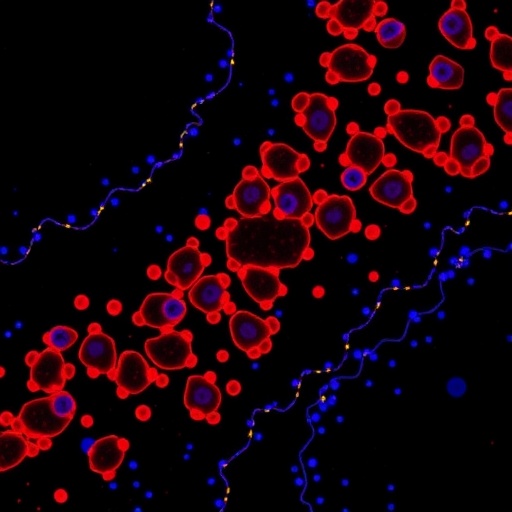
In a groundbreaking advancement that could reshape the landscape of molecular biology, researchers have unveiled a high-resolution method for single-cell sequencing of trans-spliced mRNA, setting new benchmarks in cellular transcriptomics. This state-of-the-art technique, detailed in a recent publication by Cosentino and colleagues, promises unprecedented insight into the complex mechanisms governing RNA splicing and gene expression at a single-cell level, a domain critical for understanding diverse biological processes and disease states.
Traditional RNA sequencing methods often struggle to capture the nuances of trans-splicing—an RNA processing event where exons from different pre-mRNA molecules are joined together. This unique form of splicing has been relatively underexplored, largely due to technical limitations in distinguishing trans-spliced variants from the more common cis-spliced transcripts. The innovation presented in this protocol addresses these challenges head-on by incorporating enhanced molecular tagging and amplification strategies to faithfully preserve the native architecture of trans-spliced mRNAs.
The power of single-cell sequencing lies in its ability to discern cellular heterogeneity that bulk sequencing methods average out. By applying this resolution to trans-splicing events, the new protocol enables researchers to map how individual cells harness this process to diversify their transcriptomes. This can reveal regulatory layers previously masked in population-level analyses, providing clues about cell type-specific functions, developmental trajectories, and responses to environmental stimuli.
Central to the protocol’s success is its meticulous capture of the transcript’s 5’ and 3’ ends, allowing unambiguous identification of trans-spliced junctions. The approach leverages novel enzymatic reactions and ligation steps carefully optimized to maintain sequence integrity, enabling high-fidelity reconstruction of splicing landscapes. Moreover, the method integrates seamlessly with established single-cell RNA sequencing platforms, widening accessibility and potential for widespread adoption.
The practical implications of this development are vast. Researchers can now probe the role of trans-splicing in normal physiology and pathogenesis with precision. Given that aberrant RNA splicing is implicated in various cancers and genetic disorders, understanding trans-splicing patterns at the single-cell level could illuminate new biomarkers and therapeutic targets. Furthermore, tissues with complex cell compositions, such as the brain or immune system, stand to benefit profoundly from this refined analytical lens.
Implementing this protocol requires meticulous experimental execution. Steps include cell isolation, mRNA extraction under conditions preserving RNA integrity, strategic reverse transcription with specialized primers, as well as a series of purification and amplification cycles designed to enrich for trans-spliced sequences. Each phase has been rigorously characterized to maximize sensitivity and specificity, ensuring reproducible outcomes across diverse sample types.
Bioinformatic analysis pipelines accompanying the protocol are equally sophisticated. They employ advanced algorithms capable of distinguishing genuine trans-splicing events from experimental artifacts or sequencing errors. These computational tools facilitate high-confidence annotation of transcripts, visualization of splicing diversity, and quantification of junction abundance at single-cell resolution, pushing the analytical frontier forward.
Beyond capturing static snapshots, the technology opens pathways to dynamic studies. Scientists can track how trans-splicing activity varies during cellular differentiation, in response to external cues, or throughout disease progression. This temporal dimension adds a vital layer of understanding to RNA biology’s functional repertoire, potentially revealing regulatory checkpoints amenable to therapeutic modulation.
The introduction of this high-resolution sequencing method also underscores the increasing convergence of experimental and computational biology. It reflects a growing recognition that unraveling complex molecular phenomena demands integrated approaches combining cutting-edge laboratory techniques with robust data science. This synergy not only accelerates discovery but democratizes access to intricate biological insights.
Intriguingly, this approach may shed light on evolutionary aspects of splicing. Differences in trans-splicing prevalence and patterns across species and cell types could inform hypotheses about RNA processing’s adaptive significance. Delineating these evolutionary narratives may provide broader context for interpreting functional data and guiding synthetic biology applications.
Moreover, the methodology’s adaptability hints at future expansions. For example, coupling this protocol with spatial transcriptomics could map trans-spliced mRNAs within tissue architecture, or integrating with proteomics could link transcript variants to protein isoform expression. Such multidimensional analyses hold promise for unraveling the intricate web connecting genotype to phenotype.
As research workflows adopt this technology, anticipated challenges include managing increased data complexity and scaling up throughput for large single-cell atlases. Nonetheless, the benefits—unveiling the hidden layers of transcriptomic regulation with unprecedented clarity—far outweigh these hurdles. The authors’ thorough validation in diverse biological contexts allays concerns about adaptability and robustness.
Ultimately, this state-of-the-art protocol propels trans-splicing research to new heights, furnishing the scientific community with a versatile toolset to decode RNA’s role in health and disease at unparalleled resolution. It exemplifies a milestone where technological ingenuity meets biological inquiry, heralding a new era in transcriptomic sciences.
As this methodology gains traction, it is poised to catalyze transformative discoveries, deepen our molecular understanding, and inspire follow-up innovations. The potential ripple effects extend from basic science to clinical diagnostics, underlining the enduring impact of pioneering single-cell approaches in unlocking cellular complexity comprehensively.
Cite Scienmag News
Juliet Wilcox. (June 16, 2026). High-Resolution Single-Cell Sequencing Uncovers Trans-Spliced mRNA. Scienmag. https://scienmag.com/high-resolution-single-cell-sequencing-uncovers-trans-spliced-mrna/
Juliet Wilcox. "High-Resolution Single-Cell Sequencing Uncovers Trans-Spliced mRNA." Scienmag, 16 June 2026, https://scienmag.com/high-resolution-single-cell-sequencing-uncovers-trans-spliced-mrna/. Accessed 3 September 2026.
Juliet Wilcox. "High-Resolution Single-Cell Sequencing Uncovers Trans-Spliced mRNA." Scienmag. June 16, 2026. https://scienmag.com/high-resolution-single-cell-sequencing-uncovers-trans-spliced-mrna/


