Friday, October 30, 2026
Science
No Result
View All Result
  • Login
  • HOME
  • SCIENCE NEWS
  • CONTACT US
  • HOME
  • SCIENCE NEWS
  • CONTACT US
No Result
View All Result
Scienmag
No Result
View All Result
Home Science News Biology

High-Fat Diet Reshapes the Mouse Gut Microbiome in Distinct, Timed Phases

October 29, 2026
in Biology
Morgan Morrow
By Morgan Morrow Scienmag Editorial Profile - Bacteriology
Reading Time: 3 mins read
0
High-Fat Diet Reshapes the Mouse Gut Microbiome in Distinct, Timed Phases

High-Fat Diet Reshapes the Mouse Gut Microbiome in Distinct, Timed Phases

65
SHARES
587
VIEWS
Share on FacebookShare on Twitter
ADVERTISEMENT

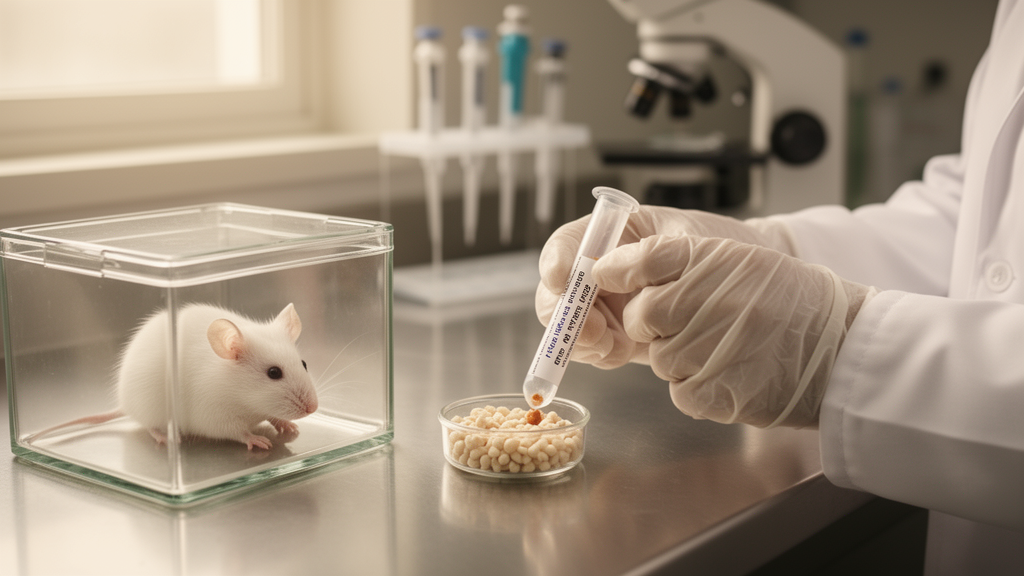
A dense longitudinal study in mice has mapped how a high-fat diet restructures the gut microbiota over time, revealing that the reorganization unfolds in distinct phases rather than as a single gradual drift. Researchers assigned mice to a normal diet (19 animals, four to five per cage) or a high-fat diet (20 animals, five per cage) and collected 468 fecal samples at 12 timepoints across 70 days, spanning acute, early, mid, and late phases. Microbial communities were profiled with 16S rRNA V3-V4 gene sequencing, and the work was published open access in BMC Microbiology on 26 October 2026.

The high-fat diet significantly reduced alpha diversity, with a mean Shannon index of 4.58 ± 0.53 in high-fat-fed mice versus 5.03 ± 0.34 in normal-diet controls (p < 0.001), and altered overall community composition, with diet explaining roughly 18% of the variance in a PERMANOVA test (R² = 0.177, p = 0.001). Two independent differential abundance methods, ANCOM-BC2 and MaAsLin3, converged on five diet-responsive genera: Lactococcus and Taurinivorans were enriched in high-fat-fed mice (log2 fold changes of 6.31 and 4.41), while Duncaniella, Lepagella, and CAG-873 were depleted (log2 fold changes of −3.22, −2.82, and −2.71), with large effect sizes (|Cohen’s d| = 1.22–2.24). Per-mouse correlations tied these taxa to body weight, with absolute Spearman coefficients of 0.67–0.82 (all adjusted p < 0.001).

Temporal analysis was the study’s central contribution. Lactococcus expanded rapidly during the acute phase, while Duncaniella showed progressive depletion. Cross-correlation lag analysis suggested an ordering of events: Duncaniella depletion preceded weight gain, peaking at a lag of −2 with a modest correlation (r = −0.31), whereas Taurinivorans enrichment followed weight gain, peaking at a lag of +1 (r = +0.31). Community state modeling identified two distinct configurations, and high-fat-fed mice shifted between them more often than controls, with transition rates of 15.8% versus 7.1%, indicating greater community instability. Indicator species analysis flagged 23 genera as phase-specific, with Lactococcus the strongest chronic-phase indicator (IndVal = 0.924). Four of the five diet-responsive genera ranked among the top ten network hubs by degree centrality in co-occurrence analysis.

Functional prediction with PICRUSt2 pointed to broad metabolic reprogramming: 342 predicted pathways were significantly altered, 63% of those tested, with enrichment of simple carbohydrate degradation and depletion of complex polysaccharide utilization, consistent with the taxonomic shifts. The authors propose a multi-phasic model in which rapid, taxon-specific acute responses give way to progressive compositional change and chronic instability, and they frame Duncaniella depletion as a candidate temporal precursor of weight gain while treating Taurinivorans enrichment as secondary to metabolic deterioration. The findings are specific to this mouse model and 16S-based profiling, and the lag-based ordering is correlational, so causal direction in the diet–microbiota–weight relationship remains to be tested. The authors suggest the identified taxa and temporal windows could serve as targets for future intervention studies, though no intervention was performed in this work.

Subject of Research: Temporal dynamics of gut microbiota restructuring in a mouse model of diet-induced obesity

Article Title: Gut microbiota restructuring during diet-induced obesity: a dense longitudinal study reveals phasic perturbation, network hubs, and temporally ordered taxonomic shifts

Article References: Li, R., Deng, L., Yang, X., Luo, G., & Hu, J. (2026). Gut microbiota restructuring during diet-induced obesity: a dense longitudinal study reveals phasic perturbation, network hubs, and temporally ordered taxonomic shifts. BMC Microbiology. https://doi.org/10.1186/s12866-026-05800-3

Image Credits: AI Generated

DOI: 10.1186/s12866-026-05800-3

Keywords: gut microbiota, high-fat diet, obesity, mice, longitudinal study, 16S rRNA sequencing, Lactococcus, Duncaniella, Taurinivorans, community dynamics, PICRUSt2, BMC Microbiology

Cite Scienmag News

Morgan Morrow. (October 29, 2026). High-Fat Diet Reshapes the Mouse Gut Microbiome in Distinct, Timed Phases. Scienmag. https://scienmag.com/high-fat-diet-reshapes-the-mouse-gut-microbiome-in-distinct-timed-phases/

Morgan Morrow. "High-Fat Diet Reshapes the Mouse Gut Microbiome in Distinct, Timed Phases." Scienmag, 29 October 2026, https://scienmag.com/high-fat-diet-reshapes-the-mouse-gut-microbiome-in-distinct-timed-phases/. Accessed 30 October 2026.

Morgan Morrow. "High-Fat Diet Reshapes the Mouse Gut Microbiome in Distinct, Timed Phases." Scienmag. October 29, 2026. https://scienmag.com/high-fat-diet-reshapes-the-mouse-gut-microbiome-in-distinct-timed-phases/
Tags: 16S rRNA sequencing16S rRNA sequencing gut microbiotaalpha diversity in gut microbiomeBMC Microbiologycommunity dynamicsdiet-induced microbial community restructuringdifferential abundance of gut bacteriaDuncaniellaeffect of high-fat diet on microbial generagut microbiome diversity reductiongut microbiotahigh-fat diethigh-fat diet impact on gut microbiomeLactococcuslongitudinal studymicemicrobial community composition shifts over timemicrobiome profiling in diet studiesmicrobiome variance explained by dietmouse gut microbiota longitudinal studyobesityphases of microbiome change due to high-fat dietPICRUSt2Taurinivorans
Share26Tweet16
Previous Post

German patients see prescribed knee app as a useful complement to physiotherapy, not a replacement

Next Post

Hidden RNA Cleanup Role of Immune Sensor MDA5 Shields Lungs from Fibrosis

Related Posts

Branched-Chain Amino Acid Supplements Partially Ease Hormone Disruption After Brain Injury in Rats
Chemistry

Branched-Chain Amino Acid Supplements Partially Ease Hormone Disruption After Brain Injury in Rats

October 30, 2026
Scientists Link Immune Genes and Iron-Driven Cell Death to PCOS
Biotechnology

Scientists Link Immune Genes and Iron-Driven Cell Death to PCOS

October 30, 2026
Workshop report flags heavy burden of co-occurring conditions in fetal alcohol spectrum disorders
Medicine

Workshop report flags heavy burden of co-occurring conditions in fetal alcohol spectrum disorders

October 30, 2026
Cotton’s cold stress memory may hinge on two opposing histone marks
Biology

Cotton’s cold stress memory may hinge on two opposing histone marks

October 30, 2026
Yeasts Turn Alfalfa Biomass Into Protein-Rich Single-Cell Feed
Biotechnology

Yeasts Turn Alfalfa Biomass Into Protein-Rich Single-Cell Feed

October 30, 2026
Hidden Enzymes That Erase Protein Palmitoylation Emerge as Disease Drivers
Biology

Hidden Enzymes That Erase Protein Palmitoylation Emerge as Disease Drivers

October 30, 2026
Next Post
Hidden RNA Cleanup Role of Immune Sensor MDA5 Shields Lungs from Fibrosis

Hidden RNA Cleanup Role of Immune Sensor MDA5 Shields Lungs from Fibrosis

  • Mothers who receive childcare support from maternal grandparents show more optimized

    Mothers who receive childcare support from maternal grandparents show more parental warmth, finds NTU Singapore study

    27656 shares
    Share 11059 Tweet 6912
  • University of Seville Breaks 120-Year-Old Mystery, Revises a Key Einstein Concept

    1061 shares
    Share 424 Tweet 265
  • Bee body mass, pathogens and local climate influence heat tolerance

    682 shares
    Share 273 Tweet 171
  • Researchers record first-ever images and data of a shark experiencing a boat strike

    546 shares
    Share 218 Tweet 137
  • Groundbreaking Clinical Trial Reveals Lubiprostone Enhances Kidney Function

    531 shares
    Share 212 Tweet 133
Science

Embark on a thrilling journey of discovery with Scienmag.com—your ultimate source for cutting-edge breakthroughs. Immerse yourself in a world where curiosity knows no limits and tomorrow’s possibilities become today’s reality!

RECENT NEWS

  • Root Chemistry Reveals How a Chinese Medicinal Herb Tolerates Cadmium
  • Research report: Improving hydrodeoxygenation over Ni-Mo/Al2O3 by tuning the textural properties of the support via doping with lanthanoid group metals
  • When bosses and staff agree on hierarchy, employees work better, study finds
  • Oral clues to a rare keratin disorder: review maps mouth signs to gene mutations

Categories

  • Agriculture
  • Anthropology
  • Archaeology
  • Athmospheric
  • Biology
  • Biotechnology
  • Blog
  • Bussines
  • Cancer
  • Chemistry
  • Climate
  • Earth Science
  • Editorial Policy
  • Marine
  • Mathematics
  • Medicine
  • Pediatry
  • Policy
  • Psychology & Psychiatry
  • Science Education
  • Science News
  • Social Science
  • Space
  • Technology and Engineering

Subscribe to Blog via Email

Enter your email address to subscribe to this blog and receive notifications of new posts by email.

Join 5,151 other subscribers

© 2025 Scienmag - Science Magazine

Welcome Back!

Login to your account below

Forgotten Password?

Retrieve your password

Please enter your username or email address to reset your password.

Log In
No Result
View All Result
  • HOME
  • SCIENCE NEWS
  • CONTACT US

© 2025 Scienmag - Science Magazine

Discover more from Science

Subscribe now to keep reading and get access to the full archive.

Continue reading