


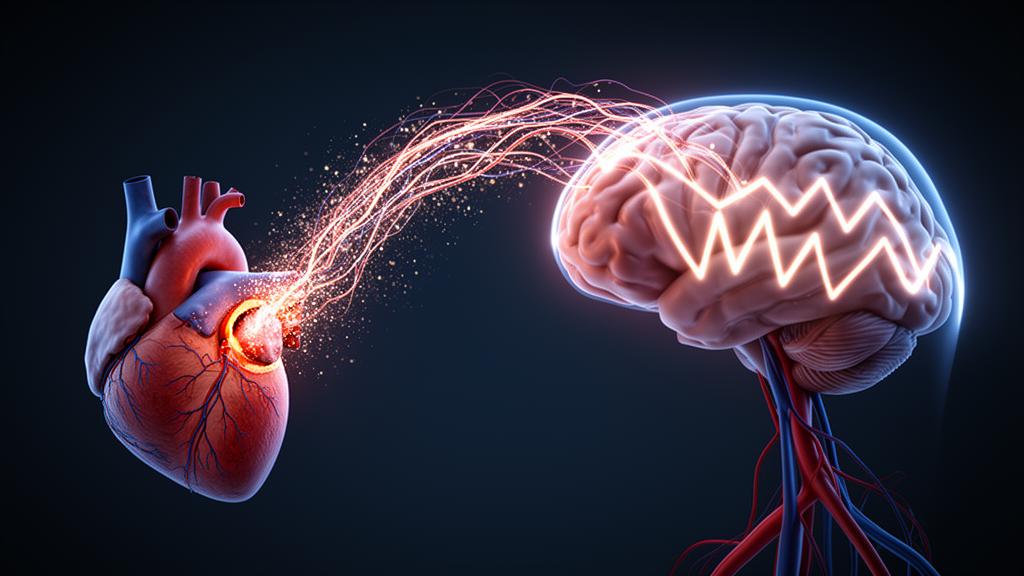
One of the most puzzling associations in neurology is about to face its most detailed interrogation yet. Migraine with aura, the form of the disease in which headaches are preceded by visual disturbances, tingling sensations or speech difficulties, has long been known to travel with a curious cardiac companion: a patent foramen ovale, or PFO, a small flap-like opening between the two upper chambers of the heart that fails to seal after birth. In the general population, PFO is common and usually harmless, but in patients with migraine with aura its prevalence appears to be up to three times higher. Why this should be so has remained stubbornly unclear, with the simplest explanation, that tiny clots slip through the hole and trigger brain disturbances, failing to account for the full picture. A new study protocol published in Frontiers in Neurology now sets out to dissect the connection at the level of genes, blood flow and platelet biology.
The study, called PFOCUS, is a prospective, monocentric, observational case-control trial led by Matteo Paolucci and colleagues at the IRCCS Istituto delle Scienze Neurologiche di Bologna in Italy, and it is registered with ClinicalTrials.gov under identifier NCT07349004. Its central ambition is to determine whether patients with migraine with aura who also carry a right-to-left shunt, the abnormal blood flow across the heart that a PFO permits, constitute a biologically distinct subgroup of the disease. Rather than treating migraine and PFO as two coincidental conditions, the researchers hypothesize that shared genetic predisposition and vascular dysfunction may bind them together, shaping both the neurological symptoms and the stroke risk that accompanies them.
The clinical stakes are considerable. Migraine with aura is associated with an increased risk of ischemic stroke, and the association is particularly striking in young people who lack the conventional vascular risk factors, such as hypertension, diabetes or smoking, that usually explain such events. This has left clinicians with an uncomfortable gap in their ability to judge who is genuinely at risk. If PFO-related migraine represents a specific, identifiable phenotype with its own underlying biology, then risk stratification could become far more precise, and preventive strategies, whether medical or procedural, could be tailored to the patients who actually need them rather than applied indiscriminately.
To build that evidence, the team will enroll a total of 240 patients with migraine with aura and sort them into two groups according to whether they show a right-to-left shunt. The classification will rely on contrast-enhanced transcranial Doppler, a non-invasive ultrasound technique in which agitated saline containing microbubbles is injected into a vein while ultrasound probes monitor blood flow in the cerebral arteries. If microbubbles appear in the brain’s circulation within a few heartbeats of the Valsalva maneuver, which raises pressure in the right atrium, this indicates that blood is bypassing the lungs’ filtering system, most commonly through a patent foramen ovale. The technique serves in this study as a surrogate marker of PFO, avoiding the need for invasive cardiac imaging in every participant.
The genetic component of the study is where PFOCUS takes its boldest swing. All participants will undergo whole-exome sequencing, a technique that reads the protein-coding portions of the genome in search of rare variants. The primary endpoint is the difference in the frequency of variants in the NOTCH3 gene between the shunt-positive and shunt-negative groups. The choice of NOTCH3 is deliberate and scientifically loaded: this gene encodes a receptor in the Notch signaling pathway that is crucial for the structural integrity of smooth muscle cells in small blood vessels, and mutations in NOTCH3 cause cerebral autosomal dominant arteriopathy with subcortical infarcts and leukoencephalopathy, a devastating inherited small-vessel disease that frequently produces migraine with aura and stroke. A milder enrichment of NOTCH3 variants in PFO-associated migraine would suggest that vascular wall biology, not merely blood-borne debris, underlies the association.
Secondary endpoints extend the genetic sweep to other genes in a curated panel, and will test whether variant burden correlates with the size of the right-to-left shunt, a parameter that transcranial Doppler can quantify by counting the microbubbles that reach the cerebral circulation. The logic here is that if genetic variants influence the development or persistence of the cardiac defect itself, or the degree to which it allows blood to shunt, then a dose-response relationship between genotype and shunt magnitude would strengthen the case for a genuine biological link rather than statistical coincidence.
Beyond the genome, the study mounts an unusually comprehensive assault on cerebrovascular physiology. Participants will undergo detection of cerebral microemboli, using prolonged transcranial Doppler monitoring to catch silent fragments of clots or debris drifting through brain arteries, events that could indicate subclinical embolism even in patients who have never had a stroke. They will also be assessed for dynamic cerebral autoregulation, the brain’s ability to keep blood flow constant despite swings in blood pressure, and for cerebral vasomotor reactivity, the capacity of brain vessels to dilate in response to a vasodilating stimulus such as carbon dioxide. Both measures probe how well the cerebral circulation copes with physiological stress, and both have shown abnormalities in migraine populations in earlier research. Impaired autoregulation or blunted vasomotor reactivity in the shunt-positive group would point to a vascular phenotype that goes beyond plumbing defects.
The hematological arm of the protocol adds a third dimension: platelet function testing. Platelets are the cellular first responders of the clotting system, and heightened platelet activation has been implicated in both migraine pathophysiology and thromboembolic disease. If patients with migraine with aura and a right-to-left shunt turn out to have measurably more reactive platelets, the paradoxical embolism hypothesis would gain new traction, but with a twist: the problem would lie not only in the cardiac shortcut but in the clot-prone blood traveling through it. Such a finding would also carry direct therapeutic implications, since antiplatelet strategies could be rationally targeted at this subgroup.
Two exploratory aims round out the design and may prove among the most clinically interesting. The study will examine whether different aura phenotypes, for instance purely visual auras versus those involving sensory or language disturbances, are associated with distinct haemodynamic and prothrombotic profiles. It will also assess whether the distribution of lesions seen on brain MRI correlates with these profiles. The underlying idea is that migraine with aura may not be a single entity but a spectrum of conditions with different mechanisms, and that the combination of a heart shunt, vascular dysfunction and clotting tendency could carve out subgroups whose stroke risk and treatment responses differ in ways that current practice cannot distinguish.
If PFOCUS delivers on its design, the consequences could ripple well beyond the headache clinic. Closure of patent foramen ovale has been tested in migraine trials with mixed and contested results, a pattern that many researchers attribute to the inclusion of heterogeneous patient populations in which only a subset truly benefits. Identifying a genetically and physiologically defined phenotype of migraine with aura associated with PFO would give those debates a sharper edge, allowing trials and clinical decisions to focus on patients whose disease is plausibly linked to their cardiac anatomy and vascular biology. The study’s findings may inform stroke risk stratification and, as its investigators put it, open new avenues for personalized preventive strategies in patients with migraine with aura. For the millions of people who experience aura with every attack, and for the young stroke patients whose events have never been adequately explained, the answers that emerge from these 240 carefully phenotyped brains, hearts and genomes could finally turn a long-standing clinical curiosity into actionable medicine.
Subject of Research: Genetic, haemodynamic and platelet determinants of the association between migraine with aura and patent foramen ovale
Article Title: PFOCUS study protocol: a prospective case–control study investigating genetic, haemodynamic, and platelet function in migraine with aura with or without patent foramen ovale
Article References: Paolucci, M., Urbinati, G., Migliaccio, L., Marucci, A., Favoni, V., Mascarella, D., Palombo, F., Carelli, V., Sebastiani, M., Stagni, S., Mancini, R., Cevoli, S., & Zini, A. (2026). PFOCUS study protocol: a prospective case–control study investigating genetic, haemodynamic, and platelet function in migraine with aura with or without patent foramen ovale. Frontiers in Neurology, 17, Article 1952744. https://doi.org/10.3389/fneur.2026.1952744
Image Credits: AI Generated
DOI: 10.3389/fneur.2026.1952744
Keywords: migraine with aura, patent foramen ovale, right-to-left shunt, NOTCH3, transcranial Doppler, whole-exome sequencing, cerebral autoregulation, vasomotor reactivity, platelet function, ischemic stroke, cerebral microemboli, study protocol
Cite Scienmag News
Cassandra Pierce. (October 16, 2026). Hidden Heart-Brain Link: New Study Probes Why Migraine Aura and a Heart Flaw Travel Together. Scienmag. https://scienmag.com/hidden-heart-brain-link-new-study-probes-why-migraine-aura-and-a-heart-flaw-travel-together/
Cassandra Pierce. "Hidden Heart-Brain Link: New Study Probes Why Migraine Aura and a Heart Flaw Travel Together." Scienmag, 16 October 2026, https://scienmag.com/hidden-heart-brain-link-new-study-probes-why-migraine-aura-and-a-heart-flaw-travel-together/. Accessed 16 October 2026.
Cassandra Pierce. "Hidden Heart-Brain Link: New Study Probes Why Migraine Aura and a Heart Flaw Travel Together." Scienmag. October 16, 2026. https://scienmag.com/hidden-heart-brain-link-new-study-probes-why-migraine-aura-and-a-heart-flaw-travel-together/


