


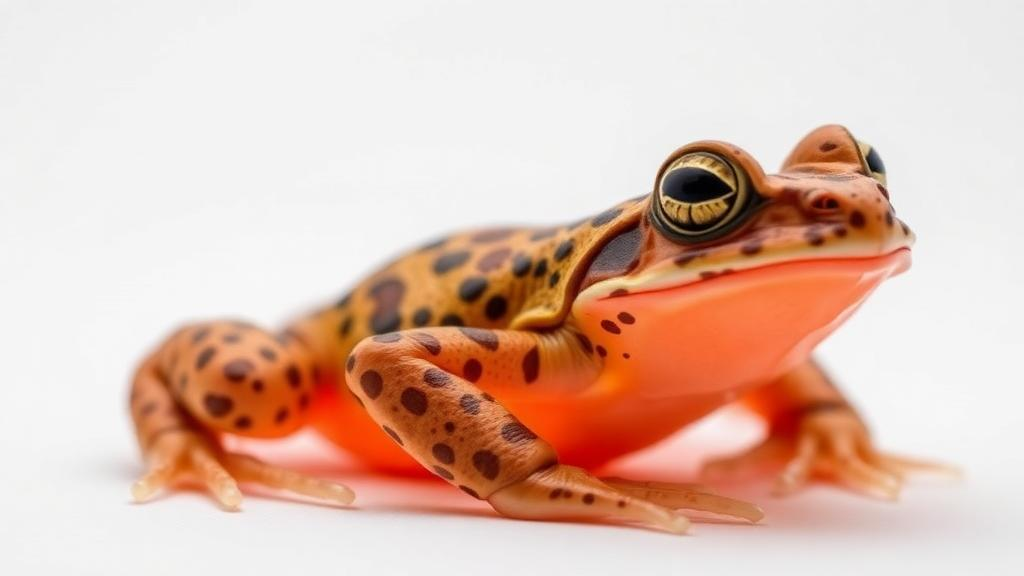
As heatwaves grow more frequent across the planet, the earliest stages of life are proving to be among the most vulnerable. A new study of the Chinese toad, Bufo gargarizans, has revealed that elevated water temperatures do more than simply accelerate embryonic development. They also reshape the community of microbes that colonizes the developing gut, potentially undermining the symbiotic relationships that amphibians rely on for digestion, immunity, and overall health. The findings, published in the journal Microbial Ecology, offer one of the most detailed looks yet at how thermal stress interferes with the delicate choreography between an amphibian embryo and its emerging microbiome.
Amphibians are already the most threatened class of vertebrates on Earth, with habitat loss, disease, pollution, and climate change combining to push hundreds of species toward extinction. Because amphibians have permeable skin and eggs that develop directly in water, they are acutely sensitive to shifts in environmental temperature. The research team, led by Jiahui Zhang and corresponding author Zhangmin Yang of Shaanxi Normal University in Xi’an, China, set out to answer a question that has received surprisingly little attention: does high temperature affect not only how fast amphibian embryos develop, but also which microbes take up residence in their guts as that development proceeds?
The experimental design was straightforward but rigorous. The researchers divided Bufo gargarizans embryos into two groups: a control group maintained at normal temperatures and a high-temperature group exposed to elevated thermal conditions. They then tracked the embryos through every stage of development, from fertilization through hatching, recording the total time required for complete embryonic development, the proportion of embryos that hatched successfully, and the proportion that emerged with malformations. To characterize the gut microbial communities, the team employed 16S rRNA sequencing, a technique that reads a specific genetic marker found in bacteria and allows scientists to identify which microbial taxa are present and in what relative abundances.
The developmental results were striking. Embryos in the control group required 502.04 hours to complete development, while those in the high-temperature group finished in just 214.04 hours — a dramatic acceleration of more than half the normal developmental period. The effect was especially pronounced during the organogenesis stage, the critical window in which the embryo’s organs and body systems are being formed. On the surface, faster development might sound like an advantage, a way for embryos to escape vulnerable aquatic eggs more quickly. But the study’s other metrics told a more troubling story.
Embryos raised under high-temperature conditions showed significantly lower hatching success and significantly higher rates of malformation compared with controls, differences that were statistically significant at the P<0.05 threshold. In other words, the speed came at a cost. Rapid development driven by heat appears to compromise the quality of the outcome, producing fewer viable hatchlings and more individuals with developmental defects. For wild populations facing increasingly frequent extreme heat events in their breeding ponds and streams, this trade-off could translate into reduced recruitment — fewer young toads surviving to join the adult population year after year.
The most novel contribution of the study, however, lies in its analysis of gut microbial colonization. The researchers found that high-temperature exposure fundamentally altered the profile of microbes establishing themselves in the embryonic gut. Specifically, the high-temperature group exhibited lower microbial richness, as measured by the Ace index, and lower microbial diversity, as measured by the Shannon index. Both metrics are standard tools in microbial ecology: richness counts how many different types of microbes are present, while diversity accounts for both the number of types and how evenly individuals are distributed among them. A reduction in both suggests a gut microbial community that is less complex and potentially less resilient.
The compositional shifts were equally telling. In the high-temperature group, the researchers documented elevated relative abundances of bacteria from the families Shewanellaceae, including the genus Shewanella; Aeromonadaceae, including the genus Aeromonas; and Bacteroidaceae, including the genus Bacteroides. By contrast, embryos in the control group showed marked enrichment of bacteria from the order Pseudomonadales, including the family Pseudomonadaceae and the genus Pseudomonas. These taxonomic differences, also significant at P<0.05, indicate that temperature is not merely nudging the microbial community around the margins but is actively selecting for a different cast of microbial characters during colonization.
Why does this matter? The gut microbiota of amphibians, as in other animals, plays a crucial role in nutrient processing, immune system training, and protection against pathogens. Some of the taxa enriched under high temperature, such as Aeromonas, are noteworthy because certain members of this genus are known opportunistic pathogens in aquatic animals, although the study did not directly assess pathogenicity in the toad embryos. The loss of microbial diversity during the earliest stages of gut colonization could deprive developing amphibians of functions they would normally acquire from a richer community, with consequences that might persist into later life stages. Because gut microbial colonization in embryos represents the founding event for the animal’s lifelong microbiome, disruptions at this stage may have cascading effects that are difficult to reverse.
The study also carries broader implications for how scientists assess the biological impacts of climate change. Much of the existing research on warming and amphibians has focused on physiological stress, range shifts, and disease dynamics, particularly the devastating effects of the chytrid fungus. This work adds a new dimension by demonstrating that thermal stress reaches all the way into the symbiotic relationships forming inside a developing embryo. The authors suggest that their findings can be placed in the broader context of climate change to explore the consequences of global warming for amphibians, providing a framework for assessing how extreme heat shapes both development and microbial colonization across other amphibian species.
For conservation biologists, the message is sobering. Extreme heat events are projected to increase in both frequency and intensity, and the breeding windows of many amphibians coincide with the warmest parts of the year. If high temperatures routinely accelerate development at the cost of hatching success and normal morphology, while simultaneously stripping diversity from the founding gut microbiome, then even populations that appear to be reproducing successfully may be quietly accumulating hidden deficits. The Bufo gargarizans embryos in this study developed roughly twice as fast under heat stress, yet paid for that speed with more malformations, fewer successful hatchings, and a simplified gut microbial community. As the authors and their colleagues at Shaanxi Normal University, supported by the Natural Science Foundation of Shaanxi Province, continue to investigate these dynamics, their work underscores a growing recognition in ecology: to understand how organisms will fare in a warming world, we must look not only at the animals themselves, but at the microscopic partners that help make them whole.
Subject of Research: Effects of high temperature on embryonic development and gut microbial colonization in the toad Bufo gargarizans
Article Title: Effects of High Temperature on Embryonic Development and Gut Microbial Colonization of Bufo gargarizans
Article References: Zhang, J., Peng, J., Wang, D., Li, W., Cao, X., Wang, H., & Yang, Z. (2026). Effects of High Temperature on Embryonic Development and Gut Microbial Colonization of Bufo gargarizans. Microbial Ecology. https://doi.org/10.1007/s00248-026-02893-1
Image Credits: AI Generated
DOI: 10.1007/s00248-026-02893-1
Keywords: amphibians, Bufo gargarizans, embryonic development, gut microbiota, microbial colonization, thermal stress, 16S rRNA sequencing, climate change, global warming, microbial ecology, organogenesis, hatching success
Cite Scienmag News
Morgan Morrow. (October 2, 2026). Heat Speeds Up Toad Embryos but Disrupts the Gut Microbes They Need. Scienmag. https://scienmag.com/heat-speeds-up-toad-embryos-but-disrupts-the-gut-microbes-they-need/
Morgan Morrow. "Heat Speeds Up Toad Embryos but Disrupts the Gut Microbes They Need." Scienmag, 2 October 2026, https://scienmag.com/heat-speeds-up-toad-embryos-but-disrupts-the-gut-microbes-they-need/. Accessed 4 October 2026.
Morgan Morrow. "Heat Speeds Up Toad Embryos but Disrupts the Gut Microbes They Need." Scienmag. October 2, 2026. https://scienmag.com/heat-speeds-up-toad-embryos-but-disrupts-the-gut-microbes-they-need/


