


The paper, written by the Ototoxicity Working Group of the German-Indonesian Society for Medicine, argues that ototoxicity monitoring remains inconsistent across clinical settings even though international guidelines have long recommended it, and it proposes a minimum benchmark that could be written directly into pediatric cancer treatment protocols worldwide.
The clinical stakes are substantial. Hearing loss occurs in an estimated 50 to 60 percent of children who receive cisplatin chemotherapy, and the condition is permanent. Cisplatin typically damages the high-frequency region of hearing, which is essential for perceiving consonant sounds, understanding speech clearly, and following conversation in noisy environments or at a distance. The risk is greatest, and appears earliest, in children younger than five years at the time of treatment, in those receiving higher individual and cumulative doses, and in those whose treatment also includes cranial irradiation, vincristine or carboplatin.
Importantly, the risk does not end when chemotherapy stops. Platinum is known to accumulate and persist within the inner ear, which could explain why progression of hearing loss has been reported in 20 to 50 percent of childhood cancer survivors exposed to cisplatin. In addition to hearing loss, cisplatin may also cause tinnitus and vestibular dysfunction, although the authors note that the prevalence and long-term impact of these ototoxic effects in children have not yet been fully established. Because hearing loss that occurs during neurocognitive development can affect speech, language and literacy acquisition, and because childhood hearing loss has been associated in adulthood with reduced employment opportunities, lower income and diminished lifetime earnings, the authors frame the issue as a lifelong disability question rather than a treatment side effect that fades with time.
Pediatric oncologists themselves recognize cisplatin ototoxicity as an important clinical problem, and international guidelines already converge on a core framework. Recommendations from the International Late Effects Guideline Harmonization Group, the International Society of Pediatric Oncology and the Children’s Oncology Group all call for a baseline audiologic evaluation before ototoxic therapy begins, monitoring during treatment to identify early changes in hearing, and an end-of-treatment evaluation within three months of completing platinum chemotherapy. These guidelines also provide age-based protocols for audiologic assessments and specific recommendations for the frequency of monitoring, both during treatment and throughout survivorship.
Yet clinical practice lags behind. Cohort studies indicate that 19 to 58 percent of children treated with ototoxic cancer therapy do not have audiologic monitoring during and at the end of treatment. In one series of 185 children treated with platinum chemotherapy and/or cranial radiation, only 43 percent received hearing assessments before, during and at completion of therapy. In a separate cohort of 305 children exposed to ototoxic therapy, 19 percent had audiologic monitoring during treatment but not at completion, and fewer than half received audiologic follow-up in survivorship. Children were less likely to be monitored if they were not enrolled in a clinical treatment study or when their treatment regimen did not include recommendations for audiologic assessments. The result, the working group writes, is underdiagnosed and undertreated hearing loss, even in high-resource healthcare settings.
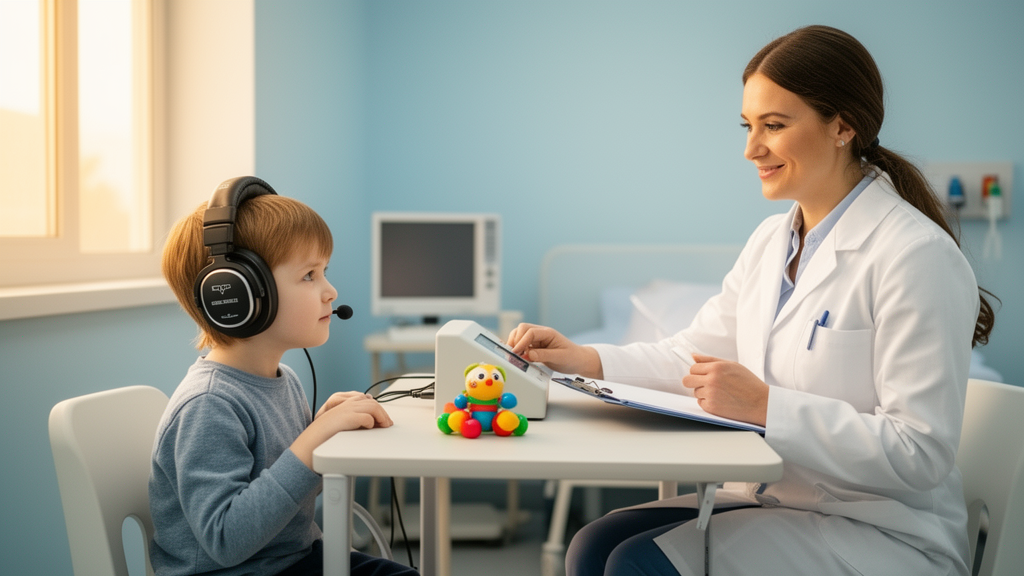
The position paper’s first recommendation is deliberately minimal so that it can be implemented almost anywhere: at a minimum, a baseline and an end-of-treatment audiologic assessment should be mandated in every treatment regimen that includes cisplatin. The baseline evaluation should be comprehensive and performed before cisplatin is initiated, or as early as possible, to establish pre-treatment hearing status. The end-of-treatment evaluation should be completed within three months of the final cisplatin dose, even if the treatment plan is modified or maintenance therapy continues. Settings with greater resources are encouraged to go further, with audiologic monitoring during treatment, particularly for children at increased risk because of young age, high cumulative dose, concurrent therapies or other risk factors.
For monitoring during treatment, the paper draws on protocols from the International Society of Pediatric Oncology Supportive Care Consensus Report, which specify testing by age group. Children aged five years and older should receive pure tone audiometry from 0.5 to 8 kilohertz, extended high-frequency testing above 8 kilohertz where available, distortion product otoacoustic emissions, middle ear assessment with otoscopy and immittance, and questioning about tinnitus, with speech recognition testing at baseline and end of therapy. Children from seven months to five years follow a similar battery adapted to their developmental stage, while infants or children with limited responsiveness are assessed with electrophysiology, including auditory brainstem response or auditory steady state response testing at specified frequencies, alongside otoacoustic emissions and middle ear measures. The frequency of monitoring during treatment depends on the cisplatin dose per cycle: every cycle when the dose exceeds 50 milligrams per square meter, and every other cycle when the dose is below 50 milligrams per square meter and no other risk factors such as planned carboplatin, vincristine or cranial radiation exposure are present. Children with baseline hearing or vision loss should be tested every cycle regardless of exposure.
The paper also addresses what happens after treatment. Hearing evaluations or screening assessments should be integrated into routine follow-up care, and audiology should be included in childhood cancer survivorship programs so patients can access long-term hearing management. Long-term follow-up guidelines summarized in the paper recommend that survivors exposed to cisplatin at any dose receive hearing evaluations yearly if they were aged six years or younger at exposure, every two years if aged six to twelve, and every five years if aged twelve or older, with yearly repeats if hearing loss is identified and more frequent assessments if hearing loss is progressive. Myeloablative doses of carboplatin above 1500 milligrams per square meter, any carboplatin dose before age one, and cranial or brain radiation therapy of 30 Gy or more carry the same follow-up schedule. Survivors with symptoms of hearing loss, tinnitus or an abnormal hearing screen should receive audiology consultation, and ongoing audiology follow-up is recommended when hearing loss greater than 20 decibels hearing level across 0.5 to 8 kilohertz is identified.
Obtaining reliable hearing results in infants and young children is technically challenging, and the paper outlines how clinicians can work around this. Prioritizing high-frequency measurement, using a team-testing approach and including objective measures have all been recommended. The cross-check principle combines behavioral audiometric tests, which require the child’s active participation, with objective measures of auditory function. When behavioral testing is not feasible, hearing thresholds can be estimated with auditory brainstem response or auditory steady state response testing, ideally including frequencies above 4 kilohertz, conducted during natural sleep or with sedation or anesthesia.
Why does monitoring fail so often? Surveys and cohort studies have identified barriers including a lack of structural integration within healthcare systems, economic constraints, limited healthcare resources and logistical challenges, as well as the absence of audiology services within or near cancer treatment centers, inflexible scheduling, and reliance on families to manage referrals and coordinate care. The working group argues that ototoxicity monitoring should be embedded as a predefined component of the cancer treatment pathway rather than functioning as a referral-dependent service. Facilitators include well-defined protocols, strong interdepartmental communication, multidisciplinary teams that co-develop processes, access to portable diagnostic equipment, systems for ensuring completion of key endpoints such as baseline and post-treatment assessments, and dedicated ototoxicity management programs, supported by institutional commitment, policy development and adequate reimbursement. The paper endorses the framework developed by the International Ototoxicity Management Group and argues that establishing a minimum benchmark within pediatric cancer protocols, with oversight by oncology governing bodies, would provide the structural support and accountability needed to improve hearing outcomes for this vulnerable population.
Subject of Research: Ototoxicity monitoring recommendations for children treated with cisplatin chemotherapy
Article Title: Standardizing ototoxicity monitoring for children treated with cisplatin: an urgent call to action
Article References: Knight, K., Drenovak, M., Langer, T., Streefkerk, N., Airlangga, T. J., Andriastuti, M., Asmarinah, Berndtson, D., Wardhani Hartantyo, A. N. K., Hoetink, A. E., de Jager, K. E., Konrad Martin, D., Ilmiawati, C., Kalcioglu, M. T., Mayangsari, I. D., Purnami, N., Putri, S. A., Oguz, H., Schmid, I., … am Zehnhoff-Dinnesen, A. (2026). Standardizing ototoxicity monitoring for children treated with cisplatin: an urgent call to action. Frontiers in Oncology, 16, Article 1923166. https://doi.org/10.3389/fonc.2026.1923166
Image Credits: AI Generated
DOI: 10.3389/fonc.2026.1923166
Keywords: cisplatin, ototoxicity, hearing loss, pediatric oncology, audiology, chemotherapy, childhood cancer survivors, tinnitus, audiometric monitoring, survivorship care, platinum chemotherapy, position paper
Cite Scienmag News
Nathaniel Bowman. (October 27, 2026). Hearing checks should be standard care for every child on cisplatin, experts urge. Scienmag. https://scienmag.com/hearing-checks-should-be-standard-care-for-every-child-on-cisplatin-experts-urge/
Nathaniel Bowman. "Hearing checks should be standard care for every child on cisplatin, experts urge." Scienmag, 27 October 2026, https://scienmag.com/hearing-checks-should-be-standard-care-for-every-child-on-cisplatin-experts-urge/. Accessed 27 October 2026.
Nathaniel Bowman. "Hearing checks should be standard care for every child on cisplatin, experts urge." Scienmag. October 27, 2026. https://scienmag.com/hearing-checks-should-be-standard-care-for-every-child-on-cisplatin-experts-urge/


