

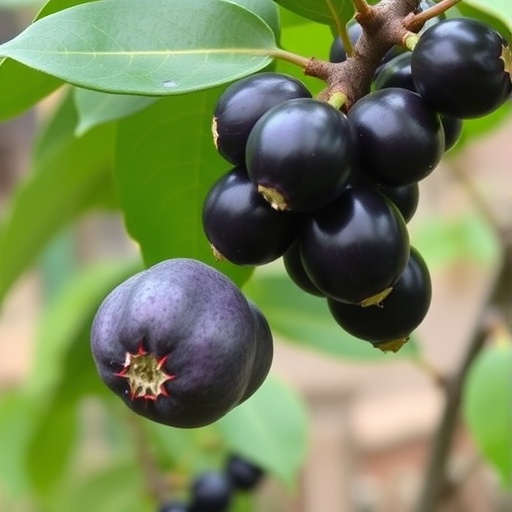
In recent years, the extraction and utilization of phenolic compounds from natural sources have emerged as a focal point within the field of biochemistry and materials science. A noteworthy study conducted by a team of researchers, Balyan, Dhaliwal, and Sarkar, delves into the innovative methods of extracting phenolic compounds from Jamun seeds using an environmentally friendly aqueous-ethanol solvent mixture. This research not only sheds light on the potential of Jamun seeds as a valuable biomass resource but also highlights the efficiency of membrane-based fractionation techniques in isolating these bioactive compounds.
The study is anchored upon the rich phytochemical profile of Jamun seeds, which are often overlooked despite their abundant availability and nutritional significance. The seeds contain various phenolic compounds, known for their antioxidant properties, which can play a significant role in combating oxidative stress and improving health outcomes. The authors emphasize the potential applications of these compounds in pharmaceuticals, food additives, and cosmetic industries due to their bioactive nature, which can contribute to health benefits and preservation strategies.
One of the pivotal aspects of the research is the methodical approach adopted for extracting the phenolic compounds. The utilization of an aqueous-ethanol solvent for extraction is indicative of a shift towards greener chemistry. Ethanol, being a renewable resource, coupled with water, creates a non-toxic solvent system that enhances the extraction efficiency while minimizing the environmental impact. This method demonstrates the possibility of utilizing such sustainable practices in the extraction processes traditionally dominated by harmful organic solvents.
Membrane-based separation technologies stand at the forefront of modern extraction techniques. By employing these technologies, the researchers successfully demonstrated the fractionation of phenolic compounds from a complex mixture, thus enhancing the purity of the bioactive extracts obtained from Jamun seeds. The effectiveness of membrane technology lies in its ability to selectively separate compounds based on size and charge, which is essential in isolating high-value phenolic compounds for further analysis and application.
The study emphasizes the importance of optimizing extraction parameters such as solvent concentration, extraction time, and temperature to maximize yield. The researchers meticulously explored various conditions to identify the optimal environment for extracting specific phenolic compounds. This optimization is critical as it directly affects not only the efficiency of extraction but also the economic feasibility of the process, particularly when scaled up for industrial applications.
In terms of analytical techniques, the researchers utilized advanced methods to characterize the extracted phenolic compounds. Techniques such as High-Performance Liquid Chromatography (HPLC) were employed to quantify the phenolic content and profile, providing a comprehensive understanding of the types and amounts of bioactive compounds present in the extracts. This level of detail is vital for any subsequent application of the extracts, ensuring that they meet the specific requirements of the target industries.
Furthermore, the findings of this research extend beyond the realm of academia into practical applications. The phenolic extracts obtained from Jamun seeds hold promise for integration into functional food formulations. Their antioxidant properties can enhance the nutritional profile of food products while also potentially improving their shelf life. Additionally, the cosmetic industry may benefit from these extracts, harnessing their natural properties to formulate anti-aging and skin rejuvenating products.
The broader implications of utilizing agricultural waste such as Jamun seeds align with global sustainability goals. Valorizing agro-waste not only supports waste reduction efforts but also contributes to the circular economy by creating value-added products. This research serves as a compelling example of how interdisciplinary approaches can lead to innovative solutions that address both environmental and economic challenges.
As the study progresses towards potential commercial applications, the authors call for further research to explore scalability and the economic viability of the extraction and fractionation processes. The transition from laboratory-scale experiments to industrial implementation will require careful consideration of the processes involved and their adaptability to larger operations while maintaining efficiency and sustainability.
In conclusion, the research conducted by Balyan, Dhaliwal, and Sarkar is a significant contribution to the field of biomass valorization and natural product extraction. By focusing on the extraction and fractionation of phenolic compounds from Jamun seeds using an eco-friendly solvent and membrane technology, the study uncovers valuable insights into the potential of utilizing underexplored natural resources.
This pioneering work sets the stage for future advancements in sustainable practices within the agricultural and biotechnological sectors, suggesting a promising path forward for the integration of natural antioxidants into various industries worldwide.
The innovative extraction protocols and characterization methods outlined in this study not only pave the way for commercial exploitation of Jamun seeds but also emphasize the critical role of research in unlocking the potential hidden within our natural resources. Through continued exploration and validation of these techniques, the research community can contribute to making significant strides towards a more sustainable and health-conscious future.
By utilizing the findings of this research, industry players can harness the potential of phenolic compounds, advocating for a transformation in how natural resources are viewed, handled, and utilized for developing health-centric products.
Subject of Research: Extraction and membrane-based fractionation of phenolic compounds from Jamun seeds.
Article Title: Extraction and Membrane-Based Fractionation of Phenolic Compounds from Jamun Seeds Using Aqueous-Ethanolic Solvent.
Article References:
Balyan, U., Dhaliwal, A. & Sarkar, B. Extraction and Membrane-Based Fractionation of Phenolic Compounds from Jamun Seeds Using Aqueous-Ethanolic Solvent.
Waste Biomass Valor (2026). https://doi.org/10.1007/s12649-025-03455-1
Image Credits: AI Generated
DOI: https://doi.org/10.1007/s12649-025-03455-1
Keywords: Jamun seeds, phenolic compounds, extraction, membrane technology, aqueous-ethanol solvent, sustainability, natural antioxidants, bioactive compounds.


