


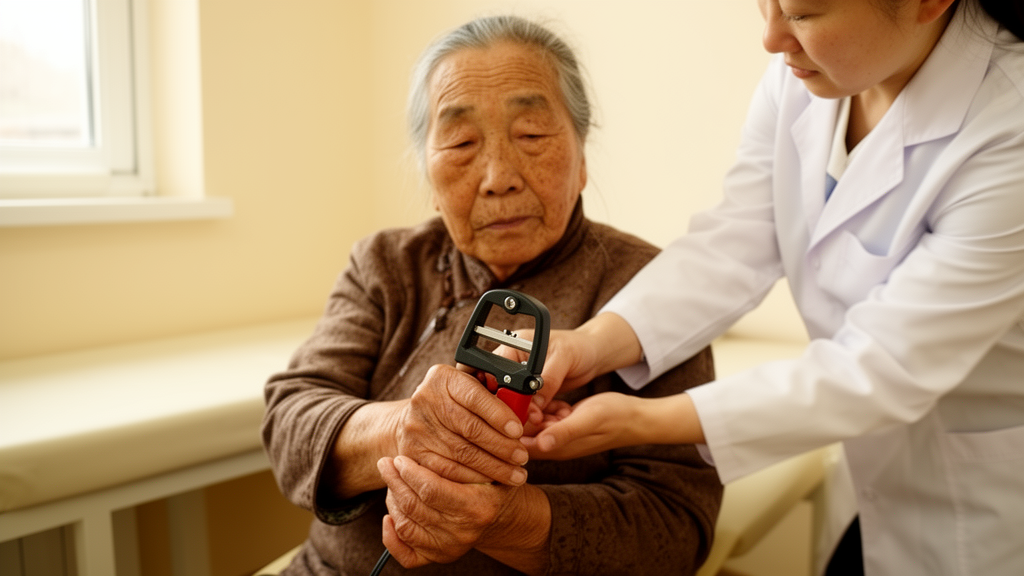
In Mongolia, where dual-energy X-ray absorptiometry (DXA) scanners are scarce, identifying people at risk of osteoporosis often depends on simple, low-cost tools. A new cross-sectional study of 356 adults aged 40 years and older suggests that a single, inexpensive measurement—grip strength—may be one of the most useful additions to such screening.
The study, published in Archives of Osteoporosis, recruited 200 men and 156 women from two urban health units. Researchers assessed sociodemographic characteristics, lifestyle factors, medical history, and handgrip strength through structured interviews and standardized measurements. Each participant was then assigned an Osteoporosis Self-Assessment Test (OSTA) score, a simple questionnaire-based index that places people into low, moderate, or high risk categories using established sex-specific thresholds.
The study aimed to determine which factors were associated with OSTA-defined risk categories in this low-resource setting.
The results were striking. Higher dominant handgrip strength was associated with lower odds of falling into the combined moderate or high OSTA risk category in both sexes. Because both confidence intervals lie entirely below one, the associations were statistically significant, although the wide intervals—particularly in women—reflect the modest sample size and leave considerable uncertainty about the exact strength of the effect.
Just as informative were the factors that did not show independent associations. Smoking, alcohol consumption, diet, and sedentary time were not independently linked to OSTA scores in the logistic regression models, which were run separately for men and women. This suggests that, in this population, a functional measure of muscle performance captured risk information that common lifestyle questions did not.
Other variables did matter. Age, sex, educational level, comorbidities, and body mass index were all significantly associated with OSTA categories when groups were compared using chi-square tests.
The authors emphasize that the strong association with handgrip strength points to potential added value in integrating functional assessments into screening strategies. The researchers argue that such combinations could support scalable, low-cost approaches to osteoporosis risk stratification across Mongolia.
Several limitations deserve emphasis. The study was cross-sectional, so it captures associations at a single point in time and cannot establish causal relationships between grip strength and osteoporosis risk. Participants were recruited from two urban health units, which may limit how well the findings generalize to rural populations. The OSTA itself is a risk-stratification tool, not a direct measure of bone density, so a high-risk category indicates a need for further assessment rather than a diagnosis.
With those caveats in mind, the study offers a concrete, practical signal for a setting where advanced imaging is difficult to access. If confirmed in larger and more diverse samples, adding a dynamometer to the screening toolkit could help health workers in Mongolia and similar low-resource settings identify adults aged 40 and older who warrant closer attention for bone health.
Osteoporosis is described by the authors as a growing public health concern in Mongolia, and the need for affordable risk identification is acute. This study does not demonstrate that grip strength screening improves health outcomes, but it provides evidence that a simple functional test tracks with an established risk index in both men and women—an encouraging starting point for building practical screening pathways where DXA remains scarce.
Subject of Research: Associations between handgrip strength, demographic factors and OSTA-defined osteoporosis risk categories among adults aged 40 and older in Mongolia
Article Title: Risk factors of high osteoporosis risk in subjects over 40 years in Mongolia
Article References: Jaalkhorol, M., Ikeda, Y., Narangerel, E., Dashtseren, A., Khulgar, T., Munkhsonguuli, U., Iimaa, T., Sampil, T., Enkhbayar, N., & Bruyere, O. (2026). Risk factors of high osteoporosis risk in subjects over 40 years in Mongolia. Archives of Osteoporosis, 21(1), 151. https://doi.org/10.1007/s11657-026-01783-w
Image Credits: AI Generated
DOI: 10.1007/s11657-026-01783-w
Keywords: osteoporosis, handgrip strength, OSTA, Mongolia, DXA scarcity, cross-sectional study, risk screening, bone health, low-resource settings, odds ratio, middle-aged adults, public health
Cite Scienmag News
Ophelia Keating. (October 27, 2026). Handgrip strength flags osteoporosis risk in Mongolia where DXA scans are scarce. Scienmag. https://scienmag.com/handgrip-strength-flags-osteoporosis-risk-in-mongolia-where-dxa-scans-are-scarce/
Ophelia Keating. "Handgrip strength flags osteoporosis risk in Mongolia where DXA scans are scarce." Scienmag, 27 October 2026, https://scienmag.com/handgrip-strength-flags-osteoporosis-risk-in-mongolia-where-dxa-scans-are-scarce/. Accessed 27 October 2026.
Ophelia Keating. "Handgrip strength flags osteoporosis risk in Mongolia where DXA scans are scarce." Scienmag. October 27, 2026. https://scienmag.com/handgrip-strength-flags-osteoporosis-risk-in-mongolia-where-dxa-scans-are-scarce/


