


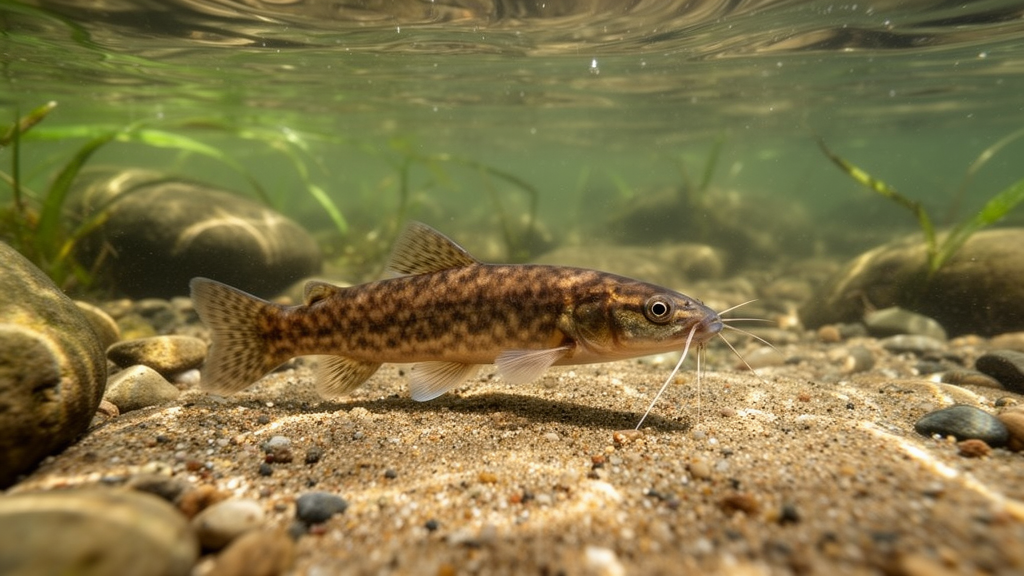
In the shallow ditches and slow rivers of north-western Germany, two relatives are on a collision course. The European weatherfish, Misgurnus fossilis, a strictly protected bottom-dweller with broad dark stripes along its flanks, shares its muddy waterways with Asian weatherloaches, an invasive group that has quietly spread across the continent. A new laboratory experiment published in Nature Conservation suggests that what sets these fish apart is not size or appetite, but something subtler: how flexibly each chooses the sediment beneath them.
The study, led by researchers at Hochschule Bremen, is the first direct comparison of substrate use between the native European weatherfish and its Asian relatives. Its central question draws on the adaptive flexibility hypothesis, the idea that invasive species succeed not because they are specialists in any one environment, but because they tolerate many. If the native weatherfish is locked into muddy floodplains while the invader thrives almost anywhere, the two species may soon find themselves competing for the same patches of riverbed, with uncertain consequences for an already endangered native.
The stakes are considerable. Asian weatherloaches have established populations on five continents, and within Europe they have now been recorded in Austria, Belgium, Germany, Italy, the Netherlands and Spain. Recent large-scale projections indicate that the potential distributional overlap between native and invasive loaches in Europe will exceed 30 percent by mid-century. Yet landscape models of this kind say nothing about what happens at the scale that matters to a fish: the patch of sediment it actually occupies. Competition between the two groups will be intense only if their microhabitat preferences overlap, and that is precisely what the German team set out to measure.
The experimental fish were wild-caught. Asian weatherloaches came from three sites in the catchment of the River Ems, while the five European weatherfish were captured in small ditches in Bremen’s Hollerland nature reserve, within the Weser catchment. The small native sample reflects a hard reality: Misgurnus fossilis is so rare and its populations so fragmented in northern Germany that few individuals could be collected. All fish were measured, weighed and housed individually before the trials began in June 2023.
Because Asian weatherloaches are notoriously difficult to tell apart, the team also ran genetic and morphological analyses on additional specimens from the same waters. Sequencing of the mitochondrial COI gene and the nuclear RAG1 gene identified most individuals as Misgurnus anguillicaudatus, and vertebral counts averaging 47 supported that assignment. Still, 14 of 40 specimens could not be assigned definitively, a reminder that cryptic diversity and hybridisation within the Misgurnus complex remain genuine possibilities. The researchers therefore refer to their subjects collectively as Asian weatherloaches.
The behavioural test itself was elegantly simple. Each fish was placed alone in a 45-litre aquarium whose floor was split evenly between two sediment types, separated by a thin plastic barrier. Three combinations were tested: gravel against sand, gravel against mud, and sand against mud. Over three observation days, each individual completed four one-hour replicates per treatment, giving up to 240 minutes of observation per fish per treatment. A single trained observer, seated 1.5 metres away, logged every behavioural transition in real time with computer-based recording, quantifying habitat use to the second.
The results were striking in their asymmetry. Native weatherfish spent 74.4 percent of their time, on average, in mud, compared with just 36.0 percent for the Asian fish. Preferences for sand and gravel, by contrast, barely differed between the two groups. A linear mixed-effects model with fish identity as a random intercept revealed a significant interaction between origin and sediment type, and post hoc comparisons confirmed that the divergence on mud was large by any conventional standard, with a Hedges’ g of 1.68. In plain terms, the native species is a mud specialist; the invader is a generalist that uses all substrates roughly equally.
That pattern fits the adaptive flexibility hypothesis neatly, and it carries two possible ecological outcomes. On one hand, habitat partitioning could allow coexistence: Asian weatherloaches may persist in disturbed or atypical substrates, from rice paddies to degraded streams, reducing direct encounters with the native specialist in patchy landscapes where sediment types alternate. On the other hand, the same flexibility may be a competitive weapon. A generalist able to migrate through coarse substrates can reach and colonise isolated muddy patches more effectively, and in predominantly muddy systems, where both species concentrate their activity in the same benthic microhabitat, interference and exploitative competition for shelter and food are likely to peak.
The authors are candid about their study’s limits. Sample sizes were small, the tank dimensions may have constrained natural swimming behaviour, and a one-degree difference in water temperature between the two groups, while statistically significant, is unlikely to have reshaped fundamental substrate preferences. The fish also came from populations more than 100 kilometres apart, and laboratory behaviour does not always translate to the wild. Yet the effect size on mud was so large that the core conclusion appears robust, and the findings add valuable data on a behavioural repertoire that has rarely been studied outside the invaders’ native range.
For conservation, the message is actionable. Because Misgurnus fossilis depends on structurally complex muddy floodplain habitats, protecting and restoring those environments may provide a competitive refuge against the advancing generalists, and should be prioritised alongside targeted monitoring of where Asian weatherloaches spread and how far their habitats overlap. The authors also argue that management of potentially invasive fishes should incorporate trait-based assessments, including behavioural observations, with complementary tools such as stable isotope analysis to resolve resource use. Long-term field studies will be needed to confirm what the laboratory suggests, but the experiment offers a clear early warning: in the contest for Europe’s riverbeds, flexibility may be the decisive trait.
Subject of Research: Invasive species ecology
Article Title: Habitat-use flexibility may promote the spread of Asian weatherloaches in Europe
Article References: Habitat-use flexibility may promote the spread of Asian weatherloaches in Europe. (n.d.). https://doi.org/10.3897/natureconservation.65.187095
Image Credits: AI Generated
DOI: 10.3897/natureconservation.65.187095
Keywords: invasive species, weatherloach, European weatherfish, habitat use, behavioural flexibility, substrate preference, freshwater fish, conservation, Germany, adaptive flexibility hypothesis, Habitat-use, flexibility
Cite Scienmag News
Gavin Prescott. (October 16, 2026). Habitat-use flexibility may promote the spread of Asian weatherloaches in Europe. Scienmag. https://scienmag.com/habitat-use-flexibility-may-promote-the-spread-of-asian-weatherloaches-in-europe/
Gavin Prescott. "Habitat-use flexibility may promote the spread of Asian weatherloaches in Europe." Scienmag, 16 October 2026, https://scienmag.com/habitat-use-flexibility-may-promote-the-spread-of-asian-weatherloaches-in-europe/. Accessed 16 October 2026.
Gavin Prescott. "Habitat-use flexibility may promote the spread of Asian weatherloaches in Europe." Scienmag. October 16, 2026. https://scienmag.com/habitat-use-flexibility-may-promote-the-spread-of-asian-weatherloaches-in-europe/


