


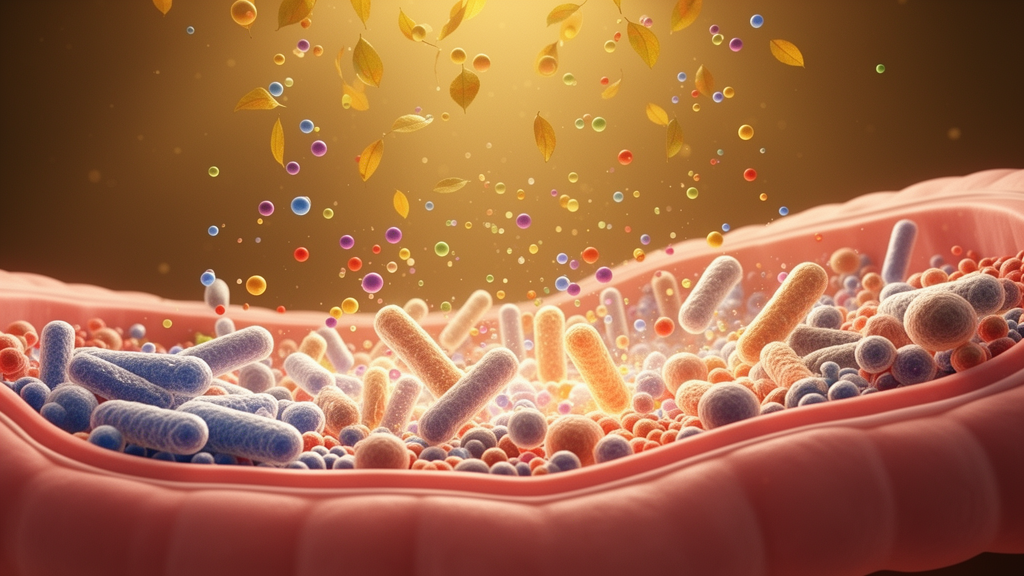
Why do some people carry gut communities dominated by Bacteroidaceae, the bacterial family that thrives in industrialized populations, while others, particularly those living traditional, non-industrialized lifestyles, harbor communities ruled by Prevotellaceae? For years, the standard answer has been diet: plant-rich, fiber-heavy eating patterns correlate with Prevotellaceae, whereas diets high in animal fat and processed foods correlate with Bacteroidaceae. But diet alone has never fully explained the split, and short-term dietary interventions have repeatedly failed to shift the balance in predictable ways. A new study published in Nature Microbiology by Caroline Tawk, Youssef El Mouali and colleagues at the Helmholtz Centre for Infection Research, together with collaborators at the University of Trento, the University of Tübingen and EMBL, now provides an experimentally grounded answer. The researchers show that the outcome of the contest between these two dominant bacterial families depends not just on what is eaten, but on a third, previously underappreciated player: members of the Enterobacteriaceae family, which include Escherichia coli and its relatives.
The team built a synthetic gut community of 21 human commensal isolates spanning the four major phyla of the human microbiota, chosen to reflect the family-level composition of a healthy gut. Into this controlled ecosystem they introduced 94 dietary components, 79 complex glycans drawn from plant, algal, animal and microbial sources, plus 15 essential vitamins, and tracked how community structure shifted using 16S rRNA amplicon sequencing. In the base medium, Bacteroidaceae species, including Bacteroides thetaiotaomicron, Bacteroides fragilis and Phocaeicola vulgatus, predominated over Segatella copri, the key representative of the Prevotellaceae. Yet adding a single glycan or vitamin was often enough to upend that hierarchy. Strikingly, 56 of the 94 compounds, most of them of plant, algal or bacterial origin, significantly expanded S. copri, and for most of these the expansion came directly at the expense of the Bacteroidaceae. Vitamins B3 and B5 also tipped the balance toward Segatella, hinting that micronutrients, not just macronutrients, can reshape microbial power dynamics.
A central technical lesson of the study is that monoculture growth on a substrate does not predict community behavior. When each of the 21 isolates was tested individually against each of the 79 glycans as a sole carbon source, more than 1,600 bacteria–glycan pairings in total, the results were counterintuitive. Bacteroides ovatus grew on the largest number of compounds, and several Bacteroidaceae matched or exceeded S. copri in their ability to exploit individual substrates. Pectic galactan, for example, supported faster growth in B. caccae and B. thetaiotaomicron than in S. copri, yet supplementing the community with it boosted Segatella. The same paradox held for arabinan, a polysaccharide abundant in plant cell walls: B. thetaiotaomicron and P. vulgatus grew on it more rapidly than S. copri in isolation, but in the community arabinan drove a roughly 35-fold increase in S. copri relative abundance, from 1.7 percent to 59.6 percent, while overall Bacteroidaceae fell more than sixfold.
Metatranscriptomics explained part of the mechanism. In the presence of arabinan, the SusC/D-like gene pairs in the S. copri arabinan-specific polysaccharide utilization locus PUL14 were upregulated as much as 16-fold, indicating that Segatella was actively metabolizing the fiber. The causal link was confirmed genetically: deleting susC1, the key arabinan uptake gene, rendered S. copri unable to expand under arabinan supplementation. But direct utilization turned out to be necessary yet not sufficient. When the researchers assembled a stripped-down community containing only S. copri and the six Bacteroidaceae, Segatella was completely crushed, outcompeted primarily by B. thetaiotaomicron and B. fragilis even on its preferred fiber. Removing either side from the full community showed that the two families occupy the same Bacteroidales niche and compete directly. Something else in the complete 21-member community was rescuing Segatella from defeat.
That rescuer turned out to be E. coli. Using an add-in strategy, the team tested whether reintroducing individual community members into the minimal two-party competition could restore Segatella’s advantage. Lachnospiraceae species, Bifidobacteria and Collinsella had no effect. The addition of E. coli alone, however, flipped the outcome entirely, handing S. copri a decisive competitive edge over the Bacteroidaceae in the presence of arabinan. Transwell co-culture assays, which allow nutrient exchange through a porous barrier while keeping cells physically separated, showed that S. copri growth was boosted when paired with E. coli under arabinan conditions, whereas Bacteroidaceae growth was never inhibited. The interaction was mutualistic in direction: E. coli itself grew better alongside the Bacteroidales, and S. copri grew better alongside E. coli, with arabinan amplifying the benefit.
The molecular details revealed a surprising twist. Metatranscriptomic analysis of E. coli inside communities with and without S. copri showed that arabinan supplementation switched E. coli’s gene expression toward the utilization of arabinose, rhamnose, galacturonate and galactose, the simple sugars released when complex arabinan is degraded, and away from maltose metabolism. This suggested classic cross-feeding, with E. coli scavenging monosaccharides shed by the polysaccharide degraders. Yet when the researchers supplemented the competitions directly with those simple sugars, S. copri expanded only when E. coli was present. Even more strikingly, a quadruple E. coli Nissle mutant engineered to be unable to metabolize arabinose, rhamnose, galactose and galacturonate still promoted S. copri just as effectively as the wild type. The presence of the sugars, rather than their consumption by E. coli, appears to be what matters, pointing to a signalling-based interaction rather than a purely nutritional one, in which polysaccharide-derived sugars act as interbacterial signals that reconfigure community dynamics.
The synergy proved remarkably broad. All eight additional plant-derived polysaccharides tested, including the starch derivatives amylose and amylopectin, promoted S. copri over Bacteroidaceae in an E. coli-dependent manner, as did vitamins B3 and B5. Multiple S. copri strains and closely related Segatella species, including S. brasiliensis, S. sinensis and S. sinica, retained the E. coli-dependent advantage, while more distantly related species such as S. brunsvicensis and S. hominis did not, mapping the interaction onto the phylogeny of the genus. On the Enterobacteriaceae side, the effect was not confined to E. coli: commensal and laboratory E. coli strains, pathogenic isolates including UTI89, and other family members such as Klebsiella oxytoca, Klebsiella pneumoniae and Salmonella enterica all boosted Segatella under arabinan conditions. The mechanism, in other words, is a conserved family-level partnership rather than a quirk of one laboratory strain.
Critically, the phenomenon survived the leap to realistic ecosystems. When S. copri and E. coli were introduced into stabilized human faecal communities derived from eight healthy donors, arabinan supplementation consistently drove a marked expansion of Segatella, recapitulating the synthetic community results. In caecal communities from specific pathogen-free mice, which naturally lack Enterobacteriaceae, the researchers could cleanly attribute the effect: S. copri expanded only when both E. coli and arabinan were supplied. Finally, the team turned to global metagenomic data from roughly 1,000 healthy adults. Non-industrialized individuals harbored not only more S. copri, as expected, but also significantly higher prevalence, diversity and abundance of Enterobacteriaceae, and S. copri abundance correlated positively with the number of Enterobacteriaceae species in these populations. An analysis of more than 3,300 food metagenomes from the curatedFoodMetagenomicData database reinforced the ecological story: plant-based foods carried the highest Enterobacteriaceae loads, and Enterobacteriaceae enriched in plant foods were also enriched in the stools of non-industrialized individuals, suggesting that diet and environmental exposure deliver both the fiber and the bacterial partners together.
The study reframes what determines the two great gut microbiota signatures. Dominance by Bacteroidaceae or Prevotellaceae is not a simple function of dietary fiber intake; it emerges from an ecosystem-level interplay in which dietary glycans and vitamins act synergistically with commensal Enterobacteriaceae to favor Segatella, through a combination of direct polysaccharide utilization, cross-feeding and sugar-dependent signalling. The findings may help explain why Prevotellaceae-dominated configurations emerge early in life in non-industrialized settings, where Enterobacteriaceae prevalence rises in step with Segatella as children reach two to three years of age. They also carry practical implications: prebiotic or vitamin interventions aimed at reshaping the microbiome may succeed or fail depending on the baseline presence of Enterobacteriaceae and the existing community composition, underscoring the case for personalized, combinatorial strategies rather than one-size-fits-all fiber supplementation. For a field long focused on pairwise battles over nutrients, the message is that the decisive alliances in the gut are often three-way, involving the food on the plate, the dominant degraders and the quiet facilitators standing between them.
Subject of Research: Diet- and Enterobacteriaceae-dependent competition between dominant Bacteroidales families in the human gut microbiome
Article Title: Synergy between Enterobacteriaceae and diet mediates competition between dominant Bacteroidales in the human gut
Article References: Tawk, C., El Mouali, Y., Huang, K. D., Valkiers, S., Heidrich, V., Gronow, A., Osbelt, L., Rapp, J., Link, H., Segata, N., Typas, A., & Strowig, T. (2026). Synergy between Enterobacteriaceae and diet mediates competition between dominant Bacteroidales in the human gut. Nature Microbiology. https://doi.org/10.1038/s41564-026-02500-6
Image Credits: AI Generated
DOI: 10.1038/s41564-026-02500-6
Keywords: gut microbiome, Segatella copri, Bacteroidaceae, Prevotellaceae, Enterobacteriaceae, dietary fiber, arabinan, cross-feeding, synthetic microbial communities, metatranscriptomics, microbial ecology, enterotypes
Cite Scienmag News
Morgan Morrow. (October 9, 2026). Gut bacteria team up with diet to decide who rules the microbiome. Scienmag. https://scienmag.com/gut-bacteria-team-up-with-diet-to-decide-who-rules-the-microbiome/
Morgan Morrow. "Gut bacteria team up with diet to decide who rules the microbiome." Scienmag, 9 October 2026, https://scienmag.com/gut-bacteria-team-up-with-diet-to-decide-who-rules-the-microbiome/. Accessed 9 October 2026.
Morgan Morrow. "Gut bacteria team up with diet to decide who rules the microbiome." Scienmag. October 9, 2026. https://scienmag.com/gut-bacteria-team-up-with-diet-to-decide-who-rules-the-microbiome/


