

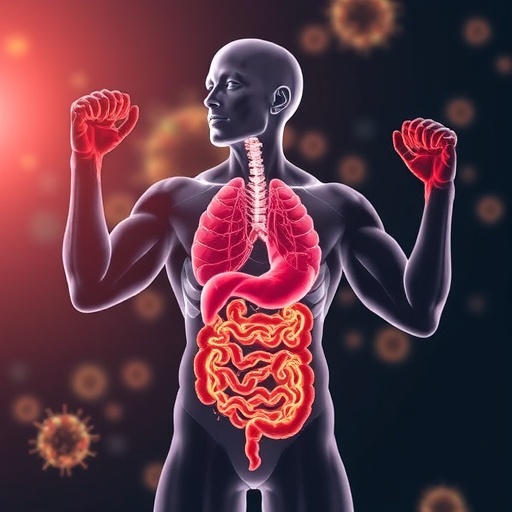
In a groundbreaking collaboration between University of Granada, University of Almería, and Leiden University Medical Center, scientists have unveiled compelling evidence linking a specific gut bacterium from the Roseburia genus to enhanced muscle strength and overall physical fitness. This discovery not only bolsters the emerging scientific concept of an intestine-muscle axis but also opens promising avenues for probiotic interventions aimed at preserving muscle function during aging.
Muscle deterioration with advancing age poses a significant health challenge, contributing to frailty and diminished quality of life worldwide. The mechanisms underlying muscle decline are multifaceted, but this recent study highlights an intriguing microbial dimension. Jonatan Ruiz, a professor at the University of Granada, articulates the essence of their findings: “Our data confirm that certain gut bacteria, specifically Roseburia inulinivorans, play a crucial role in modulating muscle metabolism and enhancing muscle strength, thereby supporting the concept of a functional gut-muscle axis.”
The research encompassed an extensive cohort of healthy young adults (aged 18-25) and older individuals aged 65 and above. Comprehensive physical assessments, including handgrip strength, leg and upper body muscle performance, alongside cardiorespiratory evaluations through maximum oxygen consumption tests, were meticulously conducted. Parallel microbial analyses of stool samples uncovered that individuals with higher abundance of Roseburia, particularly R. inulinivorans, displayed superior muscle capabilities and cardiovascular fitness metrics.
Notably, the incidence of this beneficial bacterium diminishes with age, a trend that correlates with the natural decline in muscle mass during later life stages. This inverse relationship suggests a critical role of gut microbiota composition in the etiology of sarcopenia, the age-associated loss of muscle strength. The team hypothesizes that augmenting R. inulinivorans levels through probiotic supplementation could counteract muscle degeneration, thereby promoting healthier aging trajectories.
The species-specific effects within the Roseburia genus surfaced as a key insight. While R. inulinivorans was tied closely to both muscle strength and cardiorespiratory endurance, Roseburia intestinalis demonstrated associations predominantly with localized muscle strength in the legs and upper body. Contrastingly, other Roseburia species such as R. faecis and R. hominis exhibited no notable relationship with the measured physical parameters, underscoring the nuanced interplay between distinct gut microbes and host physiology.
To probe the causal pathways, the researchers employed an experimental murine model. Mice subjected to antibiotic-induced depletion of their native gut microbiota received weekly doses of human-derived Roseburia strains for two months. Remarkably, these treated mice exhibited a 30% increase in forelimb grip strength relative to controls. Histological analyses revealed hypertrophy of muscle fibers, with a selective augmentation in fast-twitch (type II) muscle fibers within the soleus muscle, vital for producing rapid and forceful contractions.
Metabolic profiling of treated muscle tissues exposed alterations in key enzymatic activities and protein expressions pivotal for muscle energy metabolism. This suggests that Roseburia may exert its muscle-enhancing influence through modulation of mitochondrial function and metabolic pathways that underpin muscle strength and regeneration. The precise molecular triggers and signaling cascades, however, remain to be elucidated in future investigations.
The researchers caution that, despite these compelling results, Roseburia strains did not establish permanent colonization in the murine gut, highlighting limitations in translational potential and the complexity of host-microbe interactions. Moreover, the study did not directly interrogate inflammatory mediators or neuromuscular signaling pathways, both critical components potentially mediating gut-muscle crosstalk. Longitudinal human trials and mechanistic studies are warranted to ascertain whether increases in Roseburia populations drive muscle improvements or serve as biomarkers of better muscle health.
The implications of these findings are profound for public health, particularly in the context of an aging global population prone to muscle decline and frailty syndromes. Developing probiotic formulations or microbiota-targeted therapies centered on Roseburia inulinivorans could revolutionize nutritional strategies for muscle maintenance and resilience. Furthermore, these insights emphasize the broader concept of the gut microbiome as a systemic regulator beyond traditional metabolic roles, extending to musculoskeletal performance.
This multifaceted study—an exemplar of interdisciplinary research bridging microbiology, exercise physiology, and geriatrics—was spearheaded by Ramón y Cajal researcher Borja Martínez-Téllez of University of Almería. It highlights the potential of harnessing commensal bacteria for enhancing human health across the lifespan, offering a novel and biotechnologically feasible means to combat sarcopenia and physical decline.
As the field advances, unlocking the mechanistic underpinnings of the intestine-muscle axis will be pivotal, ranging from microbial metabolite identification to immunomodulatory effects on muscle tissues. With the mounting evidence presented, Roseburia inulinivorans stands at the forefront of promising microbial candidates with therapeutic potential. This research heralds a new frontier where targeting gut microbes could become a cornerstone of personalized medicine for muscular health.
In summary, the identification of Roseburia inulinivorans’ link to muscular strength not only confirms the biological relevance of the gut-muscle axis but also propels the scientific agenda toward microbiome-based interventions enhancing physical performance. The convergence of microbial ecology and exercise science thus unveils exciting prospects for improving life quality and longevity.
Subject of Research: Animals
Article Title: Roseburia inulinivorans increases muscle strength.
Web References: http://dx.doi.org/10.1136/gutjnl-2025-336980
Image Credits: University of Granada
Keywords: Roseburia inulinivorans, gut-muscle axis, muscle strength, aging, probiotics, microbiome, sarcopenia, physical fitness, muscle metabolism, microbiota, fast-twitch muscle fibers, cardiorespiratory capacity


