


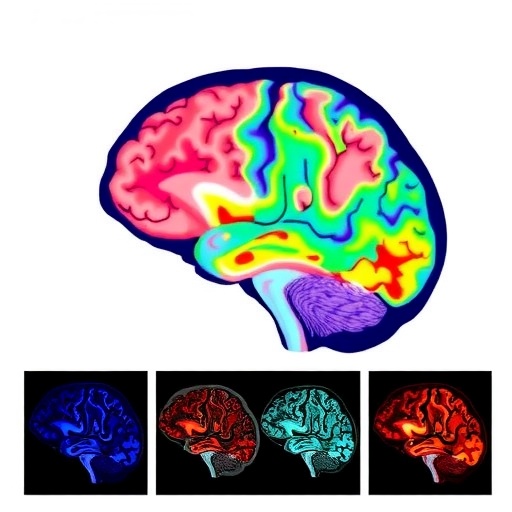
In a groundbreaking study emerging from the Blue Bird Circle Developmental Neurogenetic Laboratory at Baylor College of Medicine, researchers have unveiled a novel molecular pathway through which inherited mutations in calcium channels disrupt early brain development, fundamentally altering neural circuitry and predisposing children to epilepsy, as well as related cognitive impairments. Published in the prestigious journal Neuron, this research provides unprecedented insights into the prenatal origins of childhood absence epilepsy, revealing critical windows for early intervention.
The focus of this pioneering work lies in mutations affecting P/Q-type voltage-gated calcium channels. These channels traditionally play a pivotal role in mediating neurotransmitter release at presynaptic terminals throughout the central nervous system. Known to be linked to childhood epilepsy syndromes, particularly absence epilepsy, disruptions in their function had so far been primarily attributed to diminished synaptic transmission. However, the Baylor team’s findings challenge this narrow view, demonstrating that these mutations have far-reaching consequences beyond synaptic failure, influencing neuronal development and excitability in unexpected ways.
Leveraging a sophisticated mouse model engineered to recapitulate the genetic basis of childhood absence epilepsy, researchers Samantha Thompson and Dr. Qing-Long Miao meticulously traced the downstream signaling cascades initiated by a single calcium channel mutation. Their experimental approach combined electrophysiological assessments, gene expression analyses, and neuroanatomical studies to delineate how this mutation reprograms cellular pathways essential for thalamocortical circuit maturation, circuits that are crucial for regulating consciousness, attention, and sensory information processing.
Childhood absence epilepsy is characterized clinically by brief, recurring episodes of impaired consciousness accompanied by hallmark cortical spike-wave discharges originating from thalamocortical networks. The thalamus serves as a central relay station, integrating and transmitting sensory and cortical signals. While previous models emphasized loss-of-function effects on synaptic neurotransmitter release, this new research surprised the scientific community by revealing an increase in thalamic neuron excitability, suggesting a paradoxical gain-of-function effect contributing to seizure generation.
Further mechanistic interrogation uncovered that the P/Q-channel mutation drives significant upregulation of two proepileptic genes previously implicated in pediatric absence epilepsy, intensifying the pathological state of neural circuits. More intriguingly, it simultaneously activates the Wnt signaling cascade—a major growth and developmental pathway—within the thalamus. This unexpected convergence not only precipitates hyperexcitability but also induces excessive proliferation of thalamic relay neurons, fundamentally reshaping circuit architecture during a critical window of brain formation.
What is particularly striking in these findings is the temporal aspect: this aberrant neuronal growth commences prenatally, well before the typical clinical presentation of seizures in childhood. This challenges the traditional notion that epilepsy arises solely as a manifestation of postnatal synaptic dysfunction and underscores the importance of embryonic brain development in establishing seizure susceptibility. Thompson highlights the overlooked prenatal period as a pivotal window of vulnerability, emphasizing the need for earlier diagnostic and therapeutic targeting in epilepsy.
The simultaneous dysregulation of neural excitability and developmental proliferation pathways illuminated by this study may also shed light on a long-standing clinical conundrum—the frequent resistance of many childhood epilepsy cases to conventional single-agent antiseizure medications. By identifying that multiple overlapping molecular pathways contribute to disease pathogenesis, the research suggests that combination therapies addressing both electrical and developmental abnormalities could markedly improve treatment efficacy.
Dr. Jeffrey Noebels, director of the lab, eloquently articulates the transformative potential of these findings, stating that an integrated understanding of how inherited ion channel mutations not only disrupt electrical signaling but also remodel the developmental trajectory of brain circuits could revolutionize epilepsy treatment. By pinpointing specific molecular targets within the intersecting pathways, personalized interventions might be developed to prevent or even reverse the establishment of epileptogenic networks.
The implications of this research extend beyond epilepsy. Since the thalamocortical circuitry influences a broad array of cognitive processes, from attention to sensory integration, the remodeling induced by these calcium channel mutations could underlie comorbid neurodevelopmental disorders commonly seen in affected children, including attention deficits and learning disabilities. Thus, the identification of early mechanistic drivers opens new horizons for addressing a spectrum of developmental brain disorders simultaneously.
In sum, this Baylor-led study not only redefines our understanding of the molecular underpinnings of childhood absence epilepsy but also pioneers a paradigm shift in epilepsy research, emphasizing developmental neurogenetics and prenatal vulnerability as central themes. It calls for a reassessment of clinical strategies, advocating for the development of early diagnostic biomarkers and multipronged therapies aimed not only at seizure control but also at rectifying fundamental neurodevelopmental abnormalities.
This work underscores the vital role of experimental animal models in elucidating complex gene-environment interactions and paves the way for future studies aimed at translating these discoveries into clinical interventions. The research team acknowledges contributions from colleagues including Anika Sonig and stands poised to further explore therapeutic avenues stimulated by these novel insights.
By revealing that inherited ion channelopathies extend their impact well beyond synaptic dysfunction to influence growth signaling and neuronal population dynamics, the study opens a captivating new chapter in the quest to understand and effectively treat childhood epilepsy and its associated neurocognitive disorders.
News Publication Date: 2-Apr-2026
Web References:
Cite Scienmag News
Cassandra Pierce. (April 3, 2026). New Study Uncovers How Calcium Channel Mutations Impact Early Brain Development in Childhood Epilepsy. Scienmag. https://scienmag.com/new-study-uncovers-how-calcium-channel-mutations-impact-early-brain-development-in-childhood-epilepsy/
Cassandra Pierce. "New Study Uncovers How Calcium Channel Mutations Impact Early Brain Development in Childhood Epilepsy." Scienmag, 3 April 2026, https://scienmag.com/new-study-uncovers-how-calcium-channel-mutations-impact-early-brain-development-in-childhood-epilepsy/. Accessed 3 September 2026.
Cassandra Pierce. "New Study Uncovers How Calcium Channel Mutations Impact Early Brain Development in Childhood Epilepsy." Scienmag. April 3, 2026. https://scienmag.com/new-study-uncovers-how-calcium-channel-mutations-impact-early-brain-development-in-childhood-epilepsy/


