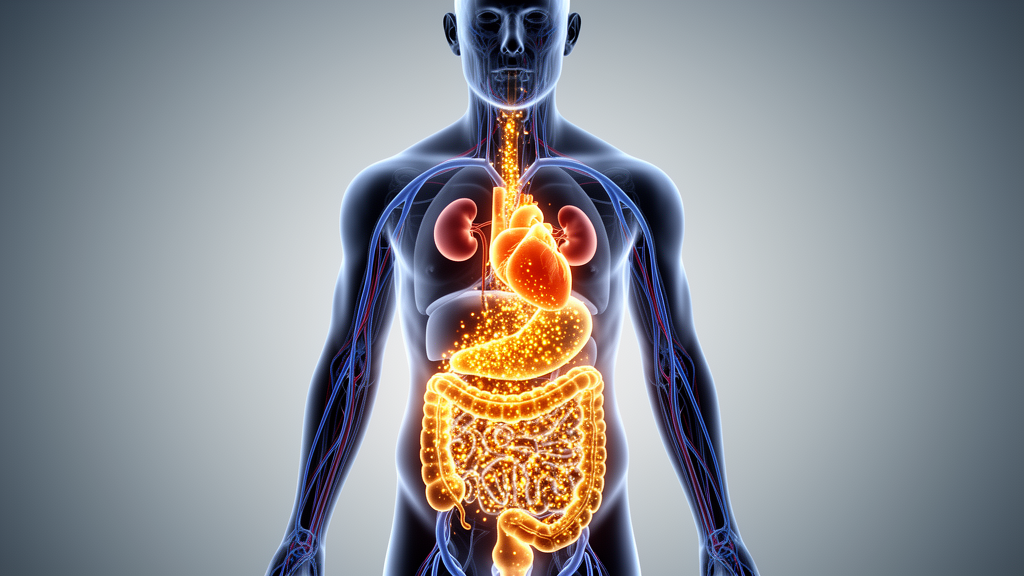
The research, conducted by a team at Xuanwu Hospital, Capital Medical University in Beijing, applied untargeted metabolomics to both serum and fecal samples from the same individuals, an approach the authors describe as paired metabolomics.
The study included 19 participants classified in CKM stages 1–2 and 25 participants in stages 3–4, reflecting progressively more advanced disease. Every participant underwent serum and fecal metabolomic profiling as well as fecal microbiome profiling, and an exploratory serum proteomic analysis was available for 35 of them. Because the design is cross-sectional, the findings describe associations at a single point in time and cannot establish cause and effect.
Serum analysis identified 470 annotated, non-exogenous metabolite features, spanning lipid-related metabolites, organic acids and steroid-related compounds. In the fecal samples, six features remained significant after Benjamini-Hochberg correction for multiple comparisons. The researchers then narrowed the candidate list according to group differences, annotation confidence and redundancy, arriving at 17 fecal and 48 serum metabolites for paired analysis.
Using partial Spearman correlations adjusted for CKM stage, the team identified eight exploratory associations between circulating and gut metabolites. Serum uridine stood out: its levels were associated with three fecal metabolites, namely 1-palmitoyl lysophosphatidic acid, the tripeptide Asp Ala Phe, and the phospholipid PE (16:0/0:0). Bootstrap resampling and leave-one-participant-out analyses were used to check the stability of these signals.
Beyond individual metabolites, the study examined pathway-level scores based on KEGG annotations. Serum and fecal pyrimidine metabolism scores were positively correlated after adjustment for CKM group, with a partial correlation coefficient of 0.429, a P value of 0.0041 and a Benjamini-Hochberg false discovery rate of 0.0246. This shared pyrimidine metabolism signal, with uridine as an exploratory candidate metabolite, forms the central conclusion of the paper.
When the researchers linked the selected metabolites to clinical measurements, the associations were mainly with indicators of renal function, suggesting that kidney status may be an important context for the fecal-serum metabolic relationships observed. The fecal microbiome analysis showed greater genus-level dispersion among participants in CKM stages 3–4, indicating more variable gut microbial composition in the more advanced disease group.
The exploratory proteomic arm added a further layer. Analysis of serum proteins in 35 participants identified 221 differential proteins, which were enriched in pathways related to complement and coagulation, inflammation and lipid metabolism. The authors note that these proteomic findings are exploratory and were available for a subset of the cohort rather than all participants.
The authors are careful to frame the work as hypothesis-generating. The correlations reported are exploratory, the sample size is modest, and the study compares people at different CKM stages rather than following individuals over time, so no conclusions about disease progression or treatment effects can be drawn. Nevertheless, the paired design, in which the same person contributes both blood and stool samples analyzed with untargeted metabolomics, allowed the study to examine fecal-serum metabolite associations directly.
Within those limits, the study provides a concrete, quantified observation: in CKM syndrome, serum and fecal pyrimidine metabolism scores rise and fall together, and serum uridine is linked to multiple fecal metabolites.
Subject of Research: Paired serum and fecal metabolomics in cardiovascular-kidney-metabolic syndrome
Article Title: Paired metabolomics identify associations between fecal and serum metabolites in cardiovascular-kidney-metabolic syndrome
Article References: Zhao, Z., Dai, J., Zou, Y., An, X., Zhang, Y., Zhu, C., Hao, L., & Jia, L. (2026). Paired metabolomics identify associations between fecal and serum metabolites in cardiovascular-kidney-metabolic syndrome. Frontiers in Endocrinology, 17, Article 1982623. https://doi.org/10.3389/fendo.2026.1982623
Image Credits: AI Generated
DOI: 10.3389/fendo.2026.1982623
Keywords: cardiovascular-kidney-metabolic syndrome, metabolomics, uridine, pyrimidine metabolism, fecal microbiome, serum metabolites, renal function, proteomics, cross-sectional study, gut-blood axis, Paired, identify
Cite Scienmag News
Daisy Hatcher. (October 27, 2026). Gut and Blood Metabolites Move Together in Cardiovascular-Kidney-Metabolic Syndrome, Small Study Finds. Scienmag. https://scienmag.com/gut-and-blood-metabolites-move-together-in-cardiovascular-kidney-metabolic-syndrome-small-study-finds/
Daisy Hatcher. "Gut and Blood Metabolites Move Together in Cardiovascular-Kidney-Metabolic Syndrome, Small Study Finds." Scienmag, 27 October 2026, https://scienmag.com/gut-and-blood-metabolites-move-together-in-cardiovascular-kidney-metabolic-syndrome-small-study-finds/. Accessed 27 October 2026.
Daisy Hatcher. "Gut and Blood Metabolites Move Together in Cardiovascular-Kidney-Metabolic Syndrome, Small Study Finds." Scienmag. October 27, 2026. https://scienmag.com/gut-and-blood-metabolites-move-together-in-cardiovascular-kidney-metabolic-syndrome-small-study-finds/