


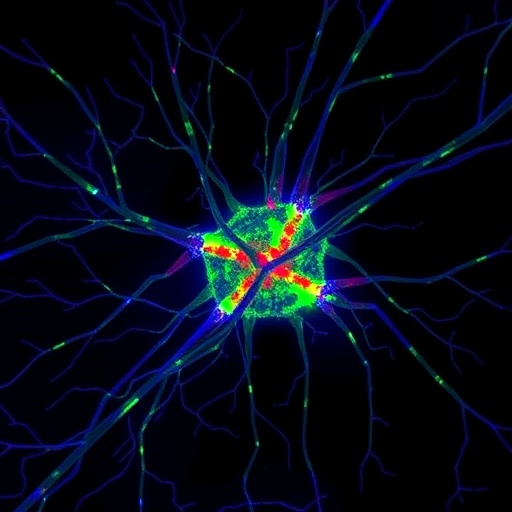
Parkinson’s disease has long been defined by the microscopic inclusions known as Lewy bodies, dense aggregates of the protein alpha-synuclein that accumulate inside dying neurons. Yet the precise molecular events that convert a normally abundant presynaptic protein into a lethal intracellular threat remain incompletely understood. A new study published in Acta Neuropathologica by Dominik Hrabos and colleagues at Palacky University Olomouc and University Hospital Olomouc in the Czech Republic adds a significant piece to this puzzle, demonstrating that GRP78—a central regulator of the cellular stress response—physically associates with alpha-synuclein in the vulnerable neurons of the Parkinson’s disease brain. The finding, published as Volume 151, article 64 of the journal, positions the endoplasmic reticulum as a critical battleground in the neurodegenerative process and offers a mechanistic bridge between protein aggregation and the activation of cellular stress pathways.
GRP78, also known as BiP or immunoglobulin heavy-chain binding protein, is the master chaperone of the endoplasmic reticulum, the organelle responsible for folding and quality-controlling the vast majority of secreted and membrane proteins in the cell. Under normal conditions, GRP78 remains bound to three transmembrane sensors—PERK, IRE1 and ATF6—keeping them in an inactive state. When misfolded proteins accumulate within the ER lumen, GRP78 is recruited away from these sensors to assist folding directly, unleashing the unfolded protein response, a coordinated transcriptional and translational program designed to restore proteostasis. If the stress persists and cannot be resolved, the same signaling network shifts the cell toward apoptosis. This dual identity makes GRP78 both a sentinel and an executioner, and its behavior in diseased tissue carries enormous diagnostic and therapeutic implications.
The Olomouc team examined post-mortem human brain tissue, focusing on the regions most devastated by Parkinson’s pathology—the dopaminergic neurons of the substantia nigra and adjacent vulnerable neuronal populations. Using immunohistochemical and immunofluorescence approaches, the researchers mapped the distribution of GRP78 relative to alpha-synuclein pathology, distinguishing neurons that carried classic Lewy body inclusions from those that did not. The central observation was one of selective colocalization: GRP78 signal was enriched in the very neurons harboring alpha-synuclein aggregates, and within those neurons the chaperone was found in close association with the pathological protein itself. This pattern of association was not a diffuse, nonspecific consequence of generalized cell stress but was strikingly restricted to the neuronal populations that are known to degenerate in the disease.
The significance of this cell-type selectivity cannot be overstated. Parkinson’s disease is not a uniform process; even within the substantia nigra, certain neurons—typically those with high dopamine content, large axonal arbors and elevated metabolic demand—are disproportionately lost, while neighboring populations survive. Previous work by the same lead author, published in Neuropathology and Applied Neurobiology in 2024, had shown that the unfolded protein response markers GRP78 and phosphorylated eIF2alpha are upregulated in parallel with increasing alpha-synuclein burden across Lewy body disease. The new study extends that correlative observation into the realm of direct molecular interaction, suggesting that in vulnerable neurons, alpha-synuclein and GRP78 do not merely coexist under stress but engage each other physically, potentially sequestering the chaperone away from its protective duties.
Mechanistically, this sequestration model fits neatly with a growing body of experimental literature. Alpha-synuclein is a small, intrinsically disordered protein that in healthy neurons resides mainly at presynaptic terminals, where it participates in vesicle trafficking. In disease, it misfolds and assembles into oligomers and fibrils that seed further aggregation in a prion-like cascade. Prior proteomic screens have identified ER-associated proteins among the binding partners of oligomeric alpha-synuclein, and independent studies have shown that alpha-synuclein can interfere with ER-to-Golgi trafficking, including the COPII vesicle-mediated export of ATF6, one of the three arms of the unfolded protein response. In human induced pluripotent stem cell models derived from patients with SNCA gene triplication, alpha-synuclein overexpression alone is sufficient to activate the unfolded protein response, confirming that the pathway is not an epiphenomenon but a direct downstream consequence of alpha-synuclein accumulation.
The cell biology underlying this interaction is complex because alpha-synuclein is primarily a cytosolic protein, whereas GRP78 carries a C-terminal KDEL retention signal that confines it to the ER lumen. How, then, do the two proteins meet inside a neuron? Several non-mutually exclusive explanations have been proposed in the literature. A fraction of alpha-synuclein can translocate into the ER lumen during conditions of proteostatic overload, and immature or misfolded forms of the protein may gain access to the chaperone machinery directly. Alternatively, GRP78 itself is known to redistribute to the cytosol and cell surface under stress conditions, where truncated or secreted forms of the protein have been detected in cancer biology for decades. A third possibility involves membrane continuity: the association could occur at the cytosolic face of the ER membrane, where alpha-synuclein’s affinity for curved lipid surfaces would bring it into proximity with the cytosolic domains of stress sensors and their chaperone regulator. The human tissue data do not resolve these alternatives definitively, but they establish that the interaction occurs in the authentic disease context—something that cell culture models can only approximate.
What makes the association pathologically consequential is the downstream effect on cell fate. The unfolded protein response is a double-edged sword in neurodegeneration. Early activation, dominated by adaptive signaling through PERK-mediated translational attenuation and chaperone induction, allows neurons to cope with protein misfolding. Chronic activation, however, particularly sustained translation arrest through the eIF2alpha branch, has been implicated in synaptic failure and neuronal death across Alzheimer’s, Parkinson’s and prion diseases. GRP78 upregulation in vulnerable neurons can therefore be read in two ways: as a compensatory attempt to refloat the proteostatic capacity of the cell, or as a marker that the cell has crossed a point of no return. The fact that GRP78 is found specifically in neurons containing alpha-synuclein pathology suggests that the ER chaperone system is engaged precisely where and when the pathological process is unfolding, and that its titration against the growing aggregate burden may determine whether a neuron adapts or dies.
The study also carries weight for the concept of selective vulnerability, one of the most vexing questions in Parkinson’s research. Why do certain neurons bearing Lewy bodies die while others, even those with substantial pathology, survive for decades? One compelling hypothesis holds that the difference lies not in the aggregate load itself but in the capacity of each neuron to mount a protective stress response. Neurons that can upregulate GRP78 and mount a productive unfolded protein response may tolerate their inclusions, whereas those that cannot—because of energetic constraints, mitochondrial dysfunction or dopamine-mediated oxidative stress—succumb. Paradoxically, the presence of GRP78 within alpha-synuclein-positive vulnerable neurons could reflect a last-ditch defensive effort that ultimately proves insufficient, or it could mark the neurons in which the chaperone has been overwhelmed and functionally titrated away by the aggregates. Distinguishing between these scenarios is a central task for future work, and the new human data provide the anatomical foundation on which such mechanistic studies can be built.
Beyond its mechanistic contributions, the work resonates with a broader clinical literature on GRP78 as a biomarker. An earlier study from Karolinska Institutet researchers found that GRP78 levels are altered in the Parkinson’s disease brain but not detectably changed in plasma or cerebrospinal fluid, tempering hopes for a simple fluid biomarker while reinforcing the importance of tissue-level analysis. The Olomouc study, grounded in carefully characterized post-mortem material obtained under Czech legislation and approved by the institutional ethics committee, underscores why neuropathological examination remains indispensable: molecular events such as chaperone-aggregate association are invisible in peripheral samples, yet they may encode the decisive information about which neurons will degenerate. As alpha-synuclein seed amplification assays move toward clinical use for the diagnosis of Parkinson’s disease, parallel efforts to quantify ER stress signatures may offer complementary insight into disease stage and trajectory.
Therapeutically, the unfolded protein response has become an increasingly attractive target. Small molecules that modulate the PERK-eIF2alpha axis, chemical chaperones such as tauroursodeoxycholic acid that buffer ER stress, and gene therapy approaches that boost chaperone capacity have all shown promise in preclinical models of synucleinopathy. The demonstration that GRP78 associates with alpha-synuclein in vulnerable human neurons provides a direct molecular rationale for such interventions: if the chaperone system can be strengthened or prevented from being sequestered, the adaptive phase of the stress response might be prolonged and the transition to apoptosis delayed. Conversely, any strategy that dissolves alpha-synuclein aggregates would be expected to release trapped GRP78 and restore proteostatic function, offering a plausible explanation for how aggregation-targeting immunotherapies might exert benefit beyond simply clearing inclusions.
The research, led by Dominik Hrabos of the Department of Clinical and Molecular Pathology with contributions from Anna Mrowiecova and Jitka Cicmancova of the Faculty of Medicine and Dentistry and Jiri Ehrmann, was supported by the Czech Ministry of Health and Palacky University Olomouc. The authors acknowledge the patients and families whose tissue donations made the work possible. While the full article is available to subscribers of Acta Neuropathologica, the central message is clear and consequential: in the neurons that Parkinson’s disease destroys, the cell’s primary folding guardian stands in direct molecular contact with the very protein that is killing them. Decoding the consequences of that encounter may prove essential to understanding why these neurons die—and how, one day, they might be saved.
Cite Scienmag News
Diana Fleming. (September 7, 2026). GRP78 binds alpha-synuclein in vulnerable Parkinson’s disease neurons. Scienmag. https://scienmag.com/grp78-binds-alpha-synuclein-in-vulnerable-parkinsons-disease-neurons/
Diana Fleming. "GRP78 binds alpha-synuclein in vulnerable Parkinson’s disease neurons." Scienmag, 7 September 2026, https://scienmag.com/grp78-binds-alpha-synuclein-in-vulnerable-parkinsons-disease-neurons/. Accessed 7 September 2026.
Diana Fleming. "GRP78 binds alpha-synuclein in vulnerable Parkinson’s disease neurons." Scienmag. September 7, 2026. https://scienmag.com/grp78-binds-alpha-synuclein-in-vulnerable-parkinsons-disease-neurons/


