


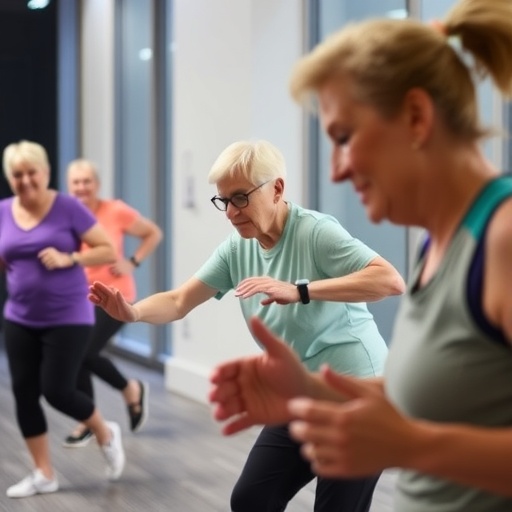
In a groundbreaking advancement poised to revolutionize dementia care, researchers have announced a comprehensive study protocol examining the influence of community-based structured group exercise programs on both cognitive and physical functions in older adults living with dementia. This randomized controlled trial, detailed in a recent publication slated for BMC Geriatrics in 2026, aims to explore the untapped potential of structured physical activity as a non-pharmacological intervention to slow cognitive decline and improve overall quality of life.
Dementia, a progressive neurodegenerative condition characterized by deteriorating memory, thinking, and motor skills, remains one of the most pressing global health challenges, especially as populations age worldwide. Traditional approaches have primarily focused on symptom management and pharmacological treatments, which often come with limited efficacy and undesirable side effects. Against this backdrop, physical exercise has emerged as a promising avenue, backed by neurobiological theories suggesting that physical activity may promote neuronal plasticity, enhanced cerebral blood flow, and reduced neuroinflammation.
The study underlines the importance of a community-based framework, which holds immense promise for scalability, accessibility, and sustained engagement. Community-based interventions leverage social support, environmental context, and local resources, creating an ecosystem that encourages consistency and motivation among older adults. It also introduces structured group exercise as opposed to individual exercise routines—infusing a social and interactive element believed to synergistically bolster cognitive engagement alongside physical exertion.
At its core, this research protocol delineates a comprehensive systematic design featuring randomization — the gold standard for clinical trials — ensuring that participants are evenly distributed among intervention and control groups to minimize bias. The intervention includes carefully tailored exercise regimens that combine aerobic, resistance, balance, and flexibility training. These multifaceted routines aim to target various physiological systems implicated in dementia progression, from cardiovascular health to motor coordination and muscle strength.
Emerging studies have shown that aerobic activities stimulate hippocampal neurogenesis, critical for memory and learning processes often impaired in dementia. Resistance training, meanwhile, supports muscular strength essential for daily activities, reducing fall risk and enhancing autonomy. Balance and flexibility exercises further contribute by improving proprioception and joint mobility, thereby mitigating mobility-related comorbidities. By integrating these elements into structured group calendars, researchers anticipate synergistic effects accumulating over the trial timeline.
Cognitively, the engagement associated with group exercise acts as a dual catalyst. Beyond the direct neuroprotective benefits of physical activity, the social interaction inherent in group settings stimulates cognitive domains such as attention, executive functions, and emotional regulation. Social isolation and loneliness have been consistently linked to accelerated cognitive decline; thus, group dynamics within this exercise framework may serve as a potent protective factor by nurturing community bonds and meaningful interpersonal connections.
The outcome measures designed for this trial span a range of validated neuropsychological and physical assessments. Cognitive outcomes include evaluations of global cognition, memory, executive function, and processing speed conducted via standardized instruments like the Mini-Mental State Examination (MMSE) and the Montreal Cognitive Assessment (MoCA). Physical parameters are meticulously assessed using tests such as gait speed, handgrip strength, and the Timed Up and Go (TUG) test, presenting a multidimensional view of functional status.
Importantly, the protocol emphasizes longitudinal follow-up to determine the persistence of any cognitive and physical benefits post-intervention, which is pivotal in discerning sustainable impacts rather than transient improvements. Additionally, the researchers have accounted for confounding variables including baseline physical activity levels, comorbidities, and medication use, thereby ensuring the robustness and generalizability of the findings.
The implications of positive outcomes from such a trial are vast. Demonstrated efficacy could reshape public health policies and clinical guidelines, reinforcing physical activity as an essential component of dementia management. Community centers, healthcare providers, and caregiving organizations might adapt to include tailored structured group exercise programs, thus democratizing access to an affordable, scalable intervention with minimal side effects.
Moreover, this research aligns with growing interdisciplinary perspectives that advocate for holistic management approaches — ones that incorporate biological, psychological, and social determinants of health. The integration of physical activity into care plans reinforces a paradigm shift from reactive to proactive and preventative models that empower older adults with dementia to maintain independence and dignity.
While challenges remain in delivering consistent, well-supervised exercise programs adapted to heterogeneous patient needs and functional capacities, this trial’s community-rooted design mitigates many logistical and motivational barriers. Leveraging local infrastructure and peer support creates a dynamic environment conducive to sustained participation—a crucial factor given historically high dropout rates in exercise interventions.
From a neurobiological standpoint, this initiative supports the evolving understanding of dementia as a modifiable disorder where lifestyle and environmental factors play significant roles. The interplay between exercise-induced neurotrophic factors such as brain-derived neurotrophic factor (BDNF), reduced oxidative stress, and enhanced cerebral angiogenesis may offer mechanistic insights into how structured physical activity slows neurodegenerative processes.
In conclusion, the launch of this randomized controlled trial heralds a promising avenue for dementia intervention research by meticulously investigating the dual benefits of physical exercise on cognitive and physical realms in a structured, community-based setting. Its innovative combination of rigorous scientific methodology and practical community implementation presents an exciting frontier in mitigating the global dementia burden.
For families, caregivers, healthcare professionals, and policymakers alike, this trial offers hope through a vision of dementia care that transcends pharmacological limitations and centers on empowering individuals via movement, social connection, and holistic well-being. The ultimate testament to this research will be its translation from protocol to practice—transforming insights into real-world impact.
Cite Scienmag News
Cassandra Pierce. (May 9, 2026). Group Exercise Boosts Cognition, Fitness in Dementia. Scienmag. https://scienmag.com/group-exercise-boosts-cognition-fitness-in-dementia/
Cassandra Pierce. "Group Exercise Boosts Cognition, Fitness in Dementia." Scienmag, 9 May 2026, https://scienmag.com/group-exercise-boosts-cognition-fitness-in-dementia/. Accessed 4 September 2026.
Cassandra Pierce. "Group Exercise Boosts Cognition, Fitness in Dementia." Scienmag. May 9, 2026. https://scienmag.com/group-exercise-boosts-cognition-fitness-in-dementia/


