


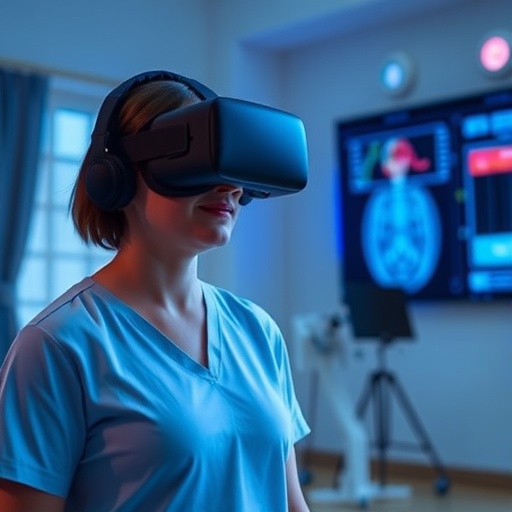
A groundbreaking study has emerged from the University of Jyväskylä (JYU), where a team of researchers has innovated a virtual reality (VR) training task aimed explicitly at aiding stroke survivors afflicted by visuospatial neglect (VSN). This fascinating and transformative approach represents a significant step in rehabilitation by integrating audiovisual cues into physiotherapy, thus providing much-needed support and motivation for those grappling with the consequences of stroke. By adopting this cutting-edge technology, researchers are not just providing treatment; they are reshaping the ways physiotherapy can effectively address complex neurological challenges.
Visuospatial neglect is a condition that affects roughly 30% of individuals who have experienced a stroke, impairing their attention and awareness of one side of their spatial environment. This lack of awareness can severely compromise their daily lives, heightening the risks associated with falls and diminishing their overall independence. In conventional rehabilitation settings, patients often find themselves involved in repetitive, therapist-led exercises. Such methods can be physically taxing and demotivating, leading to a lackluster rehabilitation experience. Recognizing these pitfalls, the JYU research team set out to create a VR solution that is not only effective but also engaging for the participants.
Dr. Andrew Danso, the lead author of the study, emphasized the importance of the rehabilitation process being both adaptable and engaging, with the physiotherapist remaining central to the experience. This innovative VR training task was thoughtfully co-designed with physiotherapists to ensure its applicability and effectiveness. The training involved interactive hand-grasping exercises that allowed users to interact with virtual objects while being guided by carefully structured visual and spatial audio cues. Such cues are designed to draw the patients’ attention towards their neglected side, fostering a more balanced spatial awareness.
In the exploratory case study published in JMIR XR & Spatial Computing, two stroke survivors with visuospatial neglect participated in a series of twelve VR-assisted physiotherapy sessions. The responses from the patients were overwhelmingly positive, as they described the experience as enjoyable and distinctly different from traditional physiotherapy sessions. One of the key outcomes reported was improved confidence in walking and mobility for one of the participants. Such improvements are essential as they significantly contribute to enhancing the quality of life for individuals with such profound disabilities.
Moreover, the physiotherapy trainees involved in the study assessed the VR system as safe, usable, and engaging. This is a crucial factor, as user experience plays a pivotal role in the successful implementation of any new rehabilitation strategy. The positive feedback from patients and trainees alike indicates that this novel approach is not just a flash in the pan but rather represents a meaningful advancement in the way stroke rehabilitation can be approached. This promising avenue of research reveals the potential for VR technology to shape the future of physiotherapy.
The implications of this study extend beyond the individual experiences of the stroke survivors involved. The findings reflect a broader potential for VR to transform rehabilitation practices by making them more personalized and patient-centered. Future research at the University of Jyväskylä, in collaboration with various partners from Finland, Canada, Singapore, Australia, and the UK, plans to broaden the scope of testing by including larger patient cohorts. This expansion will help to contextualize the effectiveness of audiovisual cueing across diverse populations and further assess the clinical impact of the newly developed VR intervention.
As cutting-edge technology continues to advance, its role in rehabilitation becomes increasingly indispensable. The establishment of effective rehabilitation methods is crucial in the context of an aging population, where the prevalence of stroke and other neurological disorders is expected to rise. By harnessing the power of VR, medical practitioners can provide customized and effective interventions, ultimately aiming to enhance the independence and well-being of stroke survivors.
While the study’s findings are presently considered preliminary, they signify an exciting leap forward in rehabilitation science. The integration of technology into therapy not only has the potential to enhance physical outcomes but can also contribute to the mental and emotional well-being of patients. Using VR to enrich the rehabilitation experience may also serve to mitigate boredom and frustration, two common barriers in traditional physiotherapy settings.
In conclusion, the work being done at the University of Jyväskylä demonstrates the promising future of virtual reality in healthcare, particularly in stroke rehabilitation. The potential for customized, engaging, and effective rehabilitation approaches using VR technology cannot be overstated. This pioneering research exemplifies the innovative spirit of modern science and indicates a clear path forward for developing tools that bring about significant changes in patient outcomes. As this research continues to evolve, the hope is that VR will become an integral part of the rehabilitation toolkit for healthcare providers, empowering stroke survivors on their journeys to recovery.
This transformative advancement in stroke rehabilitation shows how the intersection of technology and healthcare is enabling new possibilities. It is a reminder that as scientific understanding deepens, so too does the potential to improve lives through innovative therapies and patient-centered care. As we look to the future, the commitment to developing such multifaceted approaches exemplifies the growing recognition of the need for holistic and engaging rehabilitation solutions.
Keywords
Cite Scienmag News
Cassandra Pierce. (October 20, 2025). Groundbreaking Virtual Reality Method Pioneered for Enhanced Stroke Rehabilitation. Scienmag. https://scienmag.com/groundbreaking-virtual-reality-method-pioneered-for-enhanced-stroke-rehabilitation/
Cassandra Pierce. "Groundbreaking Virtual Reality Method Pioneered for Enhanced Stroke Rehabilitation." Scienmag, 20 October 2025, https://scienmag.com/groundbreaking-virtual-reality-method-pioneered-for-enhanced-stroke-rehabilitation/. Accessed 4 September 2026.
Cassandra Pierce. "Groundbreaking Virtual Reality Method Pioneered for Enhanced Stroke Rehabilitation." Scienmag. October 20, 2025. https://scienmag.com/groundbreaking-virtual-reality-method-pioneered-for-enhanced-stroke-rehabilitation/


