


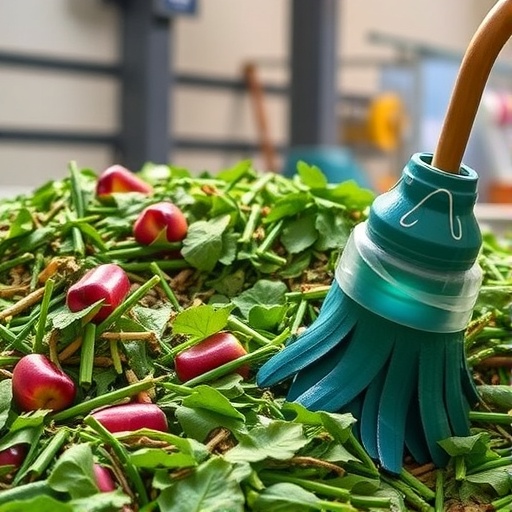
In the quest for sustainable energy, the value of anaerobic digestion (AD) has become increasingly significant, especially in converting organic waste into biogas. A recent study by de Oliveira et al. has delved into a crucial aspect of this process: the effect of grinding green waste prior to digestion. By examining how particle size and hydrolysis interact, the researchers shed light on potential methods to enhance methane production, an essential component of biogas.
The process of anaerobic digestion involves the breakdown of organic material by microorganisms in the absence of oxygen. This complex biological process can be influenced heavily by the physical properties of the feedstock, particularly its particle size. Traditional practices often overlook the importance of pre-treatment methods. However, the new findings suggest that grinding green waste could significantly improve the efficiency and output of methane during digestion.
Hydrolysis is one of the pivotal phases in the anaerobic digestion process, wherein high molecular weight compounds, such as cellulose and lignin, are broken down into simpler sugars and organic acids. The study posits that grinding green waste alters its physical structure, increasing its surface area and thereby facilitating a more efficient hydrolysis. The implications of this research could shift prevailing practices in waste management and energy recovery strategies across various sectors.
Moreover, the composition of green waste can vary widely, comprising materials such as leaves, branches, and other organic debris. Each type of green waste presents unique challenges and opportunities in the digestion process. By grinding these materials, the researchers found not only enhanced hydrolysis rates but also increased methane yields. This breakthrough offers exciting avenues for further exploration in optimizing biogas production.
Key to understanding the benefits of grinding is the relationship between particle size and microbial accessibility. Smaller particles allow microorganisms more surface area to act upon, facilitating a more rapid breakdown of organic materials. The research indicates that when green waste is finely ground, a more diverse and active microbial community is stimulated during the digestion process, leading to improved biogas production.
The findings also emphasize the potential economic benefits of adopting grinding techniques in anaerobic digestion facilities. By increasing the efficiency of biogas production, operators can maximize their output, leading to enhanced profitability. In a world increasingly driven by the need for renewable energy sources, these enhancements could contribute significantly to both energy generation and waste reduction efforts.
Importantly, the study addresses the sustainability of such approaches. As the demand for alternative energy solutions escalates, the reduction of greenhouse gas emissions is paramount. By optimizing methane production through effective waste management practices like grinding, the ecological footprint of waste processing can be substantially minimized.
Further research is necessary to delineate the optimal grinding parameters, such as the ideal particle size and the types of green waste most amenable to this pre-treatment. Researchers are encouraged to explore the interactions between different materials, as variations in composition could yield differing outcomes. Such detailed inquiry stands to refine the scientific understanding of anaerobic digestion and its applications.
The technical implications of these findings extend beyond mere production increases. Understanding how physical attributes of feedstocks affect microbial behavior opens doors to more effective bioprocess design. This research could lay groundwork for advancements in the engineering of digesters themselves, potentially leading to the next generation of waste-to-energy technology.
Another critical aspect of this work is its relevance to global sustainability goals. The effective management of organic waste is essential not just for energy recovery but also for reducing landfill dependencies and the environmental issues associated with them. By harnessing biological processes to convert waste into energy, societies can pivot towards more circular economic models.
In conclusion, the research by de Oliveira et al. marks a significant step forward in the field of renewable energy derived from organic waste. By illuminating the effect of grinding on anaerobic digestion and hydrolysis, this study not only contributes to academic discourse but also provides practical insights for industry practitioners aiming for increased efficiency in biogas production. These findings could well catalyze a shift in how organic waste is approached in the context of sustainable energy.
Cite Scienmag News
Denise Maddox. (November 7, 2025). Grinding Green Waste Boosts Methane Production Efficiency. Scienmag. https://scienmag.com/grinding-green-waste-boosts-methane-production-efficiency/
Denise Maddox. "Grinding Green Waste Boosts Methane Production Efficiency." Scienmag, 7 November 2025, https://scienmag.com/grinding-green-waste-boosts-methane-production-efficiency/. Accessed 5 September 2026.
Denise Maddox. "Grinding Green Waste Boosts Methane Production Efficiency." Scienmag. November 7, 2025. https://scienmag.com/grinding-green-waste-boosts-methane-production-efficiency/


