

Friday, July 17, 2026
Science
No Result
View All Result
  • Login
  • HOME
  • SCIENCE NEWS
  • CONTACT US
  • HOME
  • SCIENCE NEWS
  • CONTACT US
No Result
View All Result
Scienmag
No Result
View All Result
Home Science News Biology

Greek Cave Snail Identified, Named for Hermes and His Nymph Caretaker

July 17, 2026
in Biology
Reading Time: 2 mins read
0
Greek Cave Snail Identified, Named for Hermes and His Nymph Caretaker

Greek Cave Snail Identified, Named for Hermes and His Nymph Caretaker

65
SHARES
587
VIEWS
Share on FacebookShare on Twitter
ADVERTISEMENT

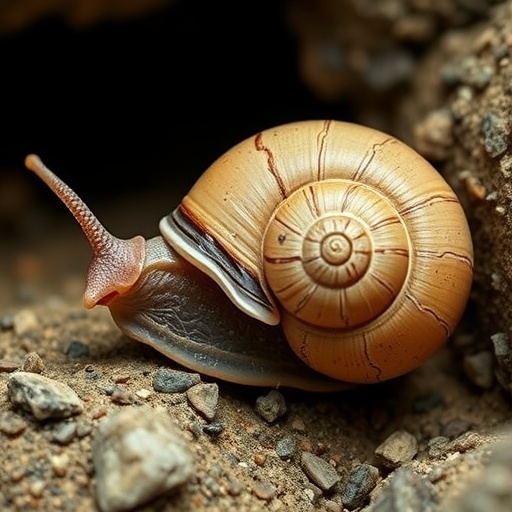
A team at the National and Kapodistrian University of Athens has identified a completely new genus and species of subterranean freshwater snail in southern Greece. The animal, named Cyllena hermes, lives its entire life underground in a specialized karst spring system and is adapted to near-total darkness, including loss of pigmentation and eyes.

The discovery was made in a highly restricted area in the Peloponnese, specifically within a single karstic spring near Mount Kyllini. The site lies at roughly 610 meters elevation in the Korinthia region, where groundwater emerges from carbonate bedrock and forms a small stream.

From there, the stream flows toward Lake Stymphalia, connecting to the broader underground hydrological network of the Stymphalia closed karst basin. Such systems can act as isolated “aquatic caves,” where species evolve under stable yet fragile conditions and dispersal is extremely limited.

Cyllena hermes is currently known from only this one locality, meaning its survival depends on the persistence of the local water source. Even minor changes in groundwater availability can reshape habitat conditions, affecting flow rate, water chemistry, and overall ecosystem stability in ways surface-dwelling species would not experience.

The researchers used these ecological constraints to assess conservation risk. Because the snail relies entirely on a single, isolated water supply, the species is classified as Vulnerable under IUCN Red List criteria, reflecting its susceptibility to drought and water extraction in neighboring areas.

Taxonomically, the team created a monotypic genus—a genus represented by only this single species—highlighting both its uniqueness and the narrow evolutionary context in which it was found. The names draw on ancient Greek mythology linked to the mountain where the snail lives.

The genus name Cyllena honors Cyllene (Κυλλήνη), a nymph associated with Mount Kyllini who, in myth, nurtured Hermes. The species epithet hermes pays tribute to Hermes (Ἑρμῆς), the messenger god said to have been born in a cave on Mount Kyllini, connecting modern science directly to the geography of the discovery.

Beyond its scientific novelty, the study underscores a broader message: Greece’s karst landscapes can contain hidden biodiversity that remains unrecorded in conventional surveys. At the same time, the work emphasizes how vulnerable these underground habitats are when water systems are pressured by climate variability and human use.

The full research details have been published in the peer-reviewed, open-access journal Subterranean Biology.

Subject of Research: Subterranean freshwater snail taxonomy and conservation
Article Title: From the dark to the light: A new genus and species of stygobiont hydrobiid (Caenogastropoda, Truncatelloidea) from southern Greece
News Publication Date: 18-Jun-2026
Web References: https://doi.org/10.3897/subtbiol.57.189090
References: Radea C, Protopapas D, Parmakelis A, Koskeridou E (2026) Subterranean Biology 57: 1–21. https://doi.org/10.3897/subtbiol.57.189090
Image Credits: Radea et al., 2026
Keywords: subterranean biology, karst spring, stygobiont, Hydrobiidae, new genus, new species, IUCN Vulnerable, Greece, Cyllena hermes

Tags: adaptation to darkness in cave speciescave-dwelling aquatic invertebratesCyllena hermesendemic species Greecefragile cave habitatsfreshwater snail conservationgroundwater-dependent specieskarst spring ecosystemnew genus and speciessubterranean biodiversitysubterranean freshwater snailunderground hydrological systems
Share26Tweet16
Previous Post

Phosphorus in coastal groundwater accelerates algal blooms worldwide

Next Post

Timing Regenerative Signals Determines Healing Outcomes After Injury

Related Posts

Structure-Guided PCSK9 Vaccine Demonstrates Promising Preclinical Results
Biology

Structure-Guided PCSK9 Vaccine Demonstrates Promising Preclinical Results

July 17, 2026
Compact genetic switch offers new potential therapies for drug-resistant epilepsy
Biology

Compact genetic switch offers new potential therapies for drug-resistant epilepsy

July 17, 2026
Metabolomic Profiling Reveals Subtype-Specific Molecular Programs in Pediatric Ependymoma
Biology

Metabolomic Profiling Reveals Subtype-Specific Molecular Programs in Pediatric Ependymoma

July 17, 2026
NIH Grants $10.7 Million to Advance Sensory Biology at OU Medicine
Biology

NIH Grants $10.7 Million to Advance Sensory Biology at OU Medicine

July 16, 2026
New Model Uncovers Hidden Disease Signals and Predicts Health Outcomes
Biology

New Model Uncovers Hidden Disease Signals and Predicts Health Outcomes

July 16, 2026
AI designs functional CRISPR-like nucleases surpassing natural models
Biology

AI designs functional CRISPR-like nucleases surpassing natural models

July 16, 2026
Next Post
Timing Regenerative Signals Determines Healing Outcomes After Injury

Timing Regenerative Signals Determines Healing Outcomes After Injury

  • Mothers who receive childcare support from maternal grandparents show more

    Mothers who receive childcare support from maternal grandparents show more parental warmth, finds NTU Singapore study

    27656 shares
    Share 11059 Tweet 6912
  • University of Seville Breaks 120-Year-Old Mystery, Revises a Key Einstein Concept

    1061 shares
    Share 424 Tweet 265
  • Bee body mass, pathogens and local climate influence heat tolerance

    682 shares
    Share 273 Tweet 171
  • Researchers record first-ever images and data of a shark experiencing a boat strike

    546 shares
    Share 218 Tweet 137
  • Groundbreaking Clinical Trial Reveals Lubiprostone Enhances Kidney Function

    531 shares
    Share 212 Tweet 133
Science

Embark on a thrilling journey of discovery with Scienmag.com—your ultimate source for cutting-edge breakthroughs. Immerse yourself in a world where curiosity knows no limits and tomorrow’s possibilities become today’s reality!

RECENT NEWS

  • ORNL Grid Researchers Achieve IEEE Senior Membership Recognition
  • ZBP1 Links Genomic Stress to Tumor Immunity, New Study Finds
  • Aral Sea Drying Turns Carbon Sink Into Major Carbon Source
  • Structure-Guided PCSK9 Vaccine Demonstrates Promising Preclinical Results

Categories

  • Agriculture
  • Anthropology
  • Archaeology
  • Athmospheric
  • Biology
  • Biotechnology
  • Blog
  • Bussines
  • Cancer
  • Chemistry
  • Climate
  • Earth Science
  • Editorial Policy
  • Marine
  • Mathematics
  • Medicine
  • Pediatry
  • Policy
  • Psychology & Psychiatry
  • Science Education
  • Social Science
  • Space
  • Technology and Engineering

Subscribe to Blog via Email

Enter your email address to subscribe to this blog and receive notifications of new posts by email.

Join 5,146 other subscribers

© 2025 Scienmag - Science Magazine

Welcome Back!

Login to your account below

Forgotten Password?

Retrieve your password

Please enter your username or email address to reset your password.

Log In
No Result
View All Result
  • HOME
  • SCIENCE NEWS
  • CONTACT US

© 2025 Scienmag - Science Magazine

Discover more from Science

Subscribe now to keep reading and get access to the full archive.

Continue reading
