

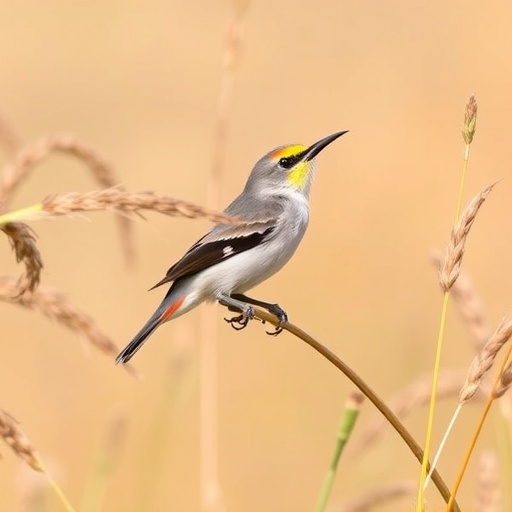
In a groundbreaking study focused on the ecological impacts of climate change, researchers have turned their attention to the Canadian prairies, a region both rich in biodiversity and increasingly vulnerable to shifting climatic conditions. The research, led by Shrestha, Arabian, and Martin, among others, meticulously examines the phenomenon known as climate change refugia. These are areas that provide sanctuary for species as they adapt to rapid environmental changes. By identifying these refugia within the prairies, the scientists aim to gain crucial insights into the shifting ranges of grassland songbirds, an essential component of these ecosystems.
The Canadian prairies are characterized by their expansive grasslands, which serve as a vital habitat for numerous species, particularly grassland songbirds. These birds are not only integral to the ecological balance of the region but also serve as indicators of environmental health. Thus, preserving their habitats is paramount, especially considering the accelerating impacts of climate change. The study’s objective is to understand how these songbirds are responding to the pressures imposed by climate fluctuations and how their breeding habitats may be shifting over time.
As the climate warms, many species are forced to migrate to new territories in search of suitable conditions. This research highlights the critical need to assess the potential shifts in range for various songbird species as they confront these environmental changes. By utilizing advanced modeling techniques, the researchers have mapped potential future habitats, providing a clearer picture of where these avian populations might find refuge. This data is essential for future conservation efforts, allowing wildlife managers to prioritize areas that will be crucial for the survival of these species.
Climate change refugia emerge as critical landscapes that may buffer the effects of climate change, providing a temporary haven for wildlife. These areas, characterized by unique microclimates or geographic features that are less susceptible to climate change impacts, are being studied in-depth. The researchers emphasize that understanding the locations and characteristics of these refugia can help inform conservation strategies. Identifying these areas enables stakeholders to make informed decisions about land use, habitat preservation, and restoration efforts.
In this study, the researchers gathered extensive data, revealing significant insights into the breeding behaviors of various grassland songbirds. The analysis showed that certain species are more resilient than others, highlighting the importance of adaptive management strategies that consider the unique needs of different populations. As climate-induced changes continue to disrupt habitats, it becomes increasingly critical to ensure that effective conservation measures are in place to protect these vulnerable species.
The findings of this research are pivotal for understanding not just the specific impacts on songbirds but also the broader implications for prairie ecosystems as a whole. Biodiversity loss in these regions could have cascading effects, potentially disrupting food chains and leading to further ecological decline. By pinpointing breeding habitats and potential refugia, the researchers have laid the groundwork for targeted conservation initiatives aimed at maintaining the integrity of these ecosystems.
In addition to addressing immediate conservation needs, the study also opens avenues for future research. The team advocates for a continued examination of climate change refugia across various ecosystems, encouraging researchers to explore additional species and ecological contexts. This holistic approach is essential for a comprehensive understanding of how climate change impacts regional biodiversity and ecosystem health.
Moreover, engaging local communities in conservation efforts is highlighted as a crucial element in the success of any management strategy. By raising awareness and involving stakeholders in conservation practices, the study promotes a model of collaboration between scientists, policymakers, and the public. This grassroots approach can foster a deeper connection to the land and the species that inhabit it, ultimately leading to more sustainable management of natural resources.
As climate change continues to shape our planet, the research conducted in the Canadian prairies stands as a testament to the need for proactive measures to safeguard biodiversity. By recognizing the significance of climate change refugia, stakeholders have the opportunity to mitigate some of the most significant impacts of climate change on vulnerable species. The findings are not only crucial for the future of grassland songbirds but also for the long-term health and sustainability of prairie ecosystems.
Policy recommendations stemming from this research will be key to integrating scientific insights into legislative measures. Understanding how specific habitats can serve as refugia allows for informed policy decisions, ensuring that regional conservation initiatives are aligned with ecological realities. As government bodies and organizations work towards climate action, evidence-based strategies drawn from such studies will be instrumental in shaping effective responses.
In conclusion, the study presented by Shrestha, Arabian, Martin, and their colleagues is a pivotal contribution to the field of ecological research amid climate change. By meticulously assessing range shifts and identifying breeding habitats for grassland songbirds, the researchers provide a vital resource for conservation efforts aimed at protecting these integral species. This research not only expands our understanding of the ecological challenges posed by climate change but also inspires hope for collaborative solutions that can help safeguard our natural heritage for future generations.
Subject of Research: The ecological impacts of climate change on grassland songbirds in Canadian prairies.
Article Title: Climate change refugia in Canadian prairies: assessing range shifts and identifying breeding habitats for grassland songbirds.
Article References: Shrestha, R., Arabian, J., Martin, C. et al. Climate change refugia in Canadian prairies: assessing range shifts and identifying breeding habitats for grassland songbirds. Environ Monit Assess 198, 11 (2026). https://doi.org/10.1007/s10661-025-14784-y
Image Credits: AI Generated
DOI: https://doi.org/10.1007/s10661-025-14784-y
Keywords: Climate change, refugia, Canadian prairies, grassland songbirds, biodiversity, habitat conservation.


