

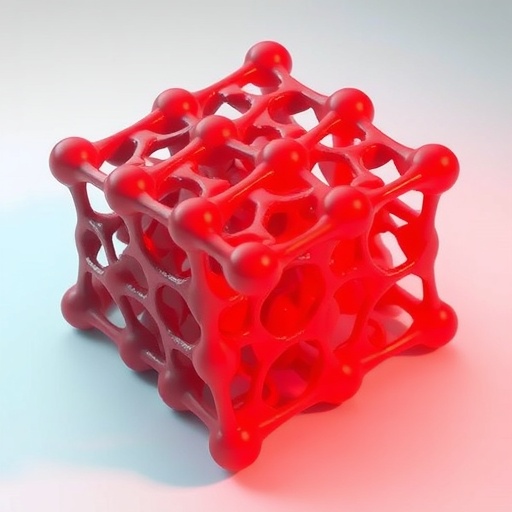
In a groundbreaking advancement that promises to revolutionize the field of gas separation and purification, researchers Festus, K., Guo, F., Ullah, S., and collaborators have unveiled a novel graphene-inspired porous polymer network specifically engineered to address some of the most pressing challenges in hydrocarbon processing. Published in the prestigious journal Nature Communications in 2026, this work represents a paradigm shift in the separation of ethane from ethylene, as well as the purification of methane, two processes central to the petrochemical and energy industries. The innovative material combines the extraordinary structural features of graphene with a tailored porous polymer architecture, achieving separation efficiencies and selectivities previously unattainable by conventional methods.
Hydrocarbon separations, particularly those involving ethane and ethylene, pose significant technical and economic challenges due to the similar molecular sizes and physical properties of these gases. Ethylene, a critical raw material for the production of plastics and other chemicals, must be separated from ethane with great precision to ensure product purity and process efficiency. Traditional methods, such as cryogenic distillation, demand substantial energy inputs and capital investment, driving the quest for alternative technologies that capitalize on molecular sieving and adsorption phenomena. The porous polymer network introduced in this study mimics the topological characteristics of graphene, known for its robustness, flexibility, and large surface area, while incorporating functional groups that enhance selective adsorption, thus offering a low-energy, cost-effective solution.
The synthesis of this graphene-inspired polymer involves a sophisticated bottom-up approach, where monomers are strategically designed to self-assemble into a porous framework with sub-nanometer channels. These channels are meticulously engineered to discriminate between molecules based on their kinetic diameters and interaction energies with the polymer matrix. Unlike traditional graphene sheets, which are often impermeable without defects, this network exploits controlled porosity to facilitate molecular transport and separation. The utilization of cross-linkers and functional moieties ensures mechanical stability, chemical resilience, and tunable affinity for target gases, embodying a material that is as versatile as it is efficient.
Characterization techniques such as scanning electron microscopy (SEM), transmission electron microscopy (TEM), and X-ray diffraction (XRD) revealed the intricate pore architecture and confirmed the preservation of graphene-like structural order within the polymer network. Porosimetry analyses demonstrated a high surface area, critical for maximizing gas adsorption sites, while spectroscopic methods provided insights into the chemical environment of the polymeric framework. Notably, the introduction of nitrogen-containing functional groups was shown to enhance selective interactions with ethylene molecules, owing to π-π stacking and dipole-induced polarization effects that preferentially capture unsaturated hydrocarbons.
Performance evaluations conducted under industrially relevant conditions highlighted the material’s outstanding selectivity toward ethylene over ethane, with separation factors exceeding those of conventional membranes and adsorbents. Gas permeation tests indicated high flux rates, indicating rapid transport through the porous network without sacrificing selectivity. Such an optimal balance between permeability and selectivity is often described as a “trade-off” in membrane science, and this research successfully pushes the limits of that trade-off. Additionally, the polymer network demonstrated remarkable stability during prolonged exposure to mixed gas feeds and fluctuating operational parameters, essential criteria for real-world applications.
Beyond ethane/ethylene separation, the study explored the utility of the polymer in methane purification, a process of growing importance as natural gas and biogas sources become more prevalent. Methane, often contaminated with heavier hydrocarbons and impurities, necessitates purification to meet stringent specifications for subsequent uses in fuel cells, chemical synthesis, or pipeline quality standards. The porous polymer network efficiently adsorbed contaminants while allowing methane to permeate, thereby enhancing gas quality. This dual functionality underscores the material’s adaptability and presents a compelling case for its broad adoption across multiple sectors in the energy value chain.
From an engineering perspective, integrating this polymer network into existing gas separation units could significantly reduce energy consumption by minimizing reliance on thermal separation methods. The low-temperature, pressure-driven operation of membrane or adsorption units employing the polymer could reduce greenhouse gas emissions associated with energy-intensive cryogenic plants, aligning process improvements with global sustainability goals. Moreover, the modularity of polymer synthesis allows for scalable production, opening pathways for commercial viability and potentially disrupting markets dominated by traditional technologies.
A key innovation of this work lies in the molecular design strategy, which harnesses computational modeling and machine learning to predict optimal monomer combinations and structural parameters. The use of predictive algorithms accelerated the discovery process, enabling the team to efficiently navigate chemical space and identify promising candidates that satisfy intricate criteria spanning pore size distribution, chemical affinity, and mechanical robustness. This integrative approach, combining experimental synthesis, characterization, and advanced computational techniques, demonstrates the power of interdisciplinary collaboration in materials science.
The implications of employing graphene-inspired porous polymers extend beyond hydrocarbon separations. The modular architecture and tunable chemistry provide a versatile platform that could be adapted for other challenging separations such as carbon dioxide capture, nitrogen/oxygen separation, or even in catalysis and sensing applications. By engineering the pore environment and functional groups, these polymers can be customized to address a broad spectrum of molecular recognition challenges, signaling a new frontier in synthetic porous materials.
Despite the significant progress, challenges remain before widescale adoption, including long-term durability under harsh industrial conditions, membrane module design, and integration with process control systems. The research team acknowledges the necessity for extended pilot-scale testing and the exploration of cost-effective fabrication techniques to ensure the technology’s competitiveness. Future directions also involve enhancing fouling resistance and exploring hybrid systems that combine the polymer network with other materials to further optimize performance parameters.
The study’s success owes much to sustained funding and collaboration among institutions spanning materials chemistry, chemical engineering, and computational science. This multidisciplinary effort underscores the importance of converging expertise to address global challenges such as energy efficiency and environmental sustainability. The publication in Nature Communications not only validates the scientific rigor but also raises awareness of the transformative potential of advanced polymer networks inspired by graphene.
This remarkable innovation arrives at an opportune moment, as the petrochemical industry confronts increasing pressures to reduce carbon footprints and embrace greener separation technologies. The transition from energy-intensive distillation to membrane- and adsorption-based processes represents a critical step toward low-carbon manufacturing pathways. The graphene-inspired porous polymer network, with its superior performance metrics and sustainable operational profile, exemplifies the kind of disruptive technology that could facilitate this transition.
In summary, the work of Festus, Guo, Ullah, and colleagues pioneers a new class of materials that synergistically blends the unique properties of graphene with the adaptability of porous polymers. Their design and synthesis of a highly selective, permeable, and stable polymer network offers a compelling solution to the longstanding challenge of hydrocarbon separation and methane purification. The demonstrated scalability and functionality are promising harbingers for future industrial deployment, potentially transforming the landscape of gas processing. This breakthrough not only pushes the boundaries of materials science but also holds profound implications for energy sustainability and environmental stewardship worldwide.
Subject of Research:
Article Title:
Article References:
Festus, K., Guo, F., Ullah, S. et al. Graphene-inspired porous polymer network for ethane/ethylene separation and methane purification. Nat Commun (2026). https://doi.org/10.1038/s41467-026-70471-7
Image Credits: AI Generated
DOI: 10.1038/s41467-026-70471-7
Keywords: Graphene-inspired polymer, porous polymer network, ethane/ethylene separation, methane purification, gas separation membranes, advanced materials, hydrocarbon separation, low-energy gas processing


