Thursday, October 29, 2026
Science
No Result
View All Result
  • Login
  • HOME
  • SCIENCE NEWS
  • CONTACT US
  • HOME
  • SCIENCE NEWS
  • CONTACT US
No Result
View All Result
Scienmag
No Result
View All Result
Home Science News Technology and Engineering

Graph neural networks shape propagation differently, large comparison study finds

October 28, 2026
in Technology and Engineering
Cassandra Pierce
By Cassandra Pierce Scienmag Editorial Profile - Systems Neuroscience
Reading Time: 3 mins read
0
Graph neural networks shape propagation differently, large comparison study finds

Graph neural networks shape propagation differently, large comparison study finds

65
SHARES
587
VIEWS
Share on FacebookShare on Twitter
ADVERTISEMENT

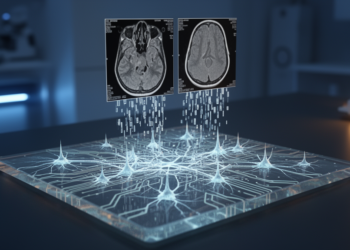
Graph neural networks, the machine learning models that learn from network-structured data, do not all organize what they learn in the same way, and those differences ripple into how information spreads across a graph. That is the central finding of a new empirical study published in Applied Network Science, which compares ten representative graph neural network architectures on six attributed graph datasets under a single, controlled experimental protocol.

The study, authored by Amin Mahmoudi and Dariusz Jemielniak, was published on 7 October 2026 as an open access research article. Its stated motivation is a gap in understanding: how different graph neural network architectures organize their embedding spaces, and how those learned representations influence downstream propagation behavior, remain insufficiently understood.

To close that gap, the researchers evaluated all ten architectures using a unified unsupervised autoencoding framework and a fixed similarity-based propagation protocol. Importantly, the authors emphasize that the framework is not intended to simulate any specific real-world diffusion process. Instead, it provides a controlled setting in which the question is how well the embeddings learned by each architecture support propagation when every other condition is held identical.

Propagation behavior was quantified in two ways: normalized cascade size, which captures how far activations spread, and multi-step activation dynamics, which track how activation unfolds over successive steps. To examine temporal patterns in propagation, the team applied Dynamic Time Warping. Embedding organization was examined through principal component analysis, t-distributed stochastic neighbor embedding, and clustering analysis.

Because graph topology could plausibly explain much of the observed behavior, the study also analyzed thirteen structural network metrics. These were examined using Pearson correlation, mixed-effects modeling, and SHAP, a feature-attribution method, followed by controlled graph intervention experiments in which the researchers deliberately altered graph structure to observe the consequences.

The results show that propagation behavior is jointly influenced by graph topology and by the representations learned by different architectures. Four architectures in particular, PNA, GAT, GCN, and EvolveGCN, consistently produced embedding spaces associated with larger propagation cascades across multiple datasets. The authors are careful to note, however, that no single architecture was uniformly superior across all settings.

Beyond the rankings, the analyses revealed architecture-specific structural fingerprints, meaning that each architecture leaves a characteristic signature in how its embeddings relate to graph structure. The intervention experiments added a further twist: identical topological perturbations could induce markedly different propagation responses depending on the architecture involved. In other words, changing the same edge or node in the same way does not produce the same downstream effect across models.

The findings offer new insight into how representation learning in graph neural networks shapes downstream, similarity-based propagation. The study also underscores the value of controlled comparison frameworks, since differences in propagation behavior emerged under identical conditions rather than from differences in task setup.

The authors report that the data and code used in the study are available to reviewers via a Zenodo repository, and that they will be made publicly available upon acceptance of the manuscript. The published version is currently shared as an accepted, citable article that remains subject to further editorial edits before the final Version of Record replaces it.

Subject of Research: How graph neural network architectures organize embeddings and influence similarity-based information propagation across graph datasets

Article Title: A comparative analysis of graph neural networks through similarity-based information propagation across diverse network structures

Article References: Mahmoudi, A., & Jemielniak, D. (2026). A comparative analysis of graph neural networks through similarity-based information propagation across diverse network structures. Applied Network Science. https://doi.org/10.1007/s41109-026-00819-x

Image Credits: AI Generated

DOI: 10.1007/s41109-026-00819-x

Keywords: graph neural networks, information propagation, embedding spaces, network topology, GAT, GCN, EvolveGCN, PNA, SHAP analysis, cascade size, Applied Network Science, machine learning

Cite Scienmag News

Cassandra Pierce. (October 28, 2026). Graph neural networks shape propagation differently, large comparison study finds. Scienmag. https://scienmag.com/graph-neural-networks-shape-propagation-differently-large-comparison-study-finds/

Cassandra Pierce. "Graph neural networks shape propagation differently, large comparison study finds." Scienmag, 28 October 2026, https://scienmag.com/graph-neural-networks-shape-propagation-differently-large-comparison-study-finds/. Accessed 29 October 2026.

Cassandra Pierce. "Graph neural networks shape propagation differently, large comparison study finds." Scienmag. October 28, 2026. https://scienmag.com/graph-neural-networks-shape-propagation-differently-large-comparison-study-finds/
Tags: Applied Network Scienceautoencoding frameworks for GNNscascade sizecontrolled experimental evaluation of GNNsdifferences in GNN information spreadembedding space organizationembedding spacesempirical study of GNNsEvolveGCNGATGCNGNN architecture comparisonGraph Neural Networksimpact of GNN architecture on cascade sizeinfluence of learned representations on diffusioninformation propagationinformation propagation in graphsMachine learningnetwork topologynetwork-structured data learningPNASHAP analysissimilarity-based propagation protocol
Share26Tweet16
Previous Post

Fine-tuned AI model flags early autism from children’s medical records in Chinese study

Next Post

Invasive Amaranthus weeds predicted to shift across China as climate changes

Related Posts

Fungi may help antibiotic resistance genes survive livestock manure composting
Technology and Engineering

Fungi may help antibiotic resistance genes survive livestock manure composting

October 29, 2026
US-Derived ICU Mortality Model Holds Up in China, but Only After Recalibration
Medicine

US-Derived ICU Mortality Model Holds Up in China, but Only After Recalibration

October 29, 2026
Quartz–cristobalite phase mix delivers ultralow-loss LTCC for 28 GHz filters
Technology and Engineering

Quartz–cristobalite phase mix delivers ultralow-loss LTCC for 28 GHz filters

October 29, 2026
Federated learning framework aims to stabilize colorectal cancer CT classification across hospitals
Technology and Engineering

Federated learning framework aims to stabilize colorectal cancer CT classification across hospitals

October 29, 2026
DOE-led BattMan Accelerator aims to push battery innovation from lab to US factory floor
Technology and Engineering

DOE-led BattMan Accelerator aims to push battery innovation from lab to US factory floor

October 29, 2026
Convolution-Inspired Spiking Neural P Circuit Achieves Lossless 75 Percent Image Resizing in Reversible Data-Hiding Framework for DICOM Medical Images
Technology and Engineering

Convolution-Inspired Spiking Neural P Circuit Achieves Lossless 75 Percent Image Resizing in Reversible Data-Hiding Framework for DICOM Medical Images

October 29, 2026
Next Post
Invasive Amaranthus weeds predicted to shift across China as climate changes

Invasive Amaranthus weeds predicted to shift across China as climate changes

  • Mothers who receive childcare support from maternal grandparents show more optimized

    Mothers who receive childcare support from maternal grandparents show more parental warmth, finds NTU Singapore study

    27656 shares
    Share 11059 Tweet 6912
  • University of Seville Breaks 120-Year-Old Mystery, Revises a Key Einstein Concept

    1061 shares
    Share 424 Tweet 265
  • Bee body mass, pathogens and local climate influence heat tolerance

    682 shares
    Share 273 Tweet 171
  • Researchers record first-ever images and data of a shark experiencing a boat strike

    546 shares
    Share 218 Tweet 137
  • Groundbreaking Clinical Trial Reveals Lubiprostone Enhances Kidney Function

    531 shares
    Share 212 Tweet 133
Science

Embark on a thrilling journey of discovery with Scienmag.com—your ultimate source for cutting-edge breakthroughs. Immerse yourself in a world where curiosity knows no limits and tomorrow’s possibilities become today’s reality!

RECENT NEWS

  • Shona kinship philosophy meets quantum theory to rethink how futures are imagined
  • Knowledge, education and fewer perceived barriers drive safe waste practices among Nigerian market traders
  • Blood transfusion linked to higher clot risk after bladder cancer surgery
  • Research report: A structured 5-question approach for echocardiographic evaluation of undifferentiated shock

Categories

  • Agriculture
  • Anthropology
  • Archaeology
  • Athmospheric
  • Biology
  • Biotechnology
  • Blog
  • Bussines
  • Cancer
  • Chemistry
  • Climate
  • Earth Science
  • Editorial Policy
  • Marine
  • Mathematics
  • Medicine
  • Pediatry
  • Policy
  • Psychology & Psychiatry
  • Science Education
  • Science News
  • Social Science
  • Space
  • Technology and Engineering

Subscribe to Blog via Email

Enter your email address to subscribe to this blog and receive notifications of new posts by email.

Join 5,151 other subscribers

© 2025 Scienmag - Science Magazine

Welcome Back!

Login to your account below

Forgotten Password?

Retrieve your password

Please enter your username or email address to reset your password.

Log In
No Result
View All Result
  • HOME
  • SCIENCE NEWS
  • CONTACT US

© 2025 Scienmag - Science Magazine

Discover more from Science

Subscribe now to keep reading and get access to the full archive.

Continue reading