Wednesday, October 21, 2026
Science
No Result
View All Result
  • Login
  • HOME
  • SCIENCE NEWS
  • CONTACT US
  • HOME
  • SCIENCE NEWS
  • CONTACT US
No Result
View All Result
Scienmag
No Result
View All Result
Home Science News Technology and Engineering

Global study finds 25% of 9,347 operational data centers in water-stressed areas

October 21, 2026
in Technology and Engineering
Denise Maddox
By Denise Maddox Scienmag Editorial Profile - Mechanical Engineering
Reading Time: 2 mins read
0
One-Quarter of Global Data Centers Sit Where Water Runs Short, Study Finds

One-Quarter of Global Data Centers Sit Where Water Runs Short, Study Finds

65
SHARES
587
VIEWS
Share on FacebookShare on Twitter
ADVERTISEMENT

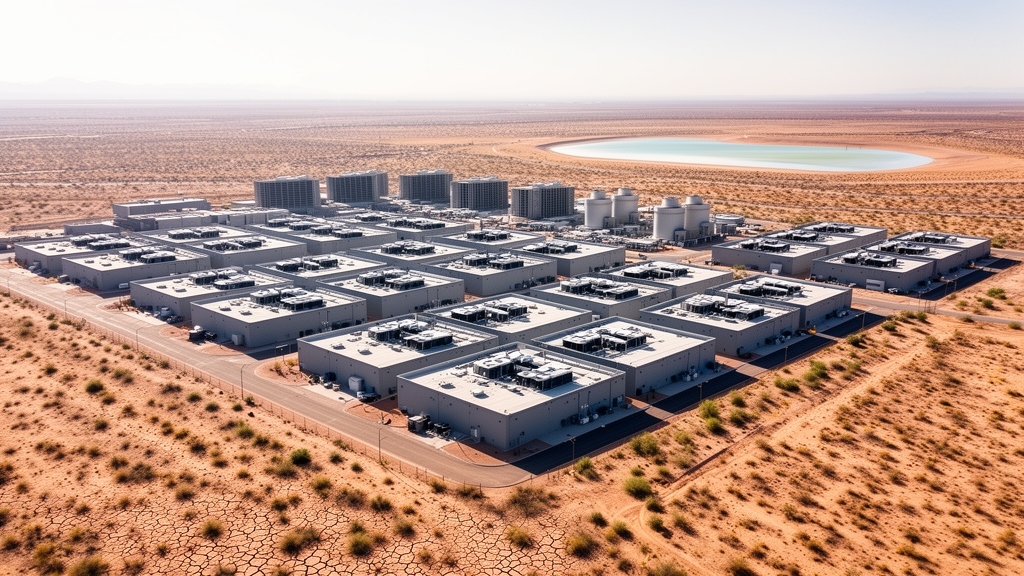
A global analysis of 9,347 operational data centers found that about 25% are located in areas where water demand exceeds supply for at least one month each year, according to the peer-reviewed study published in Environmental Science & Technology. Around 6% of the facilities are in areas stressed for most of the year. The researchers also estimated that 33% of today’s data centers could be in regions where demand will exceed supply under a future climate scenario.

Lead and corresponding author Lorenzo Rosa and colleagues mapped the locations of data centers against local water availability and demand from cities and municipalities, agriculture, manufacturing, and power generation. The analysis assessed where water use by existing users was already greater than available supply and examined how the balance could change in a modeled future climate. The researchers said the map was needed because, unlike electricity use, which is metered and reported, water scarcity is measured locally and often inconsistently or not at all.

The current analysis found that cities and municipalities were the largest water users near 41% of the data centers, while agriculture was the primary consumer near another 28%. Data centers use water to cool servers and prevent overheating, and they draw from the same local rivers, lakes, and aquifers used by nearby communities and industries. Rosa said the facilities were “landing on top of the water supply of cities and farms,” rather than being situated in landscapes without existing water use.

For the future projection, the researchers used several climate models representing average global temperatures 3 degrees Celsius, or 5.4 degrees Fahrenheit, warmer than in 1900. The authors described this scenario as representing a time frame from 10 to 40 years from now. Under those assumptions, the model estimated that 33% of today’s data centers could be located in regions where water demand will exceed supply. Most of the additional facilities potentially affected were in the United States, where 39% of the global data-center total was already located at the time of the analysis.

The findings indicate that data-center operations may add pressure to local water resources in places already experiencing, or projected to experience, water stress. The study does not establish what consequences would follow for particular water users, and the authors said future studies would be needed to determine whether projected scarcity translates into actual effects. They nevertheless argued that data-center planning should account for local water-management and infrastructure needs. The authors also disclosed that Saoradh Enterprise Partners LLC supported the work by providing access to the data-center dataset.

Subject of Research: Global analysis of water stress around operational data centers under current and future climate scenarios

Article Title: Many data centers are located where water resources are limited

Article References: Many data centers are located where water resources are limited. Original publication (Bibliographic details unavailable.)

Image Credits: AI Generated

DOI: Not provided

Keywords: data centers, water stress, water demand, water supply, climate models, global analysis, environmental science, infrastructure, Many, data, centers, located

Cite Scienmag News

Denise Maddox. (October 21, 2026). Global study finds 25% of 9,347 operational data centers in water-stressed areas. Scienmag. https://scienmag.com/global-study-finds-25-of-9347-operational-data-centers-in-water-stressed-areas/


Denise Maddox. "Global study finds 25% of 9,347 operational data centers in water-stressed areas." Scienmag, 21 October 2026, https://scienmag.com/global-study-finds-25-of-9347-operational-data-centers-in-water-stressed-areas/. Accessed 21 October 2026.

Denise Maddox. "Global study finds 25% of 9,347 operational data centers in water-stressed areas." Scienmag. October 21, 2026. https://scienmag.com/global-study-finds-25-of-9347-operational-data-centers-in-water-stressed-areas/
Tags: centersclimate change impact on data center coolingclimate modelsdataData center water stressdata centersenvironmental impact of data center coolingenvironmental sciencefuture climate scenarios and water resource planninggeographic distribution of water-stressed data centersglobal analysisglobal water scarcity analysisinfrastructurelocatedManymapping data center locations and local water availabilityoperational data centers in water-stressed areassustainable cooling solutions for data centerswater consumption by data centers and urban areaswater demandwater demand vs supply in data center locationswater scarcity measurement challengeswater stresswater supply
Share26Tweet16
Previous Post

Perspective and review finds DNA and morphology both needed for parasitoid wasp taxonomy

Next Post

Technology for social good linked with stronger corporate performance in Chinese listed firms

Related Posts

AI service hub unifies smart-grid sensing, prediction and control
Science News

AI service hub unifies smart-grid sensing, prediction and control

October 21, 2026
ZAPP reduces percentage errors in near-zero solar power forecasts
Technology and Engineering

ZAPP reduces percentage errors in near-zero solar power forecasts

October 21, 2026
Relict boreal forests of Kazakh Uplands revealed in first open-access vegetation dataset
Biology

Kazakh Uplands vegetation dataset documents 117 plots across forests, steppes and other habitats

October 21, 2026
Research report: Engineering bench characterization and reciprocal cross-sensitivity of a sensor-integrated seated measurement platform
Technology and Engineering

Research report: Engineering bench characterization and reciprocal cross-sensitivity of a sensor-integrated seated measurement platform

October 21, 2026
AI and flexible investment model lifts simulated wastewater biorefinery value
Earth Science

AI and flexible investment model lifts simulated wastewater biorefinery value

October 21, 2026
Plant-made silver nanoparticles reduce skin tumors in mice
Science News

Plant-made silver nanoparticles reduce skin tumors in mice

October 21, 2026
Next Post
Doing Good With Tech Pays Off: Chinese Firms Show Social Innovation Boosts Performance

Technology for social good linked with stronger corporate performance in Chinese listed firms

  • Mothers who receive childcare support from maternal grandparents show more optimized

    Mothers who receive childcare support from maternal grandparents show more parental warmth, finds NTU Singapore study

    27656 shares
    Share 11059 Tweet 6912
  • University of Seville Breaks 120-Year-Old Mystery, Revises a Key Einstein Concept

    1061 shares
    Share 424 Tweet 265
  • Bee body mass, pathogens and local climate influence heat tolerance

    682 shares
    Share 273 Tweet 171
  • Researchers record first-ever images and data of a shark experiencing a boat strike

    546 shares
    Share 218 Tweet 137
  • Groundbreaking Clinical Trial Reveals Lubiprostone Enhances Kidney Function

    531 shares
    Share 212 Tweet 133
Science

Embark on a thrilling journey of discovery with Scienmag.com—your ultimate source for cutting-edge breakthroughs. Immerse yourself in a world where curiosity knows no limits and tomorrow’s possibilities become today’s reality!

RECENT NEWS

  • Literature review develops starting-point framework for cultural ecosystem services in urban landscape design
  • FBXO28 ubiquitinates BRD4 to fuel lung cancer cell malignancy
  • Mud shrimp DNA persists for weeks in sediment
  • AI service hub unifies smart-grid sensing, prediction and control

Categories

  • Agriculture
  • Anthropology
  • Archaeology
  • Athmospheric
  • Biology
  • Biotechnology
  • Blog
  • Bussines
  • Cancer
  • Chemistry
  • Climate
  • Earth Science
  • Editorial Policy
  • Marine
  • Mathematics
  • Medicine
  • Pediatry
  • Policy
  • Psychology & Psychiatry
  • Science Education
  • Science News
  • Social Science
  • Space
  • Technology and Engineering

Subscribe to Blog via Email

Enter your email address to subscribe to this blog and receive notifications of new posts by email.

Join 5,150 other subscribers

© 2025 Scienmag - Science Magazine

Welcome Back!

Login to your account below

Forgotten Password?

Retrieve your password

Please enter your username or email address to reset your password.

Log In
No Result
View All Result
  • HOME
  • SCIENCE NEWS
  • CONTACT US

© 2025 Scienmag - Science Magazine

Discover more from Science

Subscribe now to keep reading and get access to the full archive.

Continue reading