


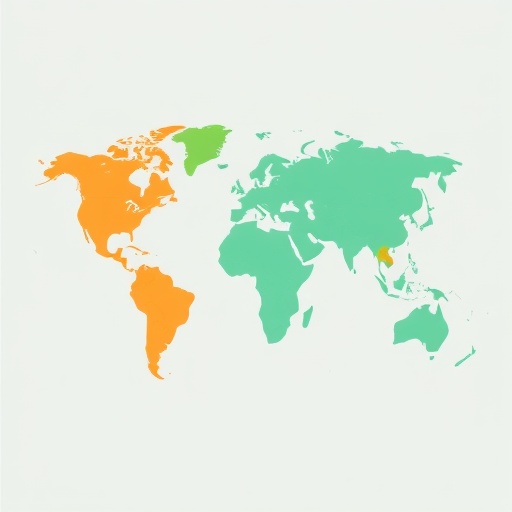
In an era where the foundations of lifelong learning are widely recognized as critical to the overall development of individuals and societies, a groundbreaking global study has emerged, shedding unprecedented light on access and quality in early childhood care and education (ECCE). This research, led by Raikes, Rao, Yoshikawa, and colleagues, has undertaken the ambitious task of mapping out the state of ECCE worldwide, an endeavor that holds profound implications for educational policy, child development paradigms, and socio-economic equity across nations.
The importance of early childhood education cannot be overstated. It constitutes the bedrock upon which cognitive, emotional, and social skills are constructed. Historically, while many countries have implemented ECCE initiatives, data tracking their effectiveness and accessibility remained inconsistent and fragmented. Addressing this gap, the study deploys a comprehensive framework for globally tracking ECCE, combining rigorous data analysis with nuanced assessments of program quality and reach.
Central to this research is the recognition that access alone does not equate to meaningful educational experiences for young children. Quality parameters, including teacher qualifications, learning environments, and curriculum relevance, are equally crucial. The study navigates the challenge of standardizing such quality indicators across diverse cultural and socio-economic contexts, a task that required innovative methodological approaches and collaborative international partnerships.
The global tracking framework introduced offers a multi-dimensional lens to evaluate ECCE programs. It emphasizes a balance between quantitative data — measuring enrollment rates, attendance, and infrastructure availability — and qualitative metrics that capture pedagogical effectiveness and child engagement. This dual focus enables stakeholders, from policymakers to practitioners, to pinpoint strengths and identify critical gaps in their ECCE systems.
One of the study’s most striking revelations pertains to the stark disparities in ECCE provision between high-income and low-income countries. While some nations boast nearly universal access to high-quality early education, others grapple with fundamental challenges such as insufficient funding, lack of trained personnel, and infrastructural deficiencies. These inequities not only reflect economic disparities but also perpetuate cycles of disadvantage, underscoring the urgent need for targeted interventions.
Moreover, the researchers explore the intersectionality of access and quality with gender, disability, and rural-urban divides. Children from marginalized backgrounds frequently face compounded barriers that limit their opportunities for developmental support during critical early years. By documenting these nuanced disparities, the study advocates for inclusive policies that prioritize vulnerable populations, reinforcing global equity goals.
An innovative aspect of the study is its use of advanced data aggregation techniques, integrating information from diverse sources such as household surveys, national education databases, and international development reports. This holistic data collation enables a more dynamic and responsive monitoring system capable of informing real-time policy adjustments, a crucial advantage in rapidly changing socio-political environments.
The research further delves into the role of caregivers and families as pivotal actors in early childhood development. Recognizing that formal ECCE programs operate within broader familial and community ecosystems, the study proposes frameworks for integrating parental support mechanisms and community engagement into standard ECCE quality assessments. This approach champions a more holistic vision of childhood education, transcending institutional boundaries.
Policy implications emerging from this global tracking initiative are profound. The study advocates for increased international cooperation and resource allocation toward ECCE as a cornerstone for sustainable development. By demonstrating clear links between early education quality and long-term socio-economic outcomes, it furnishes compelling arguments for governments and multilateral organizations to prioritize ECCE reforms and investments.
Furthermore, the research highlights the transformative potential of technology in improving ECCE monitoring and delivery. Digital tools, mobile applications, and open data platforms can enhance transparency, facilitate stakeholder collaboration, and enable personalized learning experiences, particularly in underserved regions. This dimension aligns with contemporary pushes toward digital inclusion and innovation in education sectors worldwide.
The authors also acknowledge the complexities involved in implementing global standards for ECCE quality. Cultural diversity, varying governance structures, and resource limitations necessitate flexible frameworks that accommodate local contexts. The study proposes adaptable metric sets tailored to specific national and regional realities while maintaining a coherent global comparison basis.
Underlying the entire study is a commitment to evidence-based policy-making, urging decision-makers to shift from anecdotal or politically driven initiatives toward data-informed strategies. This shift is critical for scaling effective ECCE models, ensuring accountability, and ultimately achieving universal access to quality early childhood education.
As the research disseminates its findings, it invites broad stakeholder engagement, including educators, researchers, civil society organizations, and families. By fostering a participatory dialogue around ECCE challenges and solutions, the study aims to galvanize a collective movement toward elevating early childhood education on the global agenda.
In summary, this landmark investigation into global ECCE access and quality establishes a robust foundation for understanding and improving early childhood education worldwide. Its integration of comprehensive data analytics, attention to equity, and actionable policy insights positions it as an indispensable resource for shaping the future of early learning. The implications extend far beyond education, promising to enhance human capital development and global social justice for generations to come.
Cite Scienmag News
Courtney Benton. (November 25, 2025). Global Monitoring of Early Childhood Care Quality. Scienmag. https://scienmag.com/global-monitoring-of-early-childhood-care-quality/
Courtney Benton. "Global Monitoring of Early Childhood Care Quality." Scienmag, 25 November 2025, https://scienmag.com/global-monitoring-of-early-childhood-care-quality/. Accessed 5 September 2026.
Courtney Benton. "Global Monitoring of Early Childhood Care Quality." Scienmag. November 25, 2025. https://scienmag.com/global-monitoring-of-early-childhood-care-quality/


