

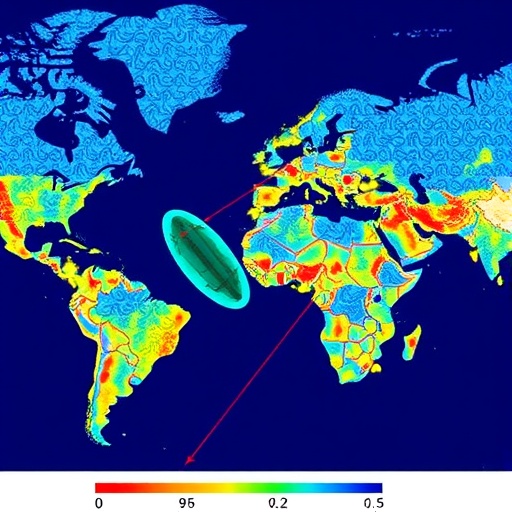
In a remarkable leap forward for marine biodiversity research, a new study harnesses the power of environmental DNA (eDNA) to dramatically expand the known geographic and ecological niches of marine fishes. This innovative approach challenges previous assumptions rooted in traditional observation and sampling, addressing long-standing biases in conservation strategies and ecological models. By capturing traces of genetic material shed by aquatic organisms into their surroundings, scientists now unlock a wealth of information that was previously inaccessible through conventional means.
Environmental DNA analysis revolutionizes our understanding of marine fish distributions across the globe. Unlike conventional surveys that rely on direct observations or physical captures, eDNA sampling involves collecting water samples and analyzing them for genetic signatures. This allows researchers to detect species over vast geographic scales, including remote and hard-to-sample habitats beneath polar sea-ice or in exceptionally deep marine zones. The recent study conducted by an international consortium spanning France, Switzerland, Tanzania, and Indonesia captures this method’s transformative ability to reveal unseen patterns in fish ecology.
The implications for conservation biology are profound. By significantly expanding the known range of species and their ecological preferences, eDNA surveys expose the shortcomings of current conservation frameworks that often rely on incomplete or biased data sets. For example, species previously thought to be restricted to certain latitudes or temperature regimes now appear to occupy broader ecological niches. This newfound knowledge encourages a reevaluation of protected areas and resource management policies, underscoring the urgency to incorporate genetic monitoring into baseline assessments of marine biodiversity.
One of the most striking applications of this research emerges from sampling conducted under the Greenlandic sea ice, a notoriously difficult environment for traditional sampling methodologies. The eDNA collected here unveils fish species’ presence and activity patterns beneath the ice sheet, providing insights into ecosystems that remain largely enigmatic. These insights are vital given the accelerating impacts of climate change on Arctic regions, where shifts in fish distributions could cascade through marine food webs and affect local human communities reliant on fisheries.
Technically, eDNA surveys offer several advantages over traditional methods. They are less invasive, often cost-effective, and scalable across multiple environments and time frames. The study’s experimental design demonstrates meticulous attention to contamination prevention, sensitivity tuning in sequencing protocols, and robust bioinformatic pipelines to filter and interpret large genetic data sets. Such rigor ensures confidence in species detections and ecological interpretations drawn from genetic evidence.
Moreover, by documenting ecological niche expansions, this research identifies biases in sampling locations that traditionally favored accessible or well-studied regions. These biases have skewed scientific understanding and potentially underrepresented species’ true habitat preferences and population dynamics. With eDNA, remote and understudied habitats become accessible to systematic monitoring, enabling the correction of these distortions and contributing to more comprehensive, accurate marine biodiversity databases.
As human activities continue to exert pressure on marine ecosystems, precise knowledge about species distributions and ecological niches is essential for forecasting ecosystem responses and resilience. This study’s findings could influence predictive models of biodiversity shifts, invasive species encroachment, and fisheries sustainability under future climate scenarios. The integration of genetic monitoring thus offers a critical tool for adaptive management strategies that aim to balance conservation goals with socio-economic needs.
The collaborative efforts of researchers spanning continents highlight the interdisciplinary and global scale of this undertaking. Utilizing cutting-edge sequencing technologies combined with ecological expertise, the team breaks new ground in marine conservation science. Their work also exemplifies how open-access research published in platforms like PLOS Biology can democratize scientific findings and foster international cooperation.
Significantly, the authors disclose no competing interests, emphasizing the integrity and transparency underlying their methodology and interpretations. Funding sources detailed in the manuscript support the notion that this research is part of broader scientific initiatives aiming to innovate biomonitoring techniques and support sustainable ocean management.
Looking forward, the study recommends scaling eDNA-based surveys across diverse marine environments worldwide, coupled with temporal monitoring to capture seasonal and interannual variations. Such expansion could refine species distribution models further, improve detection of rare or cryptic species, and inform dynamic conservation strategies that evolve with changing ocean conditions.
The advent of eDNA technology in marine ecology heralds a new era of discovery. Its potential to transform our understanding of ocean life, from polar extremes to tropical reefs, redefines how scientists, policymakers, and conservationists can respond to the challenges facing marine biodiversity today and in the future. This research not only expands scientific frontiers but also lays critical groundwork for preserving the marine world amid unprecedented environmental change.
Subject of Research: Not applicable
Article Title: eDNA surveys substantially expand known geographic and ecological niche boundaries of marine fishes
Web References: https://plos.io/42mNz7A; http://dx.doi.org/10.1371/journal.pbio.3003432
Image Credits: David Grémillet and Nicolas Loiseau (CC-BY 4.0)
Keywords: environmental DNA, eDNA, marine fishes, biodiversity, ecological niche, conservation bias, genetic monitoring, marine ecology, climate change, Arctic sea-ice, species distribution, biomonitoring


