

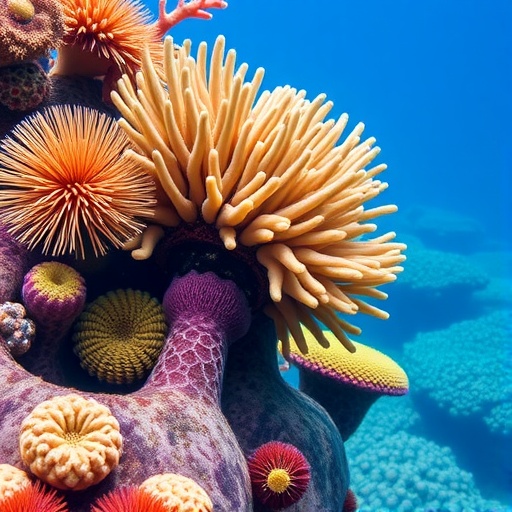
In the rapidly shifting landscape of marine ecosystems, coral reefs stand as vibrant sentinels of ocean health and biodiversity. Yet, these intricate underwater structures are facing unprecedented threats, with recent decades marking alarming rates of coral decline worldwide. A groundbreaking study published in Nature Communications in 2025 by Selmoni, Cleves, and Exposito-Alonso offers an unprecedented genomic perspective on this crisis, revealing the global genomic vulnerability of corals as a driving factor behind recent reef losses. Their integrative approach combines cutting-edge genomic technologies with ecological data, providing critical insights into why some coral populations succumb while others persist amid escalating environmental pressures.
Coral reefs, often referred to as the rainforests of the ocean, support an extraordinary diversity of life, underpinning the livelihoods of millions and safeguarding coastal protections. Their decline not only signals a loss of biodiversity but also portends cascading effects on food security, tourism, and global carbon cycling. Recognizing the urgent need to unravel the mechanisms of coral demise, the research team embarked on a global analysis, leveraging whole-genome sequencing to map the genetic landscapes that dictate coral responses to environmental stressors, particularly ocean warming and acidification.
Fundamental to their inquiry was the concept of genomic vulnerability — essentially a measure of the mismatch between a population’s genetic makeup and the current or anticipated environmental conditions. By sequencing genomes from numerous coral species spanning diverse reef locations, the researchers sought to identify genetic variants associated with thermal tolerance and adaptive potential. Their genomic vulnerability metrics were then correlated with observed reef health data and bleaching events, allowing for a predictive framework that could anticipate reef futures under climate change scenarios.
A key revelation from the study was the heterogeneous nature of genomic resilience among coral populations. While some corals exhibited genetic architectures suggesting robust adaptability to rising sea temperatures, many others possessed limited genomic variation to buffer against environmental upheavals. This disparity helps explain the patchwork pattern of bleaching and mortality events witnessed across global reefs during recurrent marine heatwaves. Importantly, coral populations with higher genomic vulnerability aligned strongly with areas experiencing severe recent declines, underscoring the predictive value of integrating genomics into conservation assessments.
The methodology underpinning these insights was as formidable as the findings themselves. The researchers harnessed next-generation sequencing platforms to delve into the complex coral genomes, addressing challenges such as high heterozygosity and symbiotic microbial DNA contamination. By employing population genomic tools and environmental association analyses, they disentangled the genetic signals linked to heat stress resilience from background genomic noise. Moreover, the incorporation of environmental data — including sea surface temperature anomalies, acidification indices, and local habitat variables — enabled a multidimensional assessment rarely achieved at this scale.
Beyond elucidating the genomic underpinnings of coral vulnerability, the study has profound implications for targeted conservation strategies. Traditional reef management has largely relied on ecological indicators and empirical observations to prioritize interventions. However, this research advocates for a genomics-informed approach, whereby populations identified as genetically vulnerable can be flagged for heightened protection, assisted gene flow, or even genomic rescue efforts. By aligning genetic data with environmental forecasts, resource managers can optimize conservation resources in a climate-constrained future.
The concept of assisted gene flow, in particular, gains traction in light of these findings. Assisted gene flow involves the transplantation of genetically robust individuals or propagules into vulnerable populations to enhance adaptive capacity. The study’s mapping of heat-tolerant variants provides candidate genotypes for such interventions, potentially offering a lifeline for reefs on the brink of collapse. However, the authors caution that such strategies require careful ecological and ethical consideration, emphasizing the need for continuous genomic monitoring to avoid unintended consequences.
Equally compelling is the study’s contribution to understanding evolutionary trajectories amidst climate change. Corals have historically survived past climatic fluctuations through natural selection acting on genomic diversity. Nevertheless, the unprecedented pace and magnitude of anthropogenic warming challenge this adaptive capacity. By quantifying the rate at which coral genomic vulnerability is increasing, the research delineates the narrow window remaining for natural evolutionary rescue. This temporal dimension stresses the urgency for immediate climate mitigation alongside adaptive management.
The integration of genomic data with ecological outcomes also opens avenues for global reef monitoring. The authors highlight the potential development of genomic vulnerability indices as standardized tools for international reef assessments, complementing existing oceanographic and satellite-based monitoring systems. Such indices could enhance early warning systems, allowing for proactive measures before mass bleaching or mortality events spiral out of control. This genomic dimension represents a paradigm shift in marine ecosystem stewardship.
Moreover, the study sheds light on biogeographical patterns of vulnerability, revealing that reefs in certain regions — such as the Indo-Pacific and Caribbean — exhibit differing genomic susceptibilities tied to historical population dynamics and environmental heterogeneity. These findings underscore that global reef conservation cannot adopt a one-size-fits-all approach but must account for local evolutionary histories and genetic landscapes. Tailoring interventions to these contexts maximizes efficacy and preserves genetic legacies essential for future resilience.
The implications extend beyond corals as well, serving as a model for other climate-sensitive marine and terrestrial organisms. The framework established by Selmoni and colleagues for assessing genomic vulnerability in response to environmental change is broadly applicable, offering a template for integrating genomics into conservation biology worldwide. Such cross-disciplinary advances elevate the role of molecular ecology in confronting biodiversity loss on a planetary scale.
In essence, this landmark study marries advanced genomic science with ecological urgency, charting a novel path for understanding and mitigating coral reef decline. It highlights that while corals possess inherent genetic tools for survival, increasing genomic vulnerability under rapid climate change threatens these ancient ecosystems. The fusion of molecular data with environmental realities not only elucidates patterns of reef change but equips humanity with strategic insights indispensable for safeguarding the underwater treasures upon which so many depend.
As the world grapples with escalating climate crises, the clarity brought forth by this research serves as both a warning and a beacon. It calls for an integration of genomic knowledge into conservation frameworks, urgent policy reform to curb emissions, and innovative interventions grounded in scientific rigor. Coral reefs may be resilient, but their genomic vulnerabilities render them perilously fragile in the Anthropocene. Harnessing genomic insights while action is still possible will be pivotal in tipping the balance from decline to recovery.
While much work remains to translate these insights into scalable conservation actions, this study undoubtedly nudges the scientific community closer to that goal. It exemplifies the power of interdisciplinary research, uniting genomics, ecology, oceanography, and conservation biology to tackle one of the most pressing environmental challenges of our era. In doing so, it not only transforms our understanding of coral reef futures but also inspires hope rooted in knowledge and innovation.
In the wake of ongoing reef losses and with climate projections growing increasingly dire, the genomic lens applied here emerges as essential rather than optional. The ability to anticipate, monitor, and ameliorate coral population variability at a molecular level may define the success or failure of conservation efforts in the decades to come. This study lays the foundational blueprint for such transformative approaches, shaping the trajectory toward a more informed and adaptive stewardship of the planet’s marine biodiversity.
Ultimately, the insights gained from Selmoni, Cleves, and Exposito-Alonso’s work underscore a fundamental truth: the interplay between genetics and environment is central to species survival in a rapidly changing world. Understanding this dynamic through the prism of coral reefs — ecosystems both ancient and vital — reinforces the critical role of genome science in shaping sustainable futures, preserving not only coral diversity but the intricate web of life that relies upon it.
Subject of Research: Coral genomic vulnerability relating to coral reef loss under climate change.
Article Title: Global coral genomic vulnerability explains recent reef losses.
Article References:
Selmoni, O., Cleves, P.A. & Exposito-Alonso, M. Global coral genomic vulnerability explains recent reef losses. Nat Commun (2025). https://doi.org/10.1038/s41467-025-67616-5
Image Credits: AI Generated


