


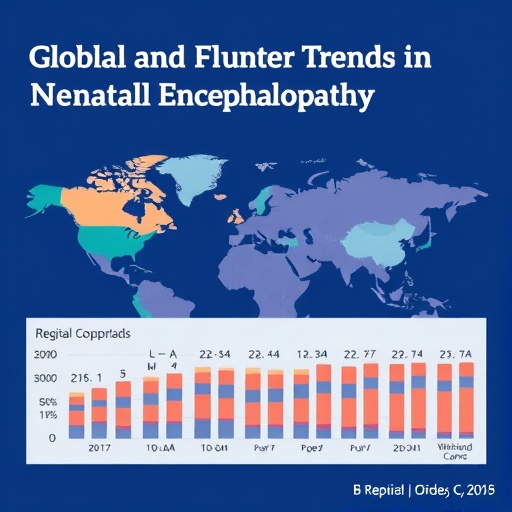
Neonatal encephalopathy (NE) remains one of the most daunting challenges within neonatal medicine, representing a primary cause of both mortality and long-term neurodevelopmental disability in newborns worldwide. In a recently published groundbreaking study by Zhao et al., titled “Global, regional, and national burden and trends of neonatal encephalopathy,” the authors embark on a monumental effort to quantify and analyze the burden of NE across diverse geopolitical landscapes. Their work, published in Pediatric Research in January 2026, reveals profound insights into epidemiological transitions and evolving public health challenges associated with NE.
Neonatal encephalopathy, defined broadly as a disturbance in brain function in newborns often caused by inadequate oxygenation or other prenatal insults, manifests clinically through symptoms such as altered consciousness, seizures, and impaired muscle tone. Although advances in perinatal care have improved outcomes in many regions, NE continues to exert a disproportionately devastating impact in low- and middle-income countries. The Zhao et al. study leverages comprehensive global health datasets, integrating age-specific mortality, morbidity, and disability-adjusted life years (DALYs) to provide the most granular assessment to date.
A key technical challenge in studying NE lies in the heterogeneity of diagnosis and reporting standards worldwide. To address this, Zhao and colleagues utilized a unified case definition while applying rigorous statistical modelling techniques, including Bayesian hierarchical frameworks, to harmonize data. This approach enabled the researchers to adjust for underreporting and misclassification biases, generating robust estimates that capture both incidence and severity spectra. Their sophisticated methodology sets a new benchmark for epidemiological surveillance in neonatal neurology.
The global burden of NE remains staggering. Zhao et al.’s data indicate millions of affected infants annually, with a significant proportion succumbing in the neonatal period or surviving with lifelong neurodevelopmental impairments, including cerebral palsy, cognitive deficits, and epilepsy. Notably, the study identifies a temporal trend toward declining mortality rates in some high-resource settings, attributable to enhanced perinatal monitoring, therapeutic hypothermia interventions, and improved neonatal intensive care infrastructure. Despite this, the overall global NE burden remains static or worsened in many regions, underscoring persistent health inequities.
Regionally, the study highlights stark contrasts. Sub-Saharan Africa and South Asia bear disproportionate shares of NE-associated mortality and morbidity, reflecting systemic health disparities, inadequate access to skilled birth attendants, and limited availability of neonatal intensive care units and advanced neuroprotective therapies. The authors call for urgent investment in preventative strategies, including improved maternal health, intrapartum fetal monitoring, and early neonatal resuscitation training to mitigate NE onset.
Another impactful finding involves the evolving epidemiology of NE in high-income countries, where advances in obstetric and neonatal care have shifted the burden from mortality toward chronic morbidity. Enhanced survival rates have led to increased prevalence of neurodevelopmental disabilities among NE survivors, requiring long-term multidisciplinary management and placing sustained socioeconomic demands on families and healthcare systems. Zhao et al. emphasize the need for integrated neurodevelopmental follow-up programs and rehabilitative services to optimize quality of life in these populations.
The study further explores the influence of perinatal risk factors contributing to NE. Hypoxic-ischemic events remain the dominant etiology, but maternal infections, placental pathologies, and genetic predispositions also modulate risk profiles. By conducting meta-regression analyses, the authors delineate associations between socio-environmental determinants, perinatal care quality, and NE incidence. These insights pave the way for targeted interventions to disrupt causal pathways and reduce NE occurrence.
In addition to epidemiological quantifications, Zhao et al. evaluate the impact of global health initiatives and policies aimed at reducing NE burden. They critically assess the effectiveness of programs like the Every Newborn Action Plan and Sustainable Development Goals related to neonatal health. Despite advances, the data suggest incomplete implementation and coverage gaps, particularly in resource-constrained settings, highlighting a pressing need for renewed commitment and tailored strategies.
Technological innovations emerge as a beacon of hope in NE prevention and management. The study discusses how emerging tools such as automated fetal heart rate monitoring, point-of-care neuroimaging, and biomarker-driven diagnostics could revolutionize early detection and treatment. Furthermore, evolving neuroprotective therapies beyond hypothermia, including stem cell-based approaches and pharmacological agents, promise to improve outcomes, warranting continued research investment.
Zhao et al.’s work also investigates temporal trends, portraying a complex interplay between global health policy, economic development, and healthcare access. While some middle-income countries exhibit promising declines in NE mortality, driven by expanding perinatal services, others lag due to persistent infrastructural deficits and sociopolitical instability. These findings emphasize the delicate balance between progress and regression in neonatal health worldwide.
The comprehensive scope of this study also addresses knowledge gaps in epidemiological surveillance, advocating for standardized data collection frameworks and international registries to monitor NE burden accurately. The authors propose collaborative consortia involving governmental and non-governmental organizations to facilitate knowledge exchange and capacity-building in diagnostic and therapeutic domains.
Importantly, the implications of this research extend beyond neonatal care, shedding light on the broader societal and economic impact of NE. The lifelong disabilities arising from NE necessitate significant healthcare resources, educational support, and social services, imposing a heavy collective burden. By quantifying these factors, Zhao et al. provide compelling evidence to prioritize NE prevention within national and global health agendas.
The study’s revelation that despite technological advances and policy efforts, NE remains a leading cause of neonatal mortality, challenges the scientific and medical community to innovate more aggressively. Zhao and colleagues highlight that interventional research, focusing on both translational and implementation science, is critical to bridge the divide between knowledge and practice, particularly in vulnerable populations.
In conclusion, the landmark study conducted by Zhao et al. offers an unprecedented global panorama of the burden and evolving trends of neonatal encephalopathy. Its meticulous analysis underscores the urgent, multifaceted nature of NE as a public health priority, demanding coordinated action across clinical, policy, and research spheres. As neonatal care continues to advance, this comprehensive epidemiological insight will be pivotal for guiding resource allocation, preventive strategies, and therapeutic innovation to reduce the devastating impact of neonatal encephalopathy worldwide.
Cite Scienmag News
Harold Sullivan. (January 10, 2026). Global and Regional Trends in Neonatal Encephalopathy. Scienmag. https://scienmag.com/global-and-regional-trends-in-neonatal-encephalopathy/
Harold Sullivan. "Global and Regional Trends in Neonatal Encephalopathy." Scienmag, 10 January 2026, https://scienmag.com/global-and-regional-trends-in-neonatal-encephalopathy/. Accessed 3 September 2026.
Harold Sullivan. "Global and Regional Trends in Neonatal Encephalopathy." Scienmag. January 10, 2026. https://scienmag.com/global-and-regional-trends-in-neonatal-encephalopathy/


