

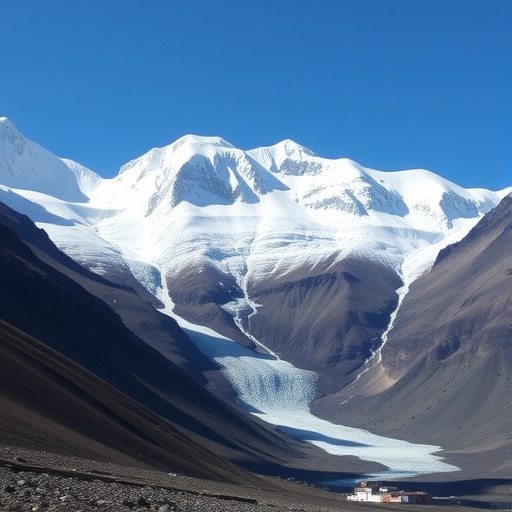
Recent studies have provided alarming insights into the dynamic changes occurring on the Tibetan Plateau, one of Earth’s most crucial geographical features known for its vast glaciers and high-altitude ecosystems. Recent research led by Kääb and colleagues has highlighted a significant event—the detachment of a massive glacier, triggered by unusual climatic and geological conditions. This phenomenon has raised concerns among scientists regarding the stability of glacial structures and the potential impacts on global sea levels and regional weather patterns.
The Tibetan Plateau, often referred to as the “Third Pole” due to its extensive glaciers and ice reserves, plays a vital role in regulating climate and water supplies for many rivers that feed millions of people. The recent detachment of a glacier showcases the fragile state of these ice masses as they respond to both natural occurrences and anthropogenic climate change. Such a significant event not only challenges our understanding of glacial dynamics but also provides insight into broader climatic trends affecting high-altitude ecosystems across the globe.
At the heart of this glacier’s detachment is its frozen tongue—a term used to describe the long, narrow projections of ice that extend from a glacier. This frozen tongue forms when ice flows downhill, primarily influenced by gravity and climatic conditions. In the case of the Tibetan glacier, its frozen tongue became destabilized, resulting in a massive section of ice breaking away. This detachment is a stark reminder of the interconnectedness of climatic factors and geological processes, highlighting how changes in temperature can lead to sudden and catastrophic results.
Research has shown that increasing temperatures, particularly in high-altitude regions like the Tibetan Plateau, are causing glaciers to lose mass at unprecedented rates. The rise in air temperatures not only accelerates melting but also affects the structural integrity of glaciers. The phenomenon observed in the recent study illustrates the immediate effects of these changes, where a critical threshold has been crossed, leading to a dramatic shift in the glacier’s behaviour.
The detachment of this glacier is particularly concerning due to its potential implications for surrounding ecosystems and communities. The sudden influx of freshwater caused by glacier calving can disrupt local hydrology, affecting water availability for agriculture, drinking, and other essential activities. Additionally, glacial retreat can change the landscape rapidly, leading to increased risks of landslides and flooding, which pose significant threats to human safety and infrastructure.
The dimensions of the detached glacier section are significant; it reflects the scale at which climate change is influencing glacial systems. Scientists are now tasked with monitoring these changes closely to understand the long-term impacts on global sea levels. A one-meter rise in sea levels can displace millions of people living in coastal regions, exacerbating existing social and economic challenges. As such, understanding the mechanisms behind glacier detachment can provide critical data for policy-makers and researchers focused on climate resilience.
Furthermore, the exploration of the glacier’s frozen tongue reveals intricate details about the historical climate of the region. Layers of ice contain trapped air bubbles that serve as time capsules, offering insights into the atmospheric conditions over centuries. Analyzing these layers can help scientists construct models predicting future glacier behaviour in the face of ongoing climate change. Understanding past climates is essential for informing future climate policies and adaptive strategies.
In light of these findings, collaboration among international researchers has become increasingly important. Given the global nature of climate change, pooling expertise and resources can lead to more comprehensive solutions and a better understanding of glacial dynamics. Studies conducted on the Tibetan Plateau are now part of a larger conversation regarding climate resilience and adaptation strategies across different ecosystems worldwide, emphasizing shared responsibility in addressing climate issues.
The communication of research findings to the public is also critical. As the scientific community responds to these striking developments, it is essential that clear and accurate information reaches policymakers, local communities, and the general public. Engaging narratives can foster greater understanding of climate change’s impact and encourage proactive measures to mitigate risks associated with glacial retreat and other climate-related phenomena.
Overall, the recent giant detachment of a glacier on the Tibetan Plateau serves as both a warning and a catalyst for action. The event exemplifies the fragility of glacial systems in the face of climate change, necessitating urgent attention and collaborative efforts to understand the ramifications. Continued research will not only help predict future events of this nature but also support the development of informed strategies aimed at preserving vital water resources and maintaining ecological balance.
As we reflect on the consequences of this glacier detachment, it’s imperative to consider our relationship with Earth’s climate systems. We have a responsibility to protect these invaluable resources and safeguard the future of our planet for generations to come. This incident underscores the urgency for the global community to address climate change comprehensively and foster innovative solutions that recognize the intrinsic value of our natural environment.
The study’s findings thus contribute significantly to the field of glaciology and climate science, reinforcing the need for ongoing observation and modeling of glaciers. Scientists advocate for more investment in research that not only documents these dramatic changes but also pioneers new technologies for monitoring glacial systems in real-time, allowing for more immediate responses to emerging threats posed by climate change.
In summation, the detachment of this massive glacier on the Tibetan Plateau is a pivotal event that exemplifies the complexities of our planet’s changing climate. As the scientific community unravels the intricacies behind this phenomenon, the information gleaned will be invaluable in navigating the challenges ahead, aiming to stem the tide of climate-related disasters and safeguard our shared future.
Subject of Research: Glacial dynamics and climate change impacts on the Tibetan Plateau.
Article Title: Recent giant detachment of a glacier on the Tibetan plateau provoked by its frozen tongue.
Article References: Kääb, A., Aga, J., Treichler, D. et al. Recent giant detachment of a glacier on the Tibetan plateau provoked by its frozen tongue. Commun Earth Environ 7, 74 (2026). https://doi.org/10.1038/s43247-025-03125-z
Image Credits: AI Generated
DOI: https://doi.org/10.1038/s43247-025-03125-z
Keywords: Glacier, Tibetan Plateau, Climate Change, Glacial Dynamics, Environmental Science, Climate Resilience


