


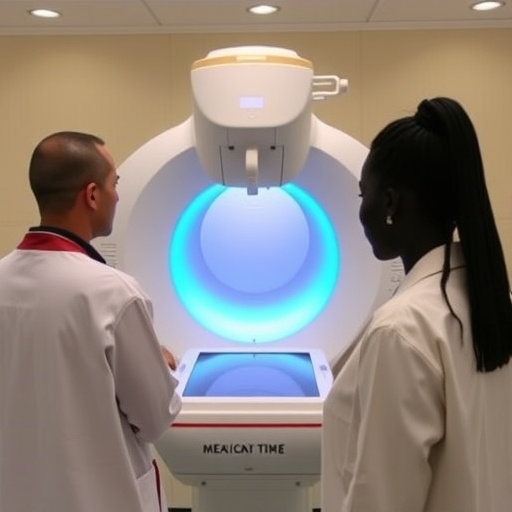
In the evolving landscape of medical education, understanding the learning environment of clinical placements has never been more critical. A recent pioneering study conducted by Razak, Eric, and Anudjo sheds light on how third- and fourth-year medical imaging students in Ghana perceive their clinical learning environments. This cross-sectional study illuminates the intricacies of their experiences, revealing insights that are crucial not only for educational reform but also for enhancing student competencies in dynamic healthcare settings.
The necessity for such research is underscored by the increasing complexities of modern medical training. As healthcare systems worldwide strive to prepare practitioners who can adapt to rapid changes in technology and patient needs, the structure and quality of clinical placements become focal points of academic inquiry. The study offers a comprehensive analysis of the perceptions of medical imaging students, highlighting specific factors that either facilitate or hinder their learning processes.
When considering the various components of the clinical learning environment, students’ perceptions reveal a vast array of influences. For instance, the accessibility of supervisors, the quality of mentorship, and the availability of learning resources were striking features that emerged from the study. Students reported that positive interactions with experienced professionals not only enhanced their learning but also contributed significantly to their confidence and preparedness for future challenges in clinical practice.
The feedback mechanism through which students convey their experiences is particularly noteworthy. In the Ghanaian context, the ability for students to articulate their perceptions about their clinical placements serves as a crucial component for educational improvement. Through this study, the authors sought to engage medical institutions and educators in reflective practices, thereby prompting necessary changes that align more closely with the evolving demands of healthcare delivery.
One of the fundamental findings of the research underscores the importance of supportive learning environments. Students expressed a need for constructive feedback and guidance from clinical mentors who are trained not only in their disciplines but also in effective pedagogical techniques. Such findings push the conversation forward regarding how medical faculties can better prepare educators to support learners effectively within clinical settings.
Moreover, the study reveals that cultural factors and institutional frameworks in Ghanaian clinical environments could significantly shape students’ educational experiences. The authors argue that a deep understanding of these factors can lead to tailored interventions aimed at enhancing the learning processes specifically within the context in which these students find themselves. As educational policies are shaped, understanding cultural influences becomes crucial not only for student satisfaction but also for the overall effectiveness of educational programs.
Another vital issue brought to light in the study pertains to the infrastructure and technology available within clinical settings. The rapid advancement of medical imaging technologies necessitates that students have access to modern equipment and updated knowledge. Participants in the study highlighted gaps in this area, illustrating how infrastructural limitations could culminate in significant discrepancies between theoretical knowledge and practical application. This disconnect not only impacts students’ academic performances but also their future career readiness.
Collaboration among educational institutions, healthcare providers, and policymakers can create a framework for sustained improvements in clinical placements. The study emphasizes that stakeholders must work together to address the challenges identified. By engaging in an ongoing dialogue about the needs of medical imaging students, institutions can develop a unified approach to overcoming barriers and enriching students’ clinical experiences.
Furthermore, the study encourages a re-evaluation of assessment methods used to gauge students’ competencies in clinical environments. Traditional evaluation measures might not fully capture students’ experiences or their actual skill mastery. The authors suggest developing innovative assessment techniques that reflect real-world scenarios, allowing a more comprehensive understanding of student performance. This shift could significantly benefit students by providing them with honest insights into their strengths and weaknesses.
Ultimately, the research underscores a universal truth in medical education: students thrive in environments where their voices are heard, their experiences valued, and their contributions recognized. By fostering an atmosphere that encourages openness and feedback, educational institutions can cultivate future healthcare professionals who are not only knowledgeable but also compassionate and adaptable.
Through these findings, Razak, Eric, and Anudjo contribute to the growing body of literature that advocates for continuous improvements in medical education. Their work highlights the profound implications these perceptions may have on curriculum design and policy-making in healthcare education, positioning the study as a crucial reference for institutions striving for excellence.
In conclusion, this cross-sectional study serves as a cornerstone for future research and discussions surrounding clinical placements in Ghana and beyond. As medical education continues to evolve, it is imperative that we prioritize understanding and improving the learning environments of our future healthcare leaders. Only through such dedication can we ensure that graduates are well-equipped to navigate the complexities of modern medicine and deliver exceptional care to the communities they serve.
In the pursuit of these educational quality improvements, efforts must remain patient-centered and remain adaptable to the dynamic healthcare landscape, driving innovation and fostering an educational ecosystem that truly supports learning at all levels.
Razak, W.A., Eric, A. & Anudjo, M.N.K. The clinical placement learning environment: a cross-sectional study of the perception of third- and fourth-year medical imaging students in Ghana.
BMC Med Educ 25, 1599 (2025). https://doi.org/10.1186/s12909-025-08207-2
Cite Scienmag News
Ophelia Keating. (November 15, 2025). Ghanaian Medical Imaging Students’ Views on Clinical Placements. Scienmag. https://scienmag.com/ghanaian-medical-imaging-students-views-on-clinical-placements/
Ophelia Keating. "Ghanaian Medical Imaging Students’ Views on Clinical Placements." Scienmag, 15 November 2025, https://scienmag.com/ghanaian-medical-imaging-students-views-on-clinical-placements/. Accessed 4 September 2026.
Ophelia Keating. "Ghanaian Medical Imaging Students’ Views on Clinical Placements." Scienmag. November 15, 2025. https://scienmag.com/ghanaian-medical-imaging-students-views-on-clinical-placements/


